

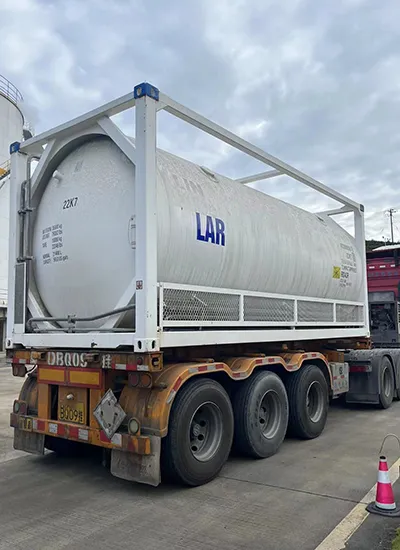
Liquid argon (LAr) is a cryogenic liquid widely used in industrial, scientific, and high-purity applications.
Due to its inert nature and high density, it is ideal for welding, electronics manufacturing, and cryogenic processes.
This guide explains its properties, evaporation behavior, storage methods, and safety requirements.
What is Liquid Argon?
Liquid argon is argon gas cooled below its boiling point of −186°C (−303°F).
It is colorless, odorless, and chemically inert. Argon accounts for approximately 0.93% of Earth’s atmosphere
and is typically produced as a by-product of air separation.
Physical & Chemical Properties of Liquid Argon
- Boiling Point: −186°C (−303°F)
- State: Cryogenic liquid
- Density: ~1.40 g/cm³
- Chemical Nature: Inert noble gas
- Vapor Density: Heavier than air
Evaporation & Boil-Off Characteristics
Liquid argon continuously absorbs heat from the environment, causing gradual evaporation known as boil-off.
Even vacuum-insulated tanks experience minimal heat ingress.
| Property | Value | Importance |
|---|---|---|
| Boiling Point | −186°C | Continuous evaporation at ambient pressure |
| Latent Heat | ~161 kJ/kg | Energy required for phase change |
| Density | 1.40 kg/L | Storage calculations |
| Expansion Ratio | 1 : 847 | Large gas generation |
Typical Boil-Off Rates
| Container Type | Boil-Off Rate |
|---|---|
| Open Dewar | 3–12% / day |
| Insulated Dewar | 1–3% / day |
| Vacuum Tank | 0.1–0.4% / day |
Gas Expansion from Evaporation
When liquid argon vaporizes, it expands significantly:
Gas Volume (m³) ≈ Liquid Volume (L) × 0.847
Example: 50 L of liquid argon produces approximately 42.35 m³ of argon gas.
This can displace oxygen in enclosed environments.
Specification Comparison: Liquid Argon vs Argon Gas
| Parameter | Liquid Argon (LAr) | Argon Gas (Ar) |
|---|---|---|
| Chemical Composition | Argon (Ar) in liquid phase | Argon (Ar) in gaseous phase |
| Physical State @ 1 atm, 20°C | Cryogenic liquid | Gas |
| Boiling Point | −186°C (−303°F) | Not applicable (already in gaseous state) |
| Density | ~1400 kg/m³ (at boiling point) | ~1.784 kg/m³ (at 20°C, 1 atm) |
| Volume Expansion Ratio (Liquid → Gas) | ~1 : 847 (at 20°C, 1 atm) | Not applicable |
| Cooling Capacity | High (latent heat of vaporization ~161 kJ/kg) | Low (sensible heat only) |
| Typical Storage Method | Vacuum-insulated cryogenic tanks or Dewars | High-pressure cylinders or bulk gas systems |
| Typical Storage Pressure | Low pressure (typically 1–5 bar) | High pressure (typically 150–300 bar) |
| Infrastructure Requirements | Cryogenic-rated piping, insulated transfer lines, vaporizers | Pressure-rated piping, regulators, gas manifolds |
| Primary Applications | Welding shielding, cryogenic processes, electronics manufacturing | Shielding gas, purging, inerting, blanketing |
| Operational Hazards | Cryogenic burns, oxygen deficiency hazard (ODH) | Asphyxiation risk, high-pressure release hazards |
Advantages and Limitations
Liquid Argon (LAr)
Advantages:
- High volumetric density allows large gas volumes from compact liquid storage
- Efficient cryogenic cooling through latent heat absorption
- Suitable for bulk supply, large-scale industrial, and laboratory operations
- Enables precise temperature control in temperature-sensitive processes
Limitations:
- Requires specialized cryogenic storage tanks and insulated transfer lines
- Continuous boil-off requires monitoring and venting systems
- Higher capital and operational safety requirements compared to gaseous argon
- Handling requires strict adherence to cryogenic safety protocols
Argon Gas (Ar)
Advantages:
- Readily available and easier to handle than cryogenic liquid
- Lower infrastructure and operational cost
- Ideal for inert atmosphere applications without ultra-low temperatures
- Simpler safety procedures; no phase-change handling required
Limitations:
- Lower volumetric efficiency; large gas volumes require larger storage systems
- Cannot achieve cryogenic cooling or phase-change heat absorption
- High-pressure handling protocols are required for safe storage and transport
How Liquid Argon is Produced
Liquid argon is produced using cryogenic air separation:
- Air compression and purification
- Cryogenic cooling
- Fractional distillation
- Argon separation and purification
- Storage in insulated tanks
Looking for a Reliable Liquid Argon Solution?
Whether you need bulk storage, transport, or on-site supply,
Storage & Supply Models
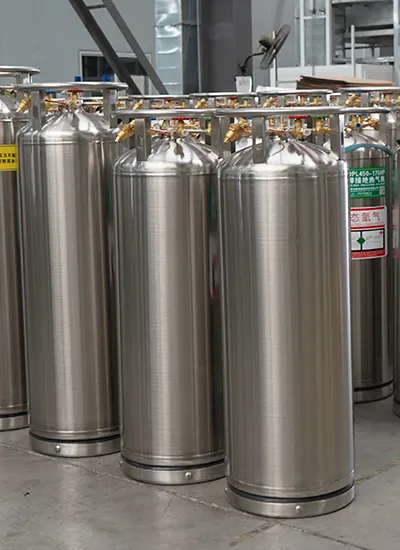
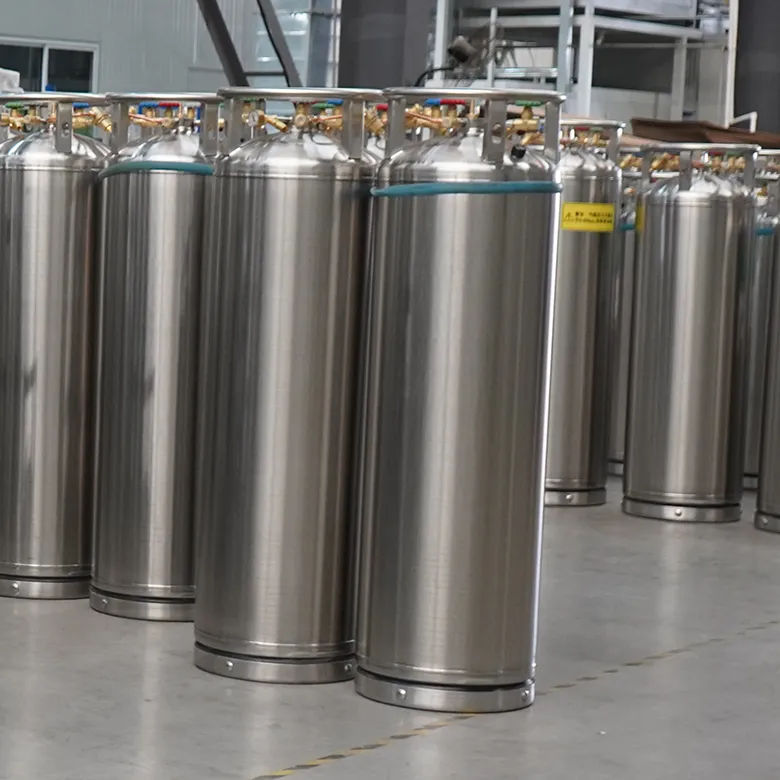
- Cryogenic Dewars: Compact cryogenic vessels designed for small-scale laboratory, medical, or low-volume industrial applications. Similar to those used for liquid nitrogen.
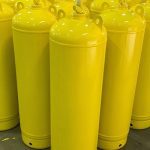
- Cylinders: Pre-filled portable liquid argon cylinders, ideal for moderate-volume usage and field operations.
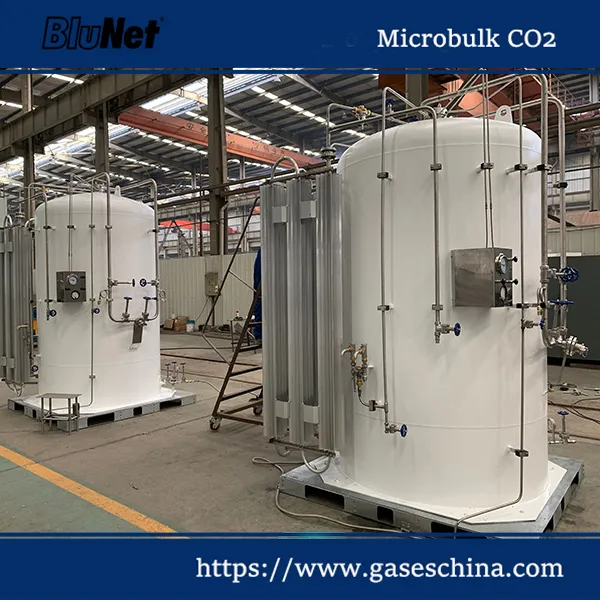
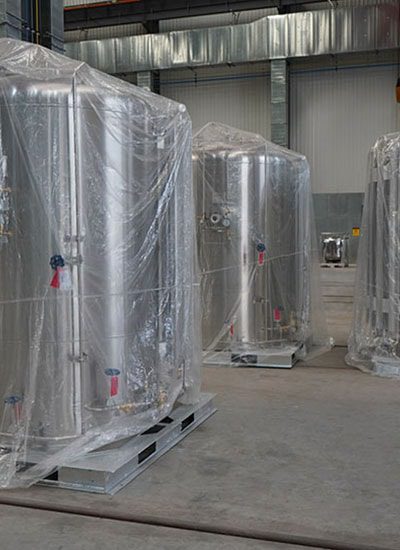
- MicroBulk Systems: Refillable cryogenic vessels for medium-to-high volume applications, providing on-site supply for businesses or labs.
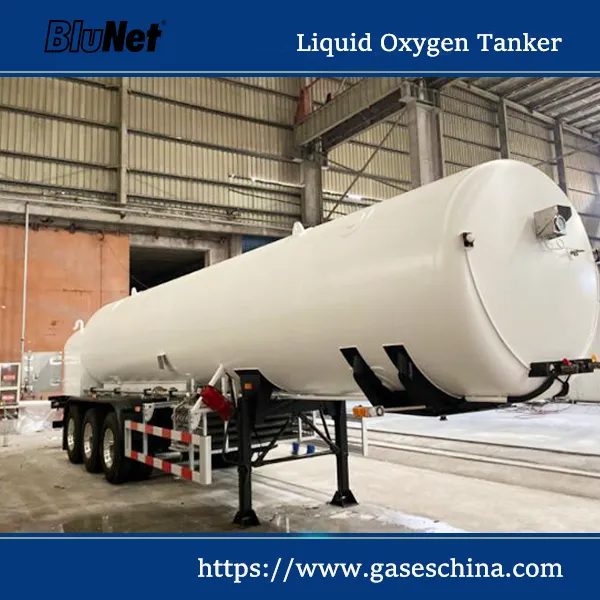
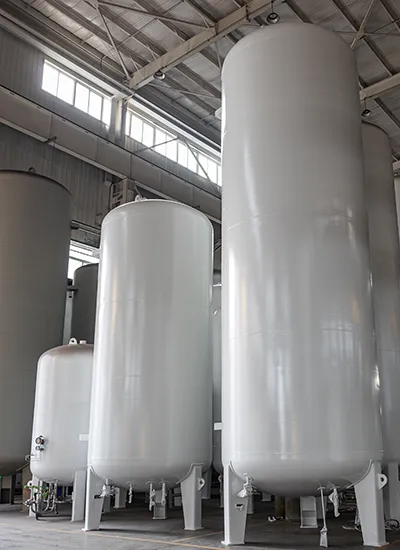
- Bulk Cryogenic Storage Tanks: Large-scale storage tanks for continuous industrial argon supply, equipped with vacuum insulation for minimal boil-off.
TECHNICAL FAQs
About Liquid Argon and LAR Supply
Liquid argon (LAr) is argon gas cooled below its boiling point of −186°C (−303°F) to form a cryogenic liquid. It is produced via cryogenic air separation, where atmospheric air is compressed, cooled, and fractionally distilled to isolate argon, which is then further purified and stored in vacuum-insulated cryogenic tanks or Dewars.
Liquid argon is colorless, odorless, chemically inert, and non-toxic. It has a density of approximately 1.40 g/cm³ at its boiling point, a boiling point of −186°C (−303°F), and a volume expansion ratio of ~1:847 when vaporized at 20°C and 1 atm.
Boil-off occurs as liquid argon absorbs heat from its environment, causing gradual evaporation. Typical boil-off rates depend on storage type: open or poorly insulated Dewars experience 3–12% per day, insulated laboratory Dewars 1–3% per day, and vacuum-insulated cryogenic tanks 0.1–0.4% per day. Proper ventilation and venting systems are essential to prevent oxygen deficiency hazards.
Liquid argon is specified for applications requiring high-density storage, cryogenic cooling, phase-change heat absorption, or bulk delivery. Argon gas is used where an inert atmosphere is needed without extreme cooling, for shielding, purging, or blanketing. Selection depends on volume, temperature requirements, infrastructure availability, and safety considerations.
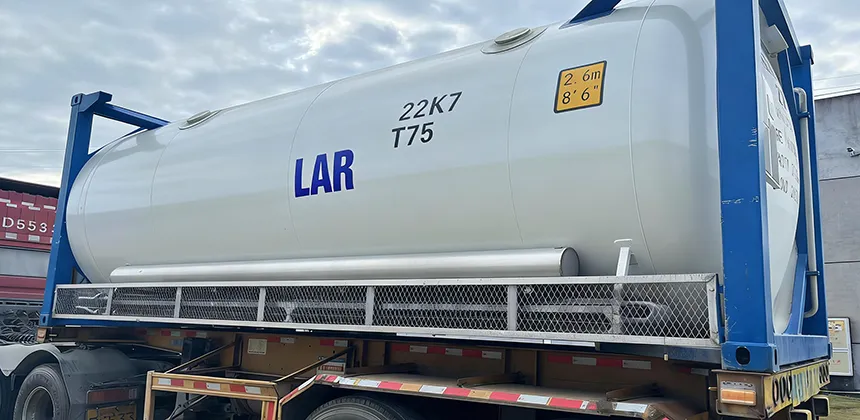
Liquid argon can be stored and supplied via four main models: Dewars for small-scale or laboratory use, portable cylinders for moderate volumes, MicroBulk systems for medium-to-high volume on-site supply, and bulk cryogenic storage tanks for large industrial applications. Each system is designed to minimize boil-off and maintain cryogenic temperatures safely.
Liquid argon offers high volumetric density, efficient cryogenic cooling, and suitability for bulk industrial supply, but requires specialized cryogenic storage, boil-off management, and safety protocols. Argon gas is easier to handle, lower cost, and ideal for inerting or shielding applications, but lacks cryogenic cooling and requires larger storage volume for equivalent gas amounts.
Handling liquid argon requires cryogenic PPE, including gloves, face shields, and protective clothing. Adequate ventilation is critical to prevent oxygen displacement and asphyxiation. Pressure relief valves, proper tank insulation, and adherence to cryogenic handling procedures are mandatory to ensure safe operation.
Safety Considerations
- Cryogenic burns risk
- Oxygen deficiency hazard (ODH)
- Proper ventilation required
- Pressure relief systems mandatory
- PPE: gloves, face shield, protective clothing
: Properties, Uses & Safety Guide)
No comment