

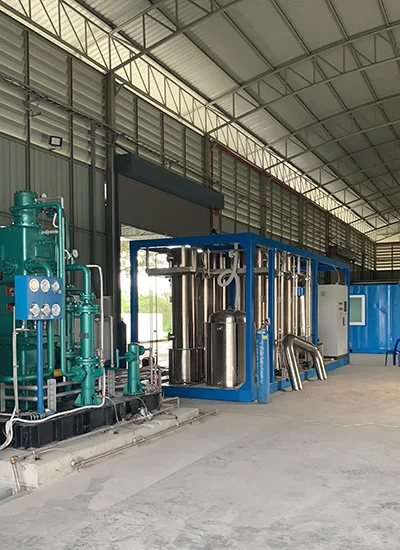
BluNet manufactures cryogenic vaporizers for industrial gas, LNG, and cryogenic liquid supply systems. Our vaporization equipment converts cryogenic liquids into stable gaseous flow using ambient air, water-bath, electric, and other heat-transfer methods.
We support vaporizer engineering from capacity selection and material selection through fabrication, welding, pressure testing, inspection, and system integration. Cryogenic vaporizers can be configured for liquid nitrogen, liquid oxygen, liquid argon, LNG, liquid CO2, and other compatible cryogenic fluids according to project requirements.
What Is a Cryogenic Vaporizer?
A cryogenic vaporizer is a heat-transfer device that converts a cryogenic liquid into gas before it enters a downstream distribution or process system. It is commonly installed between a cryogenic storage tank or transfer system and the gas supply pipeline.
The vaporizer absorbs heat from ambient air, heated water, steam, electricity, or another controlled heat source. The required configuration depends on the cryogenic fluid, vaporization capacity, operating pressure, outlet temperature, ambient conditions, and installation requirements.
For industrial gas systems, a typical process is:
→
Vaporizer
→
Gas
→
Pressure Regulation
→
Gas Distribution
For a broader overview of available equipment, see our cryogenic vaporizer
product range.

Cryogenic Vaporizer Types We Manufacture
Different cryogenic applications require different heat-transfer methods. BluNet can engineer and manufacture vaporizer configurations according to required capacity, pressure, gas type, heat source, operating conditions, and installation requirements.
| Vaporizer Type | Heat Source | Typical Applications |
|---|---|---|
| Ambient Air Vaporizer | Natural ambient air | Industrial nitrogen, oxygen and argon supply |
| Water Bath Vaporizer | Heated water | Continuous industrial gas supply |
| Electric Water Bath Vaporizer | Electric heating | Controlled vaporization and LNG applications |
| Steam-Heated Vaporizer | Steam | Large industrial gas systems |
| Shell & Tube Vaporizer | External heat medium | High-capacity industrial systems |
| LNG Regasification Vaporizer | Ambient or controlled heat source | LNG storage and natural gas supply |
Cryogenic Gases Supported
Vaporizer selection depends strongly on the physical properties and operating requirements of the cryogenic fluid. BluNet provides vaporization equipment for a range of industrial and energy applications.
Liquid Nitrogen
Used for inerting, purging, food processing, laboratories, electronics and industrial gas supply.
Liquid Oxygen
Used for medical oxygen systems, metal processing, combustion and industrial oxygen supply.
Liquid Argon
Used for welding, metallurgy, electronics and controlled-atmosphere applications.
LNG
Used for LNG regasification, industrial fuel supply and natural gas distribution.
Liquid CO2
Used for food, beverage, industrial processing and specialized gas supply systems.
Liquid Carbon Dioxide (CO2)
Used for food and beverage processing, industrial applications and controlled CO2 gas supply.
Cryogenic Vaporizer Design & Engineering
Cryogenic vaporizer design involves more than selecting a nominal gas flow rate. The vaporizer must be matched to the cryogenic fluid, operating pressure, required gas temperature, heat-transfer conditions, and installation environment.
Vaporization Capacity
Normal and peak gas demand determine the required vaporization capacity and heat-transfer area. Actual operating conditions should be considered when selecting equipment for continuous or intermittent service.
Design Pressure
Operating and design pressure are important parameters for selecting the vaporizer configuration, pressure-containing components, valves, connections and associated piping.
Cryogenic Fluid
Liquid nitrogen, oxygen, argon, LNG and CO2 have different thermodynamic and material requirements. The working fluid must therefore be considered during equipment design and material selection.
Outlet Gas Temperature
The required outlet gas temperature affects heat-transfer design and may influence the selection of downstream pressure-control and distribution equipment.
Ambient Conditions
For ambient-air vaporizers, local temperature, humidity, frost formation and operating duration can affect effective vaporization performance and should be considered during sizing.
Pressure Drop
The vaporizer should provide the required gas flow while maintaining an acceptable pressure drop across the equipment and downstream system.
Installation Conditions
Equipment selection can also consider indoor or outdoor installation, available footprint, piping orientation, connection requirements, maintenance access and local environmental conditions.
Cryogenic Vaporizer Manufacturing Process
BluNet’s manufacturing process combines engineering review, controlled fabrication and quality inspection to produce cryogenic vaporization equipment according to project specifications.
| Stage | Main Activities |
|---|---|
| 1. Engineering Design | Review gas type, capacity, pressure, temperature and installation requirements. |
| 2. Material Selection | Select suitable materials according to cryogenic temperature, pressure and heat-transfer requirements. |
| 3. Fabrication | Fabricate heat-transfer components, headers, vessels, piping and structural components. |
| 4. Welding & Assembly | Perform controlled welding, component assembly and connection preparation. |
| 5. Pressure & Leak Testing | Conduct applicable pressure, leakage and inspection procedures. |
| 6. Final Inspection | Verify dimensions, connections, identification, workmanship and required documentation. |
Cryogenic Vaporizer Quality Control
Quality control is applied throughout manufacturing rather than only at final inspection. Depending on the project and applicable requirements, inspection may include:
- Incoming material inspection and traceability
- Welding procedure and weld inspection
- Dimensional inspection
- Pressure testing
- Leak testing
- Applicable performance verification
- Final inspection and documentation review
Quality documentation can be provided according to project requirements, including applicable material, inspection and test records.
Cryogenic Vaporizer Quality Control
Cryogenic vaporizers can be engineered around specific operating conditions instead of relying on a single standard configuration. Customization may include vaporization capacity, design pressure, heat-transfer method, connections, dimensions and system interfaces.
Capacity and Pressure
Vaporizer capacity and pressure ratings can be selected according to the required gas demand and system operating conditions.
Heat Source
Ambient air, heated water, electric heating, steam and other engineered heat-transfer methods can be considered according to application requirements.
Connections and Layout
Inlet and outlet connections, piping orientation, footprint and equipment layout can be coordinated with the customer’s existing or planned gas supply system.
System Integration
Vaporizers can be incorporated into systems combining cryogenic storage tanks, pumps, pressure-building equipment, pressure regulation and downstream gas distribution.
Cryogenic Vaporizer Applications
| Application | Typical Use |
|---|---|
| Industrial Gas Supply | Continuous nitrogen, oxygen and argon gas supply. |
| LNG Regasification | Converts LNG into natural gas for downstream use and distribution. |
| Medical Gas Systems | Supports gaseous oxygen supply from bulk liquid storage systems. |
| Metal Fabrication | Provides oxygen, nitrogen and argon for welding, cutting and processing. |
| Food & Beverage | Supports cryogenic gas supply for processing and packaging applications. |
| Chemical Processing | Provides controlled cryogenic gas supply for process operations. |
| Energy & LNG Infrastructure | Used in LNG storage, regasification and distribution systems. |
Get Your Custom Cryogenic Vaporizer Designed for Your Application
BluNet provides custom cryogenic vaporizers for industrial gas, medical, laboratory, and research applications. Contact us with your gas type, capacity, and operating requirements for a tailored solution.
Cryogenic Vaporizer System Integration
A vaporizer is normally one component of a complete cryogenic gas supply system. Correct integration of storage, transfer, vaporization and pressure-control equipment helps provide stable gas delivery to the downstream process.
Cryogenic Storage Tank
↓
Cryogenic Pump / Pressure-Building System
↓
Cryogenic Vaporizer
↓
Pressure Regulation
↓
Gas Metering / Filtration
↓
Process or Distribution Pipeline
BluNet can coordinate vaporizer requirements with associated cryogenic storage and gas supply equipment for project-based applications.
Cryogenic Vaporizer Standards & Compliance
Vaporizer design and manufacturing requirements depend on the equipment configuration, working fluid, pressure, installation location and destination market. Applicable pressure-vessel, piping, material, welding, inspection and electrical requirements should therefore be confirmed during project engineering.
BluNet can work with customer specifications and applicable project requirements to determine the appropriate design, inspection and documentation scope before manufacturing.
Why Choose BluNet for Cryogenic Vaporizer Manufacturing?
Cryogenic Equipment Experience
Experience across cryogenic tanks, vaporizers and gas supply equipment.
Engineering-Based Manufacturing
Equipment is developed around flow, pressure, temperature and installation requirements.
Multiple Vaporization Technologies
Select suitable heat-transfer configurations according to the application.
Quality-Controlled Production
Material inspection, fabrication control, testing and final inspection are incorporated into production.
System Integration
Vaporizers can be coordinated with tanks, pumps, pressure-control systems and gas distribution equipment.
Cryogenic Vaporizer Manufacturing Capability
| Capability | Details |
|---|---|
| Product | Cryogenic vaporization equipment |
| Applications | Industrial gas, LNG, medical, energy and process applications |
| Gas Compatibility | LIN, LOX, LAR, LNG, LCO2 and other compatible cryogenic fluids |
| Configurations | Ambient air, water bath, electric and other engineered configurations |
| Engineering | Capacity, pressure, temperature, heat-transfer and installation design |
| Testing | Applicable pressure, leak and performance testing |
| Customization | Capacity, connections, configuration, dimensions and system integration |
Related Cryogenic Equipment
More about Cryogenic Vaporizer Manufacturing