


BluNet – Global Industrial Gas Solutions
Safe, Reliable, and Efficient Storage & Supply Systems
,
Serving manufacturing, healthcare, energy, and research facilities worldwide.
Reliable industrial gas supply is critical for modern manufacturing, healthcare, energy production, and research operations. Facilities that rely on gases such as oxygen (O₂), nitrogen (N₂), argon (Ar), carbon dioxide (CO₂), and liquefied natural gas (LNG) require stable storage, safe distribution, and consistent pressure control to maintain continuous operations.
BluNet designs and manufactures complete industrial gas storage and cryogenic supply systems for global customers. Our solutions integrate storage vessels, cryogenic equipment, vapourisation units, pipeline networks, and pressure control systems to ensure safe, efficient, and uninterrupted gas supply.
From small laboratory installations to large industrial gas infrastructure projects, our engineering team provides tailored systems designed for reliability, regulatory compliance, and long-term operational efficiency.
Industrial Gas Storage Solutions for Modern Facilities
Industrial gas systems support a wide range of sectors including:
- Steel and metallurgical production
- Automotive manufacturing
- Electronics and semiconductor fabrication
- Food processing and packaging
- Chemical and petrochemical industries
- Medical and healthcare facilities
- Energy and LNG infrastructure
These industries require continuous and stable gas supply to maintain production quality, process safety, and operational efficiency.
A properly engineered gas storage system provides several operational benefits:
- Continuous gas availability without supply interruption
- Stable pressure and flow control across production lines
- Safe storage and handling of high-pressure or cryogenic gases
- Compliance with international safety standards
- Reduced logistics costs and improved supply efficiency
The optimal storage configuration depends on gas consumption rate, facility layout, delivery logistics, and safety regulations. BluNet engineers evaluate these factors to recommend the most suitable storage and distribution solution.
When specifying, purchasing, or operating liquid nitrogen (LN₂) systems, accurate
weight–volume–gas conversion is essential for engineering design, EPC documentation, and commercial evaluation.
Why Accurate LN₂ Conversion Matters
- Storage tank sizing – determining correct bulk tank capacity
- Transport capacity calculations – verifying tanker payload and refill frequency
- Gas consumption forecasting – converting Nm³/hr to liquid litres
- Cylinder equivalency comparisons – bulk vs packaged gas evaluation
- Cost analysis – comparing pricing per Nm³, SCF, kg, or litre
Industrial Gas Storage Technologies
Different facilities require different gas storage approaches. BluNet provides several storage technologies that support a wide range of industrial applications.
High-Pressure Gas Cylinder Systems
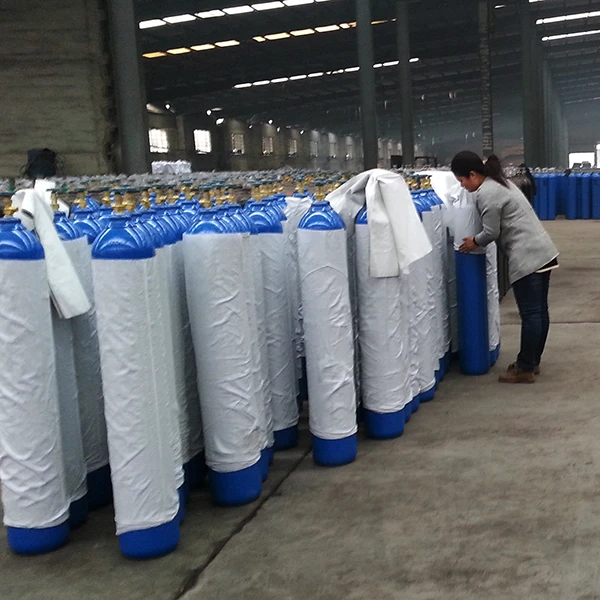
High-pressure cylinder systems are widely used for facilities with lower gas consumption or where flexible supply is required.
BluNet manufactures seamless steel and aluminium gas cylinders designed for safe storage and transportation of industrial gases, including oxygen, nitrogen, argon, carbon dioxide, and specialty gas mixtures.
- Seamless cylinder construction for structural strength
- ISO, DOT, and EN compliant manufacturing standards
- Hydrostatic pressure testing for safety verification
- Non-destructive inspection procedures
- Full material traceability documentation
- Export-ready certification packages
These cylinders are suitable for laboratories, hospitals, manufacturing workshops, and specialised industrial processes where controlled gas supply is required.
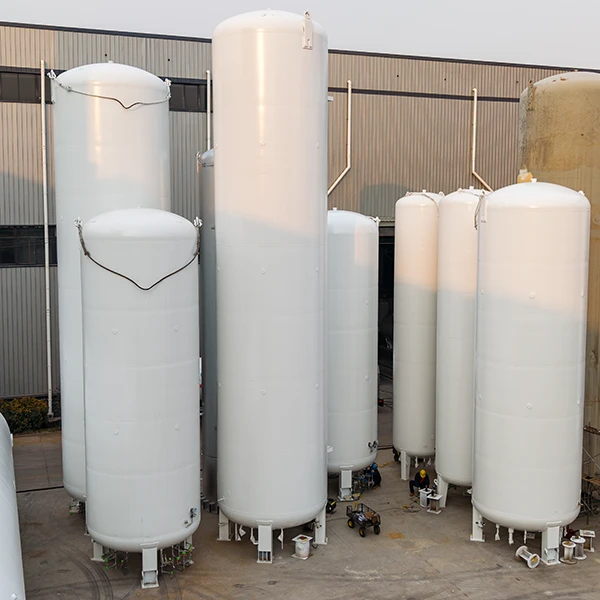
Cryogenic Liquid Storage Tanks
For medium to large gas consumption, cryogenic storage tanks provide the most efficient solution.
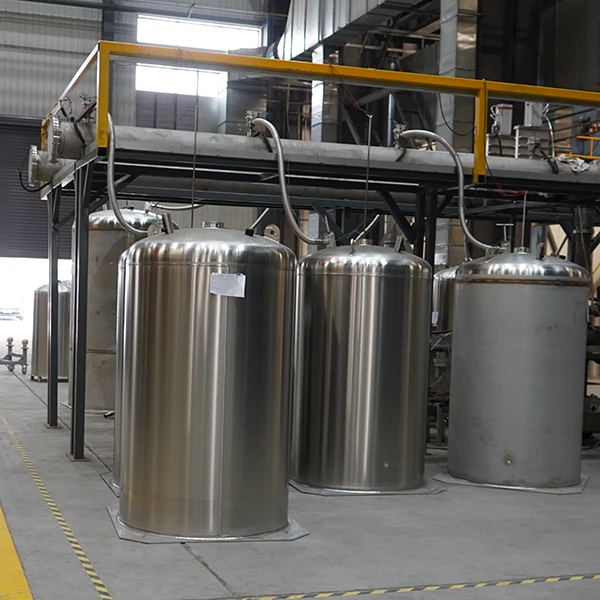
BluNet manufactures vacuum-insulated cryogenic tanks designed for long-term storage of liquefied industrial gases such as:
- Liquid Oxygen (LOX)
- Liquid Nitrogen (LIN)
- Liquid Argon (LAr)
- Liquid Carbon Dioxide (LCO₂)
- Liquefied Natural Gas (LNG)
Cryogenic tanks store gases in liquid form at extremely low temperatures, allowing large volumes of gas to be stored in compact tanks while reducing transport frequency and operational cost.
- Double-wall vacuum-insulated construction
- Perlite or multilayer insulation systems
- Low boil-off design for improved efficiency
- ASME-compliant pressure vessel engineering
- Integrated safety valve and pressure control systems
- Factory pressure, vacuum, and leakage testing
Cryogenic tanks are available in vertical and horizontal configurations, allowing flexible installation according to site conditions and infrastructure requirements.
Microbulk Gas Supply Systems
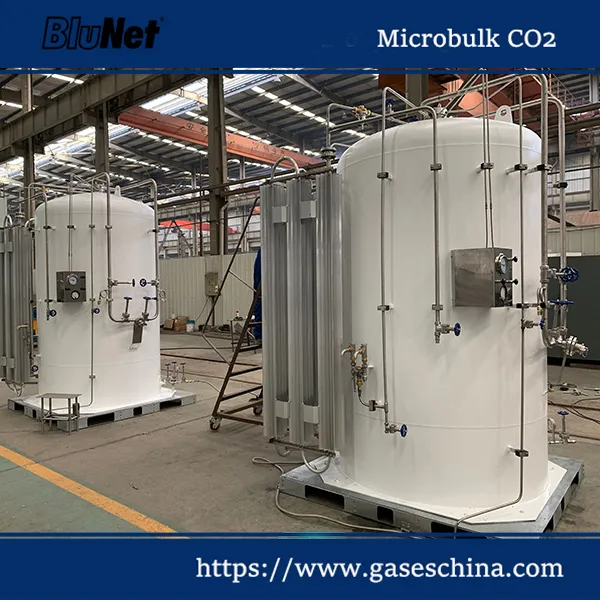
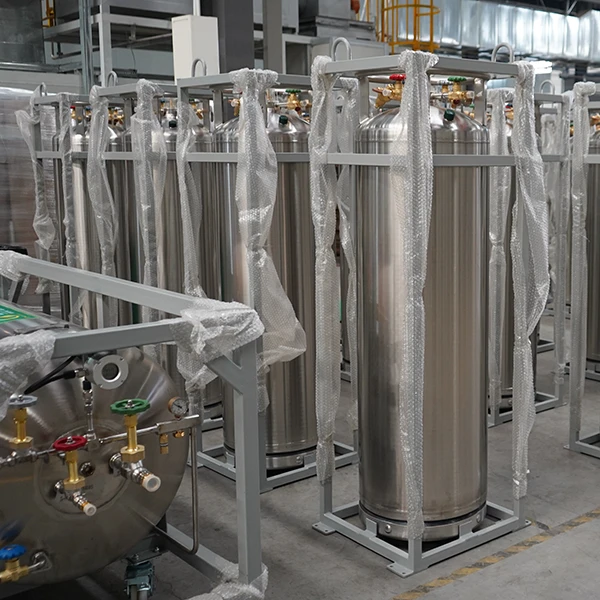
Microbulk gas supply systems bridge the gap between traditional cylinder supply and large bulk cryogenic tanks.
These compact systems store cryogenic liquids in small vacuum-insulated tanks while delivering gas through vapourisation units and pressure regulation systems.
- Reduced gas loss compared with cylinder supply
- Lower refill frequency
- Stable outlet pressure for sensitive processes
- Compact footprint for limited installation space
- Simplified gas management
Microbulk systems are widely used in hospitals, laboratories, laser cutting workshops, food processing plants, and electronics manufacturing. They provide a reliable and cost-effective gas supply solution for facilities with moderate consumption.
LNG Storage & Transportation Solutions
BluNet also provides cryogenic infrastructure solutions for the storage and transport of Liquefied Natural Gas (LNG) used in energy, marine fuel, and industrial gas distribution.
LNG ISO Tank Containers
- 40-foot ISO standard container dimensions
- Designed according to ISO 1496/3 and UN T75 standards
- Vacuum-insulated cryogenic vessel construction
- Designed for safe international transport by sea, rail, and road
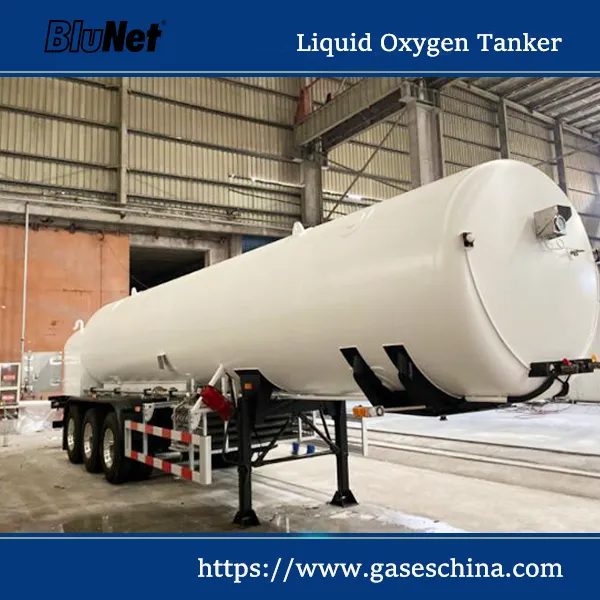
Cryogenic Semi-Trailers
- Large capacity cryogenic storage vessels
- Advanced insulation systems to minimise boil-off losses
- Integrated safety valves and pressure protection devices
- Emergency shutdown systems for operational safety
Industrial Gas Distribution Systems
An effective gas supply system involves more than storage. Complete industrial gas infrastructure includes vapourisation equipment, pressure control systems, and pipeline networks that deliver gas safely to the point of use.
Gas Distribution Components
Vapourisation Systems
BluNet supplies several types of vapourisers, including ambient air, electric heated, and steam heated units.
Pipeline Distribution Networks
Gas distribution pipelines deliver industrial gases from storage tanks to production equipment or process areas. Proper pipeline engineering ensures stable pressure, leak prevention, and efficient gas utilisation.
Pressure Regulation and Monitoring
Typical system components include pressure reducing valves, safety relief valves, flow meters, and automated monitoring instruments to maintain safe and consistent gas supply.
Applications Across Industries
- Steel and Metallurgy: Oxygen for steelmaking, argon for refining and welding.
- Automotive Manufacturing: Nitrogen and argon for welding, heat treatment, and assembly lines.
- Food and Beverage Processing: Nitrogen for packaging, CO₂ for carbonation and cooling.
- Chemical and Petrochemical Industries: Inert gases for blanketing, purging, and explosion prevention.
- Electronics and Semiconductor Manufacturing: High-purity nitrogen and specialty gases for precision manufacturing.
Safety, Compliance & Quality Assurance
Built to ASME, ISO, and PED standards for safety, compliance, and reliability.
BluNet designs and manufactures equipment in accordance with internationally recognised standards to ensure safe operation and long-term reliability.
- ASME pressure vessel standards
- PED (Pressure Equipment Directive) compliance
- ISO quality management systems
- GB manufacturing standards for international export
- Welding qualification procedures (WPS/PQR)
- Third-party inspection and certification support
- Full material certification and traceability documentation

TECHNICAL FAQs
About Industrial Gas Supply Solutions
Gas storage capacity is calculated based on consumption rate (Nm3/hr), peak demand, reserve margin, and refill frequency. For cryogenic systems, liquid-to-gas expansion ratios are used to determine tank size and supply intervals.
Selection depends on gas consumption, flow stability, available space, delivery logistics, and cost efficiency. Cylinders are suitable for low demand, microbulk for medium usage, and bulk cryogenic tanks for continuous high-volume supply.
Pressure stability is maintained using multi-stage regulation systems including primary and secondary regulators, buffer tanks, and automated control valves to ensure consistent gas delivery under varying demand conditions.
Boil-off rate refers to the evaporation of cryogenic liquid caused by heat ingress. It is minimised through vacuum insulation and multilayer insulation systems, typically achieving less than 1 percent loss per day.
Vapourisers are sized based on required gas flow rate, ambient temperature, and peak demand. Heat transfer calculations ensure complete vaporisation without pressure drop or operational instability.
Industrial gas systems comply with standards such as ASME Section VIII, PED, ISO 9809, EN 13458, and DOT regulations, ensuring safety, quality, and international transport compliance.
LNG storage requires additional safety measures such as flammability control, double containment, and boil-off gas management, following standards like EN 1473 and NFPA 59A.
Turnkey Engineering & Technical Support
- Engineering consultation
- Custom layout and system design
- Manufacturing and inspection
- On-site installation guidance
- Commissioning support
- Operational training
- Long-term maintenance assistance
We deliver safe, compliant, and high-performance industrial gas infrastructure for global projects.
Request a Technical Consultation
Selecting the right industrial gas storage and supply system requires careful engineering evaluation.
BluNet’s technical team can assist with system selection, capacity planning, and regulatory compliance for your project.
Contact us today to discuss your requirements for industrial gas storage systems, cryogenic tanks, LNG infrastructure, and gas distribution solutions. We will provide a tailored system designed to meet your operational requirements, safety standards, and long-term performance goals.