


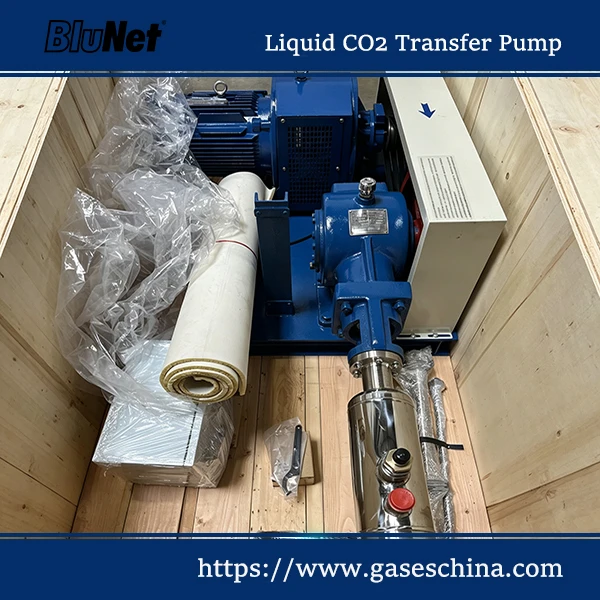
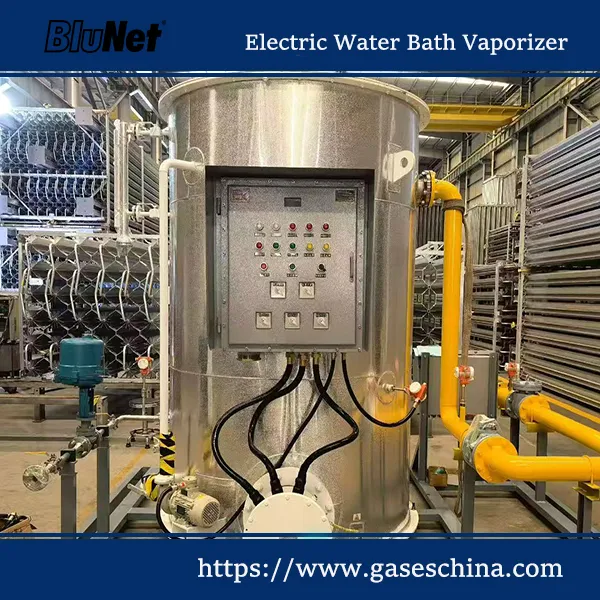
This Cryogenic Tanks Guide explains stationary bulk cryogenic storage systems, including their design, components, working principles, sizing, applications, and procurement considerations. It helps engineers and industrial buyers understand how bulk storage tanks enhance operational safety, optimize gas costs, and ensure reliable industrial gas supply.
Cryogenic tanks are vacuum-insulated vessels designed to safely store liquefied industrial gases at extremely low temperatures (typically below −150°C / −238°F). These tanks are essential for industries that require continuous, high-purity gas delivery, such as manufacturing, healthcare, semiconductor production, food processing, energy, and scientific research.
Bulk cryogenic storage provides a more efficient alternative to traditional gas cylinders or manifold systems. By stabilizing pressure delivery, reducing handling risks, and minimizing production downtime, these systems improve both operational safety and cost-effectiveness. For more in-depth information, check out our BluNet Engineering Knowledge Hub, which offers comprehensive guides on industrial gases, cryogenic systems, and storage solutions.
For projects requiring customized vessel capacity, operating pressure, insulation configuration, or applicable design standards, see our cryogenic tank manufacturer page for manufacturing capabilities, engineering options, and certification information.
What Are Cryogenic Tanks?
Cryogenic storage tanks are double-wall insulated vessels designed to store liquefied gases such as:
- Liquid Oxygen (LOX)
- Liquid Nitrogen (LIN)
- Liquid Argon (LAR)
- Liquid Carbon Dioxide (LCO₂)
- Liquefied Natural Gas (LNG)
Liquefaction dramatically reduces storage volume and improves transport efficiency. For example:
1 liter of liquid nitrogen expands to approximately 700 liters of nitrogen gas at ambient conditions.
This high expansion ratio explains why cryogenic bulk storage is significantly more economical than compressed gas cylinder supply for large users.
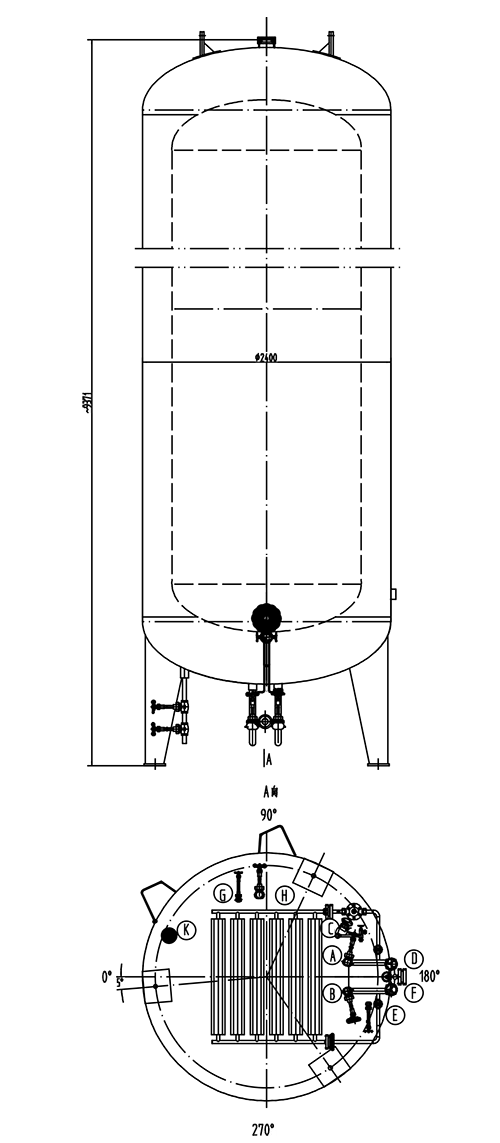
On the right is an example of the general technical specifications for a 20m³ vertical cryogenic storage tank.
What Is a Stationary Bulk Cryogenic Tank?
A stationary bulk cryogenic tank is a permanently installed industrial gas storage system designed for high-volume gas supply. These installations are typically located outdoors and connected to vaporizers, pressure control systems, and facility gas distribution pipelines. For complete system-level planning, see our cryogenic storage solutions for integrated tank, vaporization, pressure regulation, and gas distribution systems. Designed in compliance with ASME, GB150, and ISO 21009 standards for industrial cryogenic pressure systems. A complete cryogenic bulk storage system normally includes:
- Vacuum insulated cryogenic storage vessel
- Ambient air vaporizer system
- Pressure building circuit
- Gas pressure regulation manifold
- Safety relief and protection devices
- Process gas pipeline distribution network
- Level and pressure instrumentation
These integrated gas supply systems provide stable flow, consistent pressure control, and high reliability for industrial operations.
Typical stationary bulk cryogenic tanks operate in a pressure range of approximately 0.8–2.4 MPa (8–24 bar), depending on gas type, vaporization demand, and system configuration. The pressure is not fixed inside the storage vessel; instead, it is actively maintained by a pressure-building circuit to ensure stable downstream delivery.
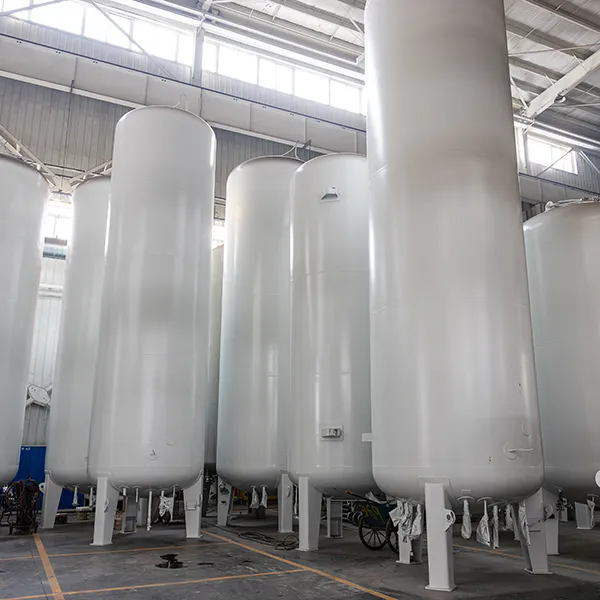
On the left is an example of a 20m³ stationary cryogenic tank.
The following specifications represent a typical 20m³ stationary cryogenic storage tank configuration. Actual design parameters may vary depending on stored media, operating pressure, regional design codes, and project-specific engineering requirements.
| Typical 20m³ Cryogenic Tank Design Specifications | |
|---|---|
| Design Standards | GB 150.1~150.4-2011 Pressure Vessels GB/T 18442-2011 Stationary Vacuum Insulated Cryogenic Pressure Vessels TSG R0004-2009 Safety Technical Supervision Regulations for Stationary Pressure Vessels HG/T 20584-2011 Technical Specifications for Oxygen and Cryogenic Engineering |
| Stored Media | LOX / LIN / LAR / LNG |
| Insulation System | Pearlite vacuum insulation |
| Medium Characteristics | Properties vary by stored gas; cryogenic media may include oxidizing, inert, or flammable gases. |
| Working Temperature | Approximately −196°C to −162°C depending on stored cryogenic media |
| Typical Operating Pressure | 0.8–2.4 MPa depending on system configuration and gas demand |
| Design Pressure | 1.63 MPa |
| Design Temperature | −196°C to +60°C |
| Corrosion Allowance | Typically 1.0 mm depending on design code and service conditions |
| Weld Joint Efficiency | 1.0 / 0.85 depending on weld category and inspection requirements |
| Inner Vessel Material | S30408 stainless steel |
| Post Weld Heat Treatment (PWHT) | Applied according to material grade, thickness, and applicable pressure vessel code requirements |
| Total Capacity | 21.03 m³ / 36.99 m³ |
| Effective Volume | 20 m³ / 15.8 m³ |
| Hydrostatic Test Pressure | 1.91 MPa / 0.15 MPa |
| Gas Tightness Test Pressure | 1.63 MPa |
| Pressure Vessel Classification | Classification depends on applicable regional pressure vessel regulations and design standards |
| Filling Ratio | Typically up to 95% depending on stored media and safety requirements |
| Inner Vessel Thickness | Determined by pressure rating, vessel diameter, and applicable design code calculations |
| Estimated Service Life | Typically 20 years or longer with proper maintenance and inspection |
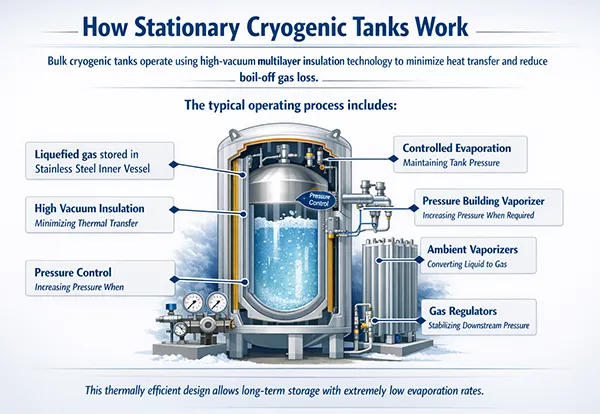
How Stationary Cryogenic Tanks Work
Bulk cryogenic tanks operate using high-vacuum multilayer insulation technology to minimize heat transfer and reduce boil-off gas loss.The typical operating process includes:
- Liquefied gas stored inside a stainless steel inner pressure vessel
- High vacuum insulation minimizing thermal transfer
- Controlled evaporation maintaining tank pressure
- Pressure building vaporizer increasing pressure when required
- Ambient vaporizers converting liquid into process gas
- Gas regulators stabilizing downstream pressure
This thermally efficient design allows long-term storage with extremely low evaporation rates.
Main Components of a Stationary Cryogenic Tank System
Inner Pressure Vessel
The inner vessel contains the cryogenic liquid and must maintain mechanical strength at extremely low temperatures. Austenitic stainless steel is typically used due to excellent cryogenic toughness and corrosion resistance.
Key engineering characteristics include:
- Cryogenic temperature toughness
- ASME pressure design compliance
- High quality automatic welding
- Non-destructive testing verification
- Corrosion resistance
Outer Jacket
The outer vessel provides structural protection and maintains the insulation vacuum. It is usually fabricated from carbon steel with anti-corrosion coating systems.
Main functions include:
- Structural protection
- Vacuum containment
- Weather protection
- Support of internal piping
Vacuum Insulation System
The annular space between inner and outer vessels contains multilayer insulation combined with high vacuum conditions to minimize:
- Heat conduction
- Radiation heat transfer
- Convective heat transfer
Vacuum level and insulation quality directly determine static evaporation rate and overall tank efficiency.
Pressure Building System
The pressure building circuit maintains required gas delivery pressure without external compressors.
This system typically includes:
- Pressure building vaporizer coil
- Pressure regulators
- Control valves
- Pressure transmitters
- Process instrumentation
Safety Protection System
Multiple safety devices protect the tank from over-pressure and abnormal operating conditions.
Standard safety components include:
- Primary safety relief valves
- Secondary relief devices
- Rupture discs
- Emergency shut-off valves
- Pressure gauges
- Level indicators
Vaporizer System
Vaporizers convert cryogenic liquid into usable gas through heat exchange.
Common industrial vaporizer types include:
- Ambient air vaporizers
- Steam heated vaporizers
- Electric heated vaporizers
- Water bath vaporizers
Ambient vaporizers are most widely used because they require no external energy and provide low operating cost.
Key Manufacturing Processes
Cryogenic storage tanks are manufactured under strict compliance with ASME, GB150, and ISO 21009 standards. The process ensures structural integrity, vacuum insulation performance, and long-term safety for industrial gas applications.
Material Selection and Traceability
Inner vessels use austenitic stainless steel (304L / 316L / S30408) for cryogenic toughness, while outer jackets are carbon steel with anti-corrosion coating.
All materials are fully traceable through MTC certification.
– Verified chemical and mechanical properties
– Cryogenic impact toughness testing
– Full batch traceability system
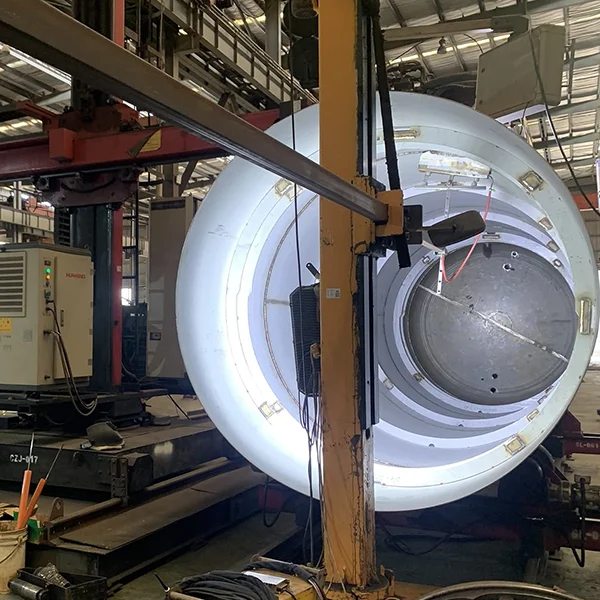
Inner Vessel Fabrication and Welding
Inner vessels are formed using CNC rolling and precision welding processes. TIG or submerged arc welding ensures structural strength and leak prevention.
– Shell forming and alignment
– Automatic longitudinal and circumferential welding
– Dimensional and weld quality inspection
All welds undergo non-destructive testing.
Non-Destructive Testing (NDT)
Critical welds are inspected using standard industrial methods:
– Radiographic Testing (RT)
– Ultrasonic Testing (UT)
– Dye Penetrant Testing (PT)
This ensures compliance with pressure vessel safety standards.
Vacuum Insulation Assembly
The inner vessel is installed inside the outer jacket to form a double-wall structure. The annular space is evacuated and filled with insulation material.
– High vacuum evacuation to reduce heat transfer
– Perlite or multilayer insulation (MLI)
– Precision alignment to minimize thermal bridges
Vacuum and Leak Testing
Vacuum integrity is verified before final certification.
– Helium leak detection testing
– Vacuum decay monitoring
– Seal integrity verification
Pressure and Safety Testing
Final validation ensures operational safety and compliance.
– Hydrostatic pressure test
– Gas tightness test
– Safety relief valve calibration
Manufacturing control ensures each cryogenic tank achieves long service life, stable performance, and compliance with international industrial standards.
Types of Stationary Cryogenic Tanks
Vertical Cryogenic Storage Tanks
Vertical tanks are the most common configuration for industrial gas storage due to efficient space utilization.
Main advantages include:
- Reduced installation footprint
- Higher capacity capability
- Simplified process piping
- Better pressure performance
Typical industrial capacities include:
- 5 m³ cryogenic tanks
- 10 m³ cryogenic tanks
- 20 m³ cryogenic tanks
- 30 m³ cryogenic tanks
- 50 m³ cryogenic tanks
- 100 m³ cryogenic tanks
Horizontal Cryogenic Storage Tanks
Horizontal tanks are used when facility height restrictions exist or transport logistics require lower profiles.
Advantages include:
- Lower overall height
- Simplified transportation
- Easier installation in restricted sites
- Improved seismic stability
Standard Pressure vs Medium Pressure Cryogenic Tanks
Cryogenic tanks are also classified by operating pressure:
- Standard pressure tanks: 8–12 bar
- Medium pressure tanks: 13–25 bar
- High pressure designs for special applications
Higher pressure tanks allow higher flow rates and improved gas delivery stability for demanding industrial processes.
| Parameter | Standard Pressure (8–12 bar) | Medium Pressure (13–25 bar) | Notes |
|---|---|---|---|
| MAWP & Pressure | ~1.5× nominal; moderate overpressure | ~1.5× nominal; higher internal stress | Designed per ASME VIII / EN 13458 |
| Tank Material & Wall Thickness | Stainless steel/aluminium; moderate (~5–10 mm) | Thicker walls (~10–20 mm) | Thickness via σ = PR/t; higher pressure → thicker walls |
| Insulation & Boil-off | BOR 0.1–0.3%/day | BOR 0.15–0.4%/day | Depends on vacuum insulation & MLI; higher pressure slightly increases BOR |
| Vapor Pressure Control | Simple PSV | Active pressure control with regulators | Ensures stable gas delivery under higher demand |
| Flow Rate Capability | Moderate | High; reduced pressure drop in pipelines | Q ≈ C × √ΔP/ρ; higher pressure → higher flow |
| Applications | Labs, small industrial processes | High-demand industrial: welding, medical gas, food freezing | Medium pressure preferred for continuous, high-flow operations |
| Safety Systems | Standard PSV, burst disks | Redundant valves, automated monitoring | Medium pressure requires enhanced safety due to stored energy |
| Temperature Considerations | LN₂ −196°C, LAr −186°C, LO₂ −183°C | Same; combined cryogenic + mechanical stress | Higher pressure increases internal energy; must consider thermal contraction |
| Cost & Fabrication | Moderate | Higher; thicker walls, precise welds | Requires NDE, stricter tolerances |
| Transport & Integration | Standard ISO connections | Reinforced supports, upgraded piping | Ensures safe integration into high-flow pipelines |
Advantages of Stationary Bulk Cryogenic Storage
Continuous Industrial Gas Supply
Stationary bulk storage is commonly integrated into cryogenic storage solutions that combine tank storage, vaporization, pressure regulation, and on-site gas distribution.
Lower Total Gas Supply Cost
Bulk storage significantly reduces:
- Cylinder rental fees
- Gas logistics costs
- Handling labor
- Inventory management complexity
Improved Operational Safety
Bulk storage reduces risks related to manual cylinder handling, connection errors, and high-pressure cylinder transport.
Reduced Labor Requirements
Automated bulk systems eliminate most manual gas handling operations.
Environmental Sustainability Benefits
Bulk gas supply improves sustainability by reducing:
- Transport emissions
- Cylinder packaging waste
- Delivery frequency
- Handling energy use
Industries Using Stationary Cryogenic Tanks
Manufacturing and Metal Fabrication
- Laser cutting nitrogen supply
- Welding shielding gases
- Heat treatment atmosphere control
- Metal processing
Healthcare and Medical Gas Systems
- Hospital oxygen supply systems
- Medical gas pipeline systems
- Laboratory research applications
Food and Beverage Processing
- Cryogenic freezing tunnels
- Food preservation
- Modified atmosphere packaging
- Beverage carbonation
Electronics and Semiconductor Industry
- Semiconductor fabrication
- Inert gas protection
- Cleanroom processes
- Precision manufacturing
Energy and LNG Applications
- LNG peak shaving systems
- Backup fuel supply
- Power plant gas systems
Looking for a Reliable Cryogenic Storage Solution?
Whether you need bulk storage, microbulk, or on-site supply,
How to Size a Stationary Cryogenic Tank
Proper bulk tank sizing depends on consumption profile, delivery logistics, and safety requirements.
Engineering best practice recommends tank capacity covering approximately 3–10 days of gas consumption.
Key sizing parameters include:
- Average daily gas consumption
- Peak consumption demand
- Supplier delivery interval
- Emergency reserve requirements
- Future production expansion
Cryogenic Tank Installation Requirements
Proper installation ensures safe operation and regulatory compliance.
Important design considerations include:
- Reinforced concrete foundation
- Required safety distances
- Maintenance access clearance
- Seismic design considerations
- Proper piping stress support
- Vaporizer airflow clearance
Installation must comply with applicable codes such as ASME pressure vessel standards and local gas safety regulations.
Maintenance Requirements
Cryogenic storage tanks require relatively low maintenance but regular inspection is essential for long-term reliability.
Recommended inspection practices include:
- Daily pressure monitoring
- Valve function checks
- Pipeline leak detection
- Safety valve testing
- Instrumentation calibration
- Vacuum performance monitoring
Typical maintenance intervals include:
- Daily operator inspection
- Monthly technical inspection
- Annual safety inspection
Proper maintenance can allow service life exceeding 20 years.
Bulk Tanks vs Microbulk vs Cryogenic Dewars
| System | Typical Capacity | Best For | Cost Efficiency |
|---|---|---|---|
| Bulk Cryogenic Tank | 5–100 m³ | High consumption factories | Best long term cost |
| Microbulk Tank | 1–5 m³ | Medium users | Moderate cost |
| Dewar | 50–500 L | Labs | Higher cost per Nm³ |
TECHNICAL FAQs
About Stationary Bulk Cryogenic Storage
Modern stationary tanks typically have static evaporation rates between 0.2% and 0.6% per day depending on tank size and insulation quality.
Typical operating pressures range from 8 bar to 25 bar depending on system design.
Annual inspection is typical, with daily operator checks recommended.
Common standards include ASME, PED, ISO 21009, and GB pressure vessel codes.
Related Cryogenic Tank Resources
Explore our core cryogenic tank resources and technical guides for selecting, designing, manufacturing, and maintaining cryogenic storage equipment.
Core Cryogenic Tank Resources
– Learn about cryogenic tank manufacturing capabilities, engineering, testing, customization, and certification.
– Explore integrated solutions for cryogenic liquid storage, vaporization, pressure regulation, and gas supply.
– Browse cryogenic storage tank options for liquid nitrogen, oxygen, argon, CO₂, LNG, and other cryogenic liquids.
Technical Resources
– Understand the basic design, construction, insulation, and applications of cryogenic tanks.
– Learn how stainless steel, insulation materials, and other components are selected for cryogenic service.
Conclusion
Stationary bulk cryogenic tanks are critical infrastructure for industries requiring reliable industrial gas supply. These systems improve safety, reduce operating costs, and provide stable process gas delivery.
Understanding cryogenic tank design, sizing, installation, and maintenance helps engineers and procurement teams make better investment decisions and optimize gas supply reliability.
As industrial automation and gas consumption continue growing, stationary bulk cryogenic storage remains the most efficient long-term solution for high-volume gas users.