
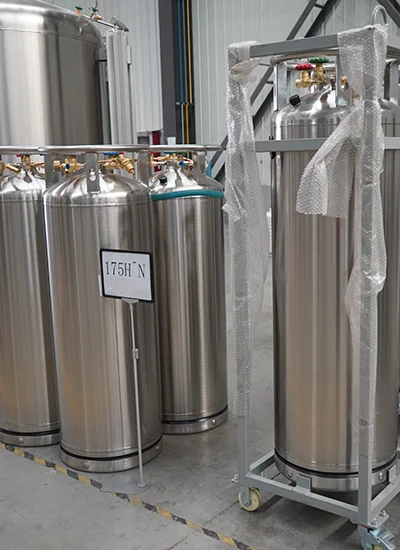
Liquid nitrogen dewar inspection is an important part of cryogenic equipment manufacturing. At BluNet, our manufacturing quality-control procedures cover weld examination, pressure testing, helium leak detection, internal cleanliness, and vacuum-insulation preparation to help ensure that each product meets its specified technical requirements.
Reliable inspection helps verify the integrity of pressure-containing components, identify potential leakage paths, and maintain the cleanliness required for cryogenic service. The inspection scope depends on the dewar design, operating conditions, applicable standards, and intended application.
1. Welding Inspection and Non-Destructive Testing
Weld quality is essential to the structural integrity and leak-tightness of liquid nitrogen dewars. During fabrication, designated weld seams are examined according to the applicable manufacturing codes, technical specifications, and approved inspection procedures.
The principal non-destructive testing methods may include:
- Radiographic testing (RT): Uses X-rays or gamma rays to examine welds for internal discontinuities, including porosity and certain types of incomplete fusion or cracking.
- Liquid penetrant testing (PT): Identifies surface-breaking discontinuities on suitable non-porous materials.
Where required by the approved inspection plan, 100% radiographic testing is performed on the specified weld seams. Penetrant testing provides complementary information about surface condition and weld integrity.
The testing scope, acceptance criteria, and inspection records are determined by the applicable standards and vessel specifications.
2. Pressure Testing and Gas-Tightness Verification
Pressure testing verifies the performance and integrity of pressure-containing components under specified test conditions. The test method and medium depend on the vessel design, applicable regulations, and approved manufacturing procedure.
BluNet uses high-purity nitrogen, with a purity of up to 99.999%, for designated testing procedures where appropriate.
The inner vessel undergoes the required pressure-performance and gas-tightness tests according to its technical specifications. Test pressures, holding periods, procedures, and acceptance criteria must be established before testing and documented as required.
Pneumatic testing requires appropriate safety precautions because compressed gas stores significant energy. The selected test method must be suitable for the vessel and permitted by the applicable requirements.
3. Helium Mass Spectrometer Leak Detection
Helium mass spectrometer leak detection is used to identify very small leaks in designated vessel boundaries, welds, and connections.
BluNet uses helium mass spectrometer leak detection equipment with a stated detection sensitivity of up to 2 × 10⁻⁹ Pa·L/s, subject to confirmation against the actual instrument specification and test conditions.
Helium leak testing differs from conventional pressure testing. A pressure test evaluates a vessel under specified pressure conditions, while helium leak detection measures leakage using a sensitive tracer-gas method.
The detector’s minimum detectable leak rate is not necessarily the acceptance limit for the finished vessel. The applicable acceptance criteria must be established by the approved inspection procedure.
For vacuum-insulated equipment, leak testing may be applied to designated boundaries of the inner vessel, outer shell, and associated connections, depending on the design and testing method.
4. Internal Surface Cleaning, Pickling, and Passivation
Internal surface cleanliness is important for cryogenic vessels, especially when the intended application requires strict control of moisture, oil, and other contaminants.
Where specified, internal metal surfaces undergo suitable pickling, passivation, or other approved surface-treatment procedures. The treatment method depends on the material, intended service, and required cleanliness level.
Following surface treatment, the vessel is cleaned and dried according to the approved procedure. The resulting surface condition is then checked against the applicable cleanliness requirements.
Pickling and passivation are not interchangeable processes. Pickling removes scale and certain surface contaminants, while passivation helps promote a protective passive layer on suitable metals, particularly stainless steel.
The specific treatment must be compatible with the vessel material and intended application.
5. Inspection for Oil and Organic Contamination
Oil residues and other contaminants can affect the cleanliness of cryogenic equipment. Visual inspection and appropriate verification methods are therefore important before final assembly.
BluNet uses ultraviolet black-light inspection equipment as a supplementary method to help identify oil residues and other substances that fluoresce under suitable ultraviolet light.
Because not all oils and organic contaminants fluoresce, ultraviolet inspection alone cannot establish that a surface is completely free of contamination. Additional cleaning, visual examination, or other verification methods may be required by the applicable cleanliness specification.
6. Controlled Assembly of Inner and Outer Containers
A vacuum-insulated liquid nitrogen dewar typically consists of an inner vessel and an outer shell separated by an insulation space. Controlled assembly helps reduce the introduction of dust, moisture, and other contaminants into this space.
BluNet’s manufacturing procedure targets completion of the specified assembly operations within 2.5 hours after the relevant cleaning and preparation stages.
After assembly, designated openings and spaces are protected with nitrogen or other approved methods, as appropriate to the vessel design and manufacturing procedure.
Proper handling, clean assembly conditions, and controlled exposure to the surrounding environment help maintain the cleanliness required for subsequent insulation and vacuum-processing operations.
7. Outer Surface Preparation and Sa 2.5 Abrasive Blasting
Surface preparation is essential for achieving suitable coating adhesion and corrosion protection on designated external steel surfaces.
Where specified, BluNet uses abrasive blasting to prepare steel surfaces to Sa 2.5 in accordance with ISO 8501-1.
Sa 2.5 is a surface-preparation grade describing very thorough abrasive blast cleaning. The prepared surface is checked for visible contaminants, and dust and loose particles are removed using suitable cleaning equipment.
The surface is then processed according to the subsequent coating or manufacturing requirements. Proper preparation supports coating quality and helps protect the equipment during service.
8. Vacuum Insulation Integrity and Perlite Filling
Vacuum insulation is a key feature of many liquid nitrogen dewars and cryogenic storage vessels. The inner vessel contains the cryogenic liquid, while the outer shell and evacuated interlayer help reduce heat transfer from the surroundings.
For applicable BluNet designs, specially selected perlite is used as insulation material in the interlayer. The material is processed according to the company’s manufacturing procedure before filling.
The insulation system’s performance depends on several factors:
- Vessel construction: The inner vessel, outer shell, welds, and connections must meet the relevant design requirements.
- Vacuum integrity: Leakage into the evacuated interlayer can impair insulation performance.
- Insulation preparation: Perlite quality, processing, and filling must follow the specified manufacturing procedure.
- Vacuum processing: Evacuation and verification must be completed according to the vessel design and approved production process.
Helium leak testing can help identify leakage paths, but it does not by itself establish the overall insulation performance of the finished dewar. Where required, vacuum-related checks and other specified quality-control procedures are used to verify the completed insulation system.
9. Nitrogen Purging and Final Protection
After manufacturing and inspection, designated pipelines, valves, and accessible internal passages are purged with nitrogen according to the approved cleaning and preservation procedure.
Nitrogen purging helps displace residual air and moisture from accessible flow paths. The required final cleanliness depends on the intended gas service and customer specifications.
After purging, designated pipe openings and valves are sealed to help prevent contamination during storage and transportation.
Where specified by the approved preservation procedure, high-purity nitrogen is introduced at a nominal pressure of 0.2 MPa, provided that this pressure is compatible with the design limits of the vessel, valves, and connected components.
The pressure reference, whether gauge or absolute, must be clearly defined in the manufacturing procedure. The preservation method should also account for temperature changes and the equipment’s storage conditions.
10. Liquid Nitrogen Dewar Inspection Checklist
The following table summarizes the principal inspection and manufacturing quality-control stages.
| Inspection Stage | Method | Purpose |
|---|---|---|
| Weld Inspection | Radiographic and penetrant testing, as specified | Identify relevant weld discontinuities |
| Pressure Testing | Approved pressure and gas-tightness tests | Verify pressure-containing integrity |
| Leak Detection | Helium mass spectrometer testing | Detect small leaks in designated boundaries |
| Internal Surface Treatment | Cleaning, pickling, and passivation where required | Meet specified surface cleanliness requirements |
| Contamination Inspection | Visual and ultraviolet inspection, as appropriate | Help identify oil residues and other contaminants |
| Assembly Control | Controlled handling and contamination protection | Maintain cleanliness during assembly |
| External Surface Preparation | Abrasive blasting to Sa 2.5 where specified | Prepare steel surfaces for coating |
| Insulation Preparation | Perlite filling and vacuum processing, where applicable | Support thermal insulation performance |
| Final Preservation | Nitrogen purging and protective sealing | Help maintain cleanliness before delivery |
11. Inspection Records and Quality Acceptance
Inspection records provide evidence that the required manufacturing and testing activities have been completed. Depending on the product specification and applicable requirements, quality documentation may include:
- Weld inspection and non-destructive testing reports.
- Pressure-test and gas-tightness test records.
- Helium leak-test results, including the applicable acceptance criteria.
- Material identification and traceability records, where required.
- Surface-treatment and cleanliness inspection records, where specified.
- Final inspection and product conformity documentation.
The exact documentation package depends on the vessel design, manufacturing standard, customer requirements, and applicable certification scheme.
Buyers evaluating a liquid nitrogen dewar should confirm which inspections are performed, which standards apply, and what records are supplied with the equipment.
How to Choose the Right Liquid Nitrogen Dewar?
Get a customized liquid nitrogen dewar solution tailored to your storage and operational needs.
12. Why Liquid Nitrogen Dewar Inspection Matters
Liquid nitrogen dewars operate under demanding cryogenic conditions. Their reliability depends on the combined performance of the vessel structure, welds, connections, internal cleanliness, and insulation system.
A suitable inspection program helps manufacturers and buyers:
- Verify the integrity of pressure-containing components.
- Identify relevant weld discontinuities and potential leakage paths.
- Maintain the required internal cleanliness for the intended application.
- Support the integrity of the vacuum-insulation system.
- Reduce the risk of contamination during storage and transportation.
- Maintain appropriate records of manufacturing quality and inspection results.
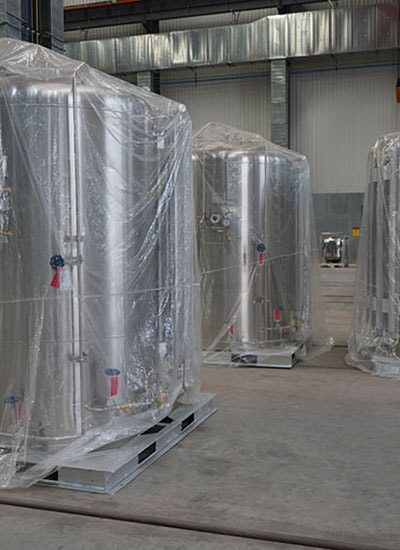
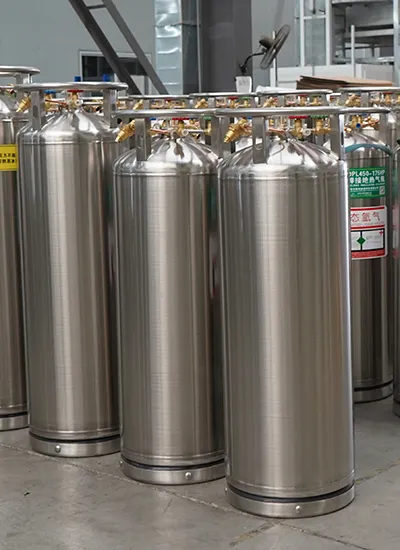
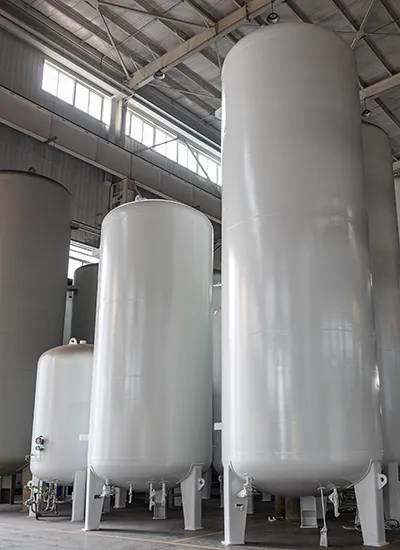
Inspection requirements vary according to equipment type. A non-pressurized liquid nitrogen storage dewar, a pressurized cryogenic liquid cylinder, and a large vacuum-insulated storage tank may require different testing procedures and acceptance criteria.
The inspection plan must therefore match the specific product design, operating conditions, applicable standards, and intended service.
13. BluNet Liquid Nitrogen Dewars and Cryogenic Equipment
BluNet manufactures industrial gas equipment and cryogenic storage solutions. Our manufacturing quality-control approach focuses on weld examination, pressure testing, leak detection, surface preparation, cleanliness control, and insulation-system preparation according to the applicable product requirements.
To explore our equipment, visit our dewar cylinder range and liquid nitrogen containers.
For related technical information, see our liquid nitrogen dewar sizing guide or explore our cryogenic storage tank products.
Contact BluNet to discuss your liquid nitrogen storage requirements, technical specifications, and the inspection documentation available for your selected equipment.
TECHNICAL FAQs
About Liquid Nitrogen Dewar Inspection
Depending on the design and applicable requirements, testing may include radiographic examination, penetrant testing, pressure testing, gas-tightness testing, helium leak detection, and inspection of the vacuum-insulation system.
Helium mass spectrometer testing can detect very small leaks in designated vessel boundaries and connections, helping verify compliance with specified leak-tightness requirements.
Sa 2.5 is a cleanliness grade for steel surfaces prepared by abrasive blasting. It is commonly used to prepare surfaces for protective coating.
Nitrogen purging and protective sealing help reduce exposure to air, moisture, and contaminants during storage and transportation. The preservation method and pressure must be compatible with the vessel design.
No. Inspection requirements depend on the vessel design, pressure rating, applicable standards, intended service, and customer specifications.

No comment