





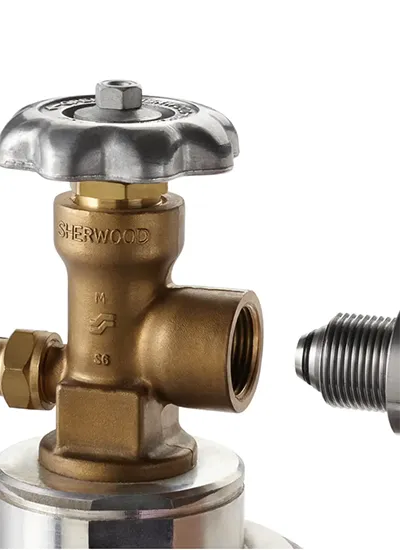
Gas cylinder valve connections must follow strict thread standards to ensure safe gas handling and compatibility between gas cylinders, regulators, and filling equipment.
Different countries and engineering organizations have developed their own standards for gas cylinder valve connections. The most widely used systems include CGA, DIN, BS, ISO, and regional standards used in Asia and Australia.
Understanding these thread standards helps prevent incorrect regulator connections, gas leaks, and safety hazards during gas storage and gas supply operations.
Why Gas Cylinder Thread Standards Are Important
Gas cylinder thread standards ensure that cylinders, regulators, and gas supply equipment can be safely connected and operated.
Key reasons these standards are important include:
- Preventing accidental gas cross-connection
- Ensuring regulator compatibility
- Maintaining safe gas pressure sealing
- Complying with national safety regulations
Different gases may use specific thread types to prevent accidental mixing of incompatible gases.
Major Gas Cylinder Thread Standards
Several international standards define gas cylinder valve thread types.
The most commonly used standards include:
- CGA (Compressed Gas Association)
- DIN (German Industrial Standard)
- BS (British Standard)
- ISO (International Organization for Standardization)
Each standard defines the thread dimensions, sealing methods, and connection types used in gas cylinder valves and regulators.
CGA Cylinder Thread Standards
The CGA system is widely used in North America and several international gas markets.
Different CGA numbers correspond to specific gas types and regulator connections.
| CGA Number | Gas Type | Typical Application |
|---|---|---|
| CGA 540 | Oxygen | Industrial oxygen cylinders |
| CGA 580 | Nitrogen / Argon | Inert gas cylinders |
| CGA 320 | Carbon dioxide | CO₂ cylinders |
These numbered connections help prevent incorrect regulator installation.
DIN Cylinder Thread Standards
DIN thread standards are widely used across Germany and many European countries.
These standards define both internal valve threads and regulator outlet connections.
| DIN Standard | Application |
|---|---|
| DIN 477 No.6 | Oxygen cylinders |
| DIN 477 No.9 | Nitrogen cylinders |
DIN standards are often used together with European EN gas cylinder regulations.
BS Cylinder Thread Standards
British Standard valve connections are defined under BS 341.
These connections are used primarily in the United Kingdom and several Commonwealth countries.
| BS Standard | Typical Application |
|---|---|
| BS 341 | Cylinder valve outlet threads |
| BS 2779 | Thread specifications for regulators |
These standards ensure compatibility between British gas cylinders and regulators.
ISO Gas Cylinder Thread Standards
ISO standards aim to harmonize gas cylinder connections internationally.
ISO specifications typically define:
- Thread profiles
- Sealing surfaces
- Tolerances
- Compatibility requirements
These standards support international gas equipment manufacturing and trade.
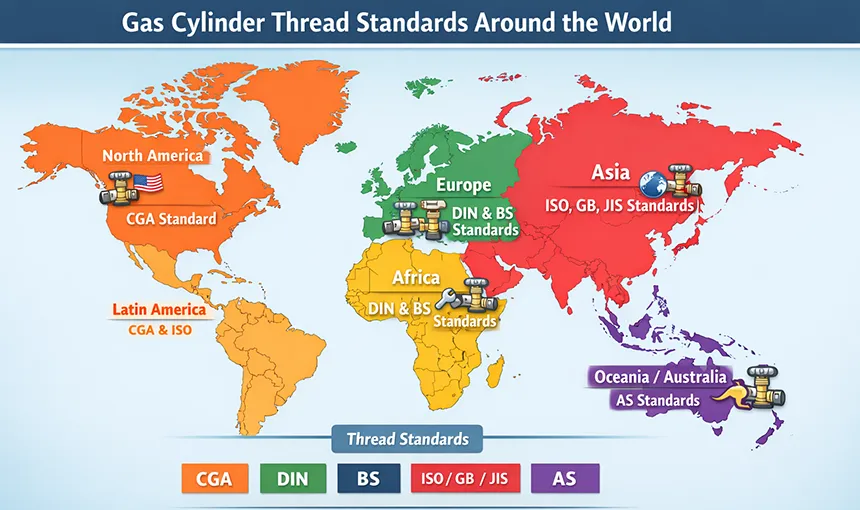
Global Gas Cylinder Thread Standards by Country and Region
Gas cylinder valve thread standards vary between countries and regions. Each standard is designed to ensure compatibility between cylinders, regulators, and gas supply systems within a specific market.
The following table shows commonly used thread standards across major gas markets.
| Country / Region | Common Thread Standard | Thread Details | Typical Applications |
|---|---|---|---|
| United States | CGA | CGA 540 / 580 / 320 / 510 / 350 (UNF threads, LH/RH depending on gas) | Oxygen, nitrogen, argon, CO₂, hydrogen cylinders |
| Canada | CGA | Same CGA numbered connections as US | Industrial and medical gas cylinders |
| United Kingdom | BS 341 | British Standard valve outlet threads | Gas cylinder valve connections |
| Germany | DIN 477 | W21.8 × 1/14 LH / RH | Industrial gas cylinders |
| Italy | UNI / DIN Compatible | DIN-based European threads | Industrial gas equipment |
| European Union | EN / DIN Standards | M25 × 2, W21.8, M18 × 1.5 (varies by gas) | Industrial and medical cylinders |
| France | AFNOR / DIN Compatible | European DIN-compatible threads | Industrial gas systems |
| China | GB Standards | W21.8 × 1/14, M22 × 1.5 | Industrial gas cylinders |
| Japan | JIS Standards | W22 × 14 | Industrial gas supply systems |
| India | BIS Standards | 5/8″ BSP LH and related national standards | Industrial and medical gases |
| Australia | AS 2473 | Type 10, Type 30, Type 50 connections | Industrial gas cylinders |
| Africa (Various Countries) | BS / DIN / ISO Compatible | Commonly W21.8, DIN 477, BSP threads | Industrial and medical gas systems |
| South America (Various Countries) | CGA / DIN / ISO Compatible | Depending on imported equipment standards | Industrial gas cylinders and regulators |
Safety Notes
- Left-hand (LH) threads are commonly used for oxygen and flammable gases to prevent accidental cross-connection.
- Right-hand (RH) threads are typically used for inert or non-flammable gases.
- Different gases use different thread standards even within the same country for safety reasons.
- Many countries adopt DIN, ISO, or BS standards based on historical industrial equipment supply.
Although many countries maintain their own national standards, modern gas cylinder systems increasingly adopt internationally compatible designs to support global gas equipment markets.
Regional Differences in Gas Cylinder Connections
Different regions developed their own cylinder thread standards based on historical engineering practices and safety regulations.
For example:
- North America primarily uses CGA numbered connections for different gases.
- Europe commonly uses DIN and EN standards.
- The United Kingdom historically adopted BS 341 valve connections.
- Asia often follows ISO or locally adapted standards such as GB or JIS.
Because of these regional differences, gas regulators designed for one country may not always be compatible with cylinders used in another region.
Why International Thread Compatibility Matters
For companies involved in global gas equipment supply, understanding international thread standards is essential.
Key reasons include:
- Ensuring regulator compatibility
- Preventing incorrect gas connections
- Complying with regional safety regulations
- Supporting international equipment trade
Many modern industrial gas suppliers provide regulators or adapters designed to support multiple international thread standards.
TECHNICAL FAQs
About Cylinder Valve Thread Standards: CGA, DIN, BS & ISO
Different thread types are used to prevent incorrect regulator connections and improve safety when handling compressed gases. Specific thread designs help ensure that incompatible gases cannot be accidentally connected to the wrong equipment.
Gas cylinder thread standards are not fully standardized worldwide. Different countries use systems such as CGA, DIN, BS, ISO, and national standards. However, international standards are gradually improving compatibility between gas equipment in global markets.
CGA thread standards are primarily used in North America and identify gas connections using specific numbered fittings. DIN standards are commonly used in Europe and define the dimensions and specifications of gas cylinder valve threads and regulator connections.
Gas cylinder thread types can be identified by checking valve markings, cylinder documentation, regulator compatibility charts, or national gas cylinder standards. Using the correct thread connection is essential for safe gas handling.
Gas cylinder thread standards define how a cylinder valve connects safely to a regulator. They are specified by several technical parameters, including thread diameter, pitch, thread type (parallel or tapered), sealing method (metal-to-metal or gasket), thread direction (left-hand or right-hand), and pressure rating.
These specifications ensure the valve and regulator fit correctly, seal tightly, and operate safely, following international standards such as CGA, DIN, BS, and ISO.

No comment