

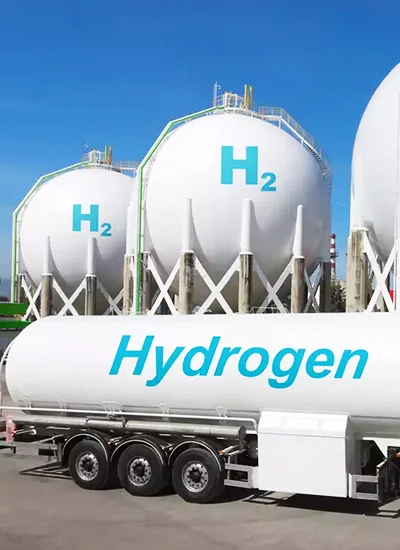
Liquid hydrogen (LH₂) is one of the most important cryogenic fuels in modern energy systems, aerospace engineering, and hydrogen infrastructure. With its exceptionally low boiling point and high energy-to-weight ratio, liquid hydrogen is widely used where performance, efficiency, and clean energy are critical.
This article gives an in-depth look at liquid hydrogen, including its properties, production process, applications, storage methods, and safety considerations.
What is Liquid Hydrogen?
Liquid hydrogen is hydrogen gas cooled to an extremely low temperature of −253°C (−423°F), where it condenses into a liquid.
This significantly reduces its volume, making it suitable for storage and transportation in high-demand applications.
Key Properties of Liquid Hydrogen
- Boiling Point: −253°C (−423°F)
- Density: ~70.8 kg/m³
- State: Cryogenic liquid
- Color & Odor: Colorless and odorless
- Expansion Ratio: ~1:850 (liquid to gas)
- Flammability: Highly flammable
Evaporation and Boil-Off
Liquid hydrogen continuously absorbs heat from its surroundings and evaporates. Even in insulated tanks,
boil-off gas is unavoidable and must be safely vented or managed.
Typical Boil-Off Rates
- Small Dewar: 1–5% per day
- Vacuum-insulated tank: 0.2–1% per day
- Large bulk tank: 0.1–0.3% per day
Liquid Hydrogen vs Hydrogen Gas
Liquid hydrogen provides higher storage density and is ideal for large-scale transport, while hydrogen gas is more suitable
for smaller, lower-demand applications.
Advantages and Limitations
Advantages
- High energy per unit mass
- Efficient bulk storage and transport
- Clean fuel with zero carbon emissions
Limitations
- Requires cryogenic storage systems
- High liquefaction energy cost
- Boil-off losses during storage
- Strict safety requirements
Liquid Hydrogen vs Hydrogen Gas
| Parameter | Liquid Hydrogen (LH₂) | Hydrogen Gas (H₂) |
|---|---|---|
| State | Cryogenic liquid | Gas |
| Temperature | −253°C | Ambient |
| Density | ~70.8 kg/m³ | ~0.0899 kg/m³ |
| Storage | Cryogenic tanks | High-pressure cylinders |
| Energy Density (by volume) | High | Low |
| Transport Efficiency | High (bulk) | Lower |
| Safety Risk | Cryogenic + flammable | Flammable + high pressure |
When to Use Liquid Hydrogen
- Large-scale hydrogen transport
- Aerospace propulsion
- Hydrogen fueling infrastructure
- High energy density requirements
When to Use Hydrogen Gas
- Small-scale industrial use
- On-site generation systems
- Low-volume applications
How is Liquid Hydrogen Made?
Liquid hydrogen is produced through a multi-stage industrial process:
1. Hydrogen Production
Hydrogen gas is typically produced by:
- Steam methane reforming (SMR)
- Electrolysis of water
2. Purification
Impurities such as moisture, oxygen, and nitrogen are removed.
3. Compression
Hydrogen gas is compressed to high pressure.
4. Cryogenic Cooling
The gas is cooled using heat exchangers and expansion cycles.
5. Liquefaction
Hydrogen is cooled to −253°C, converting it into a liquid.
This process is energy-intensive, consuming up to 30–40% of the hydrogen’s energy content.
Types of Hydrogen: Gray, Blue, and Green
Hydrogen is classified based on its production method and environmental impact. The three main types are gray, blue, and green hydrogen.
Gray Hydrogen
Produced from fossil fuels such as natural gas or coal through steam methane reforming (SMR).
- Low production cost
- Large-scale industrial production
- Accounts for ~95% of global hydrogen supply
CO₂ is released into the atmosphere, making it the most environmentally harmful form.
Blue Hydrogen
Produced in the same way as gray hydrogen, but CO₂ emissions are captured and stored or reused.
- Lower carbon emissions than gray hydrogen
- Uses carbon capture and storage (CCS)
- Higher energy demand due to capture process
A transitional solution toward low-carbon hydrogen production.
Green Hydrogen
Produced using renewable energy such as wind or solar through water electrolysis.
- No CO₂ emissions
- Fully renewable energy source
- Produces hydrogen and oxygen from water
The only fully sustainable and carbon-free hydrogen production method.
Applications
Liquid hydrogen (LH2) is used in various industries due to its high energy density and cryogenic properties.
Aerospace Industry
- Rocket fuel for launch vehicles
- Used with liquid oxygen for propulsion
Hydrogen Energy and Mobility
- Fuel for hydrogen fuel cell vehicles
- Used in hydrogen refueling stations
Energy Storage
- Long-term renewable energy storage
- Grid balancing
Industrial Applications
- Semiconductor manufacturing
- Metal processing
- Cooling applications
Research and Cryogenics
- Scientific experiments
- Particle accelerators
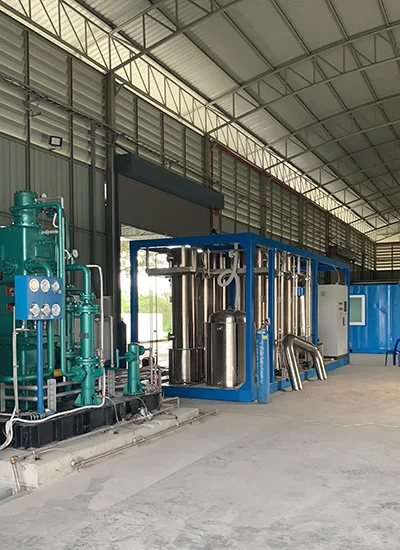
Hydrogen Storage and Supply Solutions
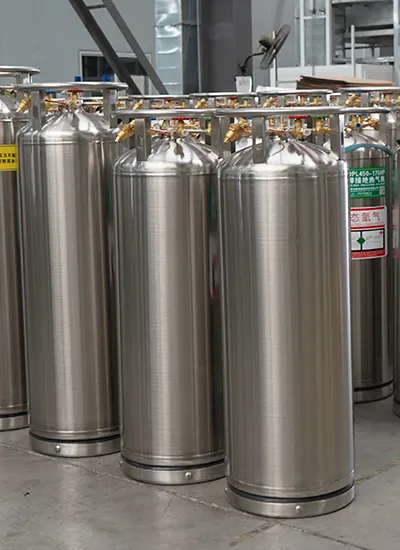
- Cryogenic dewars designed for small-scale storage and research applications
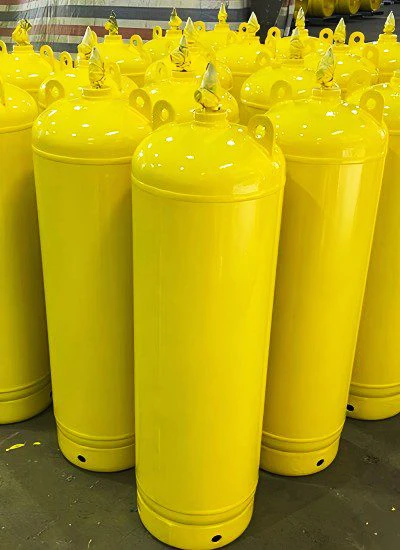
- Liquid hydrogen (LH₂) cylinders suitable for medium-volume supply
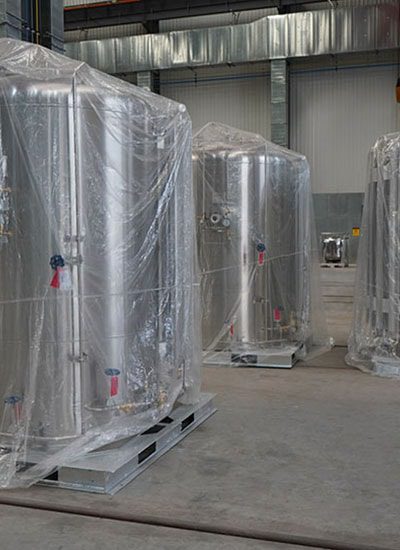
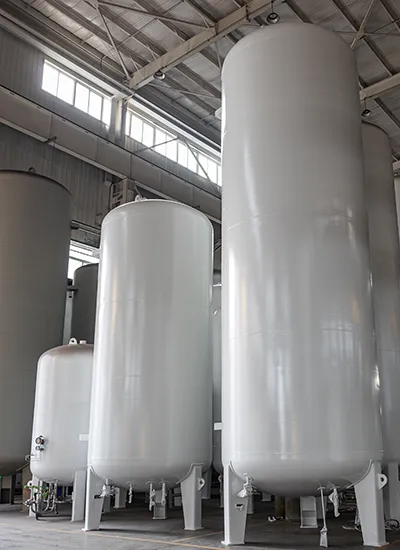
- Bulk cryogenic tanks engineered for large-scale industrial storage
- Hydrogen tube trailers and ISO tank containers optimized for efficient transportation
Liquid Hydrogen vs Other Gases
The main difference between liquid hydrogen (LH2) and other industrial gases is not just the gas itself—it’s the state, storage physics, and energy behavior under cryogenic conditions.
1. Extreme Temperature Requirement
- LH2 must be stored at −253°C
- Most gases (oxygen, nitrogen, argon) liquefy between (−183°C to −196°C)
- Hydrogen is the coldest industrial liquid
2. Very Low Volumetric Density
- LH2: ~70.8 kg/m³
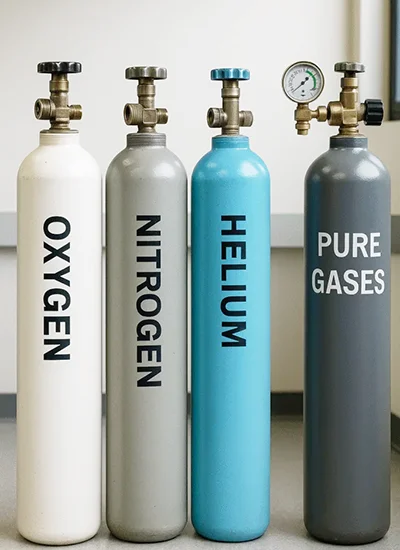
- Liquid nitrogen: ~808 kg/m³
- Much lower density than other cryogenic liquids
3. Extremely High Expansion Ratio
- 1 liter LH2 → ~850 liters gas
- Requires strong safety and ventilation systems
4. Storage Difficulty
- Continuous boil-off losses
- Requires vacuum insulation
- Needs venting or reliquefaction
5. Safety Behavior
- Highly flammable
- Wide ignition range (4–75%)
- Invisible flame hazard
6. Energy Density
- Very high energy per kg (~120 MJ/kg)
- Low energy per volume
Looking for a Reliable Liquid Hydrogen Solution?
Whether you need bulk storage, transport, or on-site supply,
Safety Considerations
- Use cryogenic protective equipment
- Ensure proper ventilation
- Install hydrogen leak detection systems
- Avoid ignition sources
- Use pressure relief systems
TECHNICAL FAQs
About Liquid Hydrogen and LH2 Supply
Liquid hydrogen (LH2) is hydrogen gas cooled to -253°C (-423°F), where it becomes a cryogenic liquid. It is used in aerospace, energy storage, and industrial applications due to its high energy density.
Liquid hydrogen is produced by first generating hydrogen gas through steam methane reforming or electrolysis, then purifying, compressing, and cooling it to -253°C until it liquefies.
Liquid hydrogen is used in rocket propulsion, hydrogen fuel cell vehicles, renewable energy storage, semiconductor manufacturing, and cryogenic research applications such as particle accelerators.
Liquid hydrogen is stored at cryogenic temperatures and has much higher volumetric energy density, while hydrogen gas is stored under high pressure and is used for smaller-scale industrial applications.
Liquid hydrogen is safe when handled properly, but it requires strict safety measures due to extreme cold temperatures and flammability. Proper ventilation, protective equipment, and leak detection systems are essential.
Liquid hydrogen is difficult to store because it must be kept at -253°C and continuously absorbs heat from the environment, causing boil-off losses even in highly insulated cryogenic tanks.

No comment