

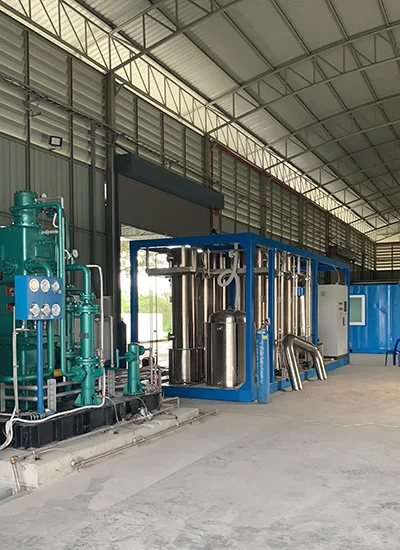
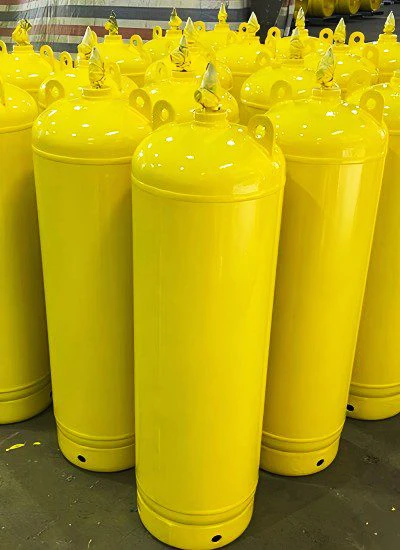
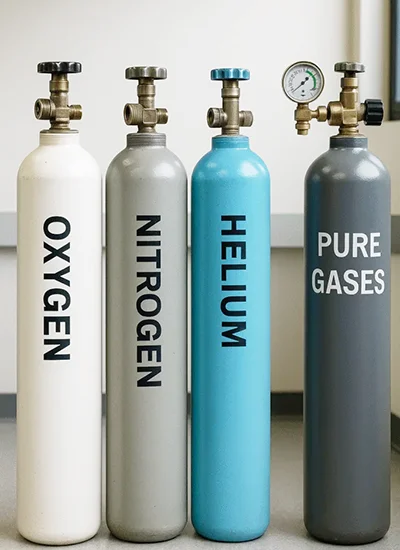
A liquid nitrogen vaporizer is a cryogenic device used to convert liquid nitrogen (LN₂) at -196°C into usable gaseous nitrogen. The process relies on controlled heat transfer to trigger a phase change from liquid to gas, ensuring a stable and continuous nitrogen supply for industrial applications.
This system is widely used in manufacturing, food processing, electronics, medical industries, and chemical plants where on-site nitrogen gas generation is required.
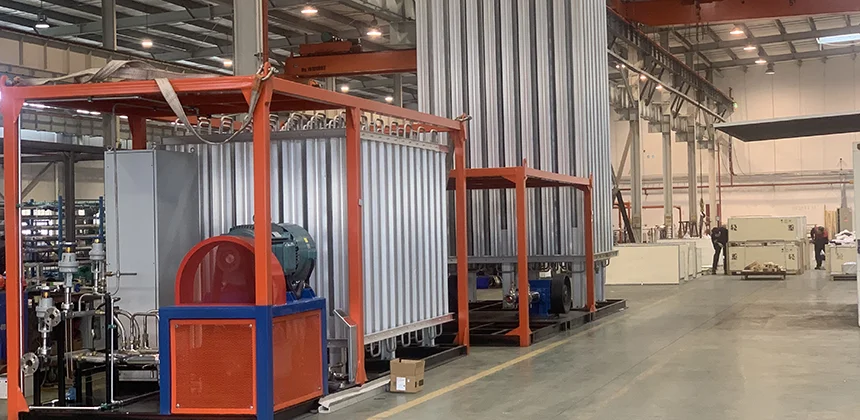
Working Principle
The working principle is based on a simple thermodynamic process: when liquid nitrogen absorbs heat energy, it reaches its boiling point and changes state from liquid to gas.
This phase change is carefully controlled inside the vaporizer to maintain stable pressure and safe gas output.
Step-by-Step Operation Process
- 1. Liquid Nitrogen Supply
LN₂ is delivered from a cryo storage tank or cryogenic dewar through insulated pipelines. - 2. Heat Exchange
The vaporizer transfers heat from ambient air, electricity, steam, or warm water depending on system type. - 3. Vaporisation
Liquid nitrogen absorbs heat and converts into gaseous nitrogen at -196°C boiling point. - 4. Pressure Stabilisation
The gas is regulated to maintain safe and consistent output pressure. - 5. Gas Delivery
Nitrogen gas is supplied to industrial systems for direct use.
Cryogenic Vaporizer Comparison Overview
This table provides a simple comparison of the four major cryogenic vaporizer systems used in industrial gas applications.
| Cryogenic System | Key Gas | Main Risk | Typical Applications |
|---|---|---|---|
| LN₂ Vaporizer | Nitrogen (N₂) | Oxygen displacement | Food, electronics, medical, metallurgy |
| LNG Vaporizer | Natural Gas | Flammability | Energy, power plants, LNG terminals |
| LAR Vaporizer | Argon (Ar) | Asphyxiation risk | Welding, metallurgy, laboratory gas |
| LOX Vaporizer | Oxygen (O₂) | Fire acceleration | Medical, aerospace, steel production |
Types of Nitrogen Vaporizers
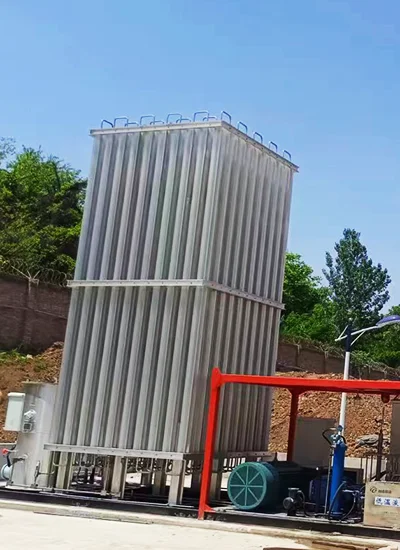
Ambient Air Vaporizer
Uses natural air heat and aluminium finned tubes for efficient energy-free vaporisation.
Electric Heated Vaporizer
Uses electric heating elements for controlled and stable gas output.
Steam Heated Vaporizer
Uses steam as a heat source for high-capacity industrial applications.
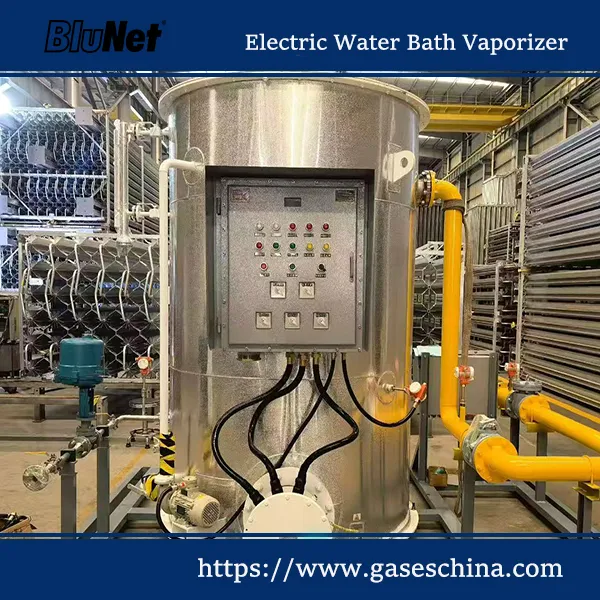
Water Bath Vaporizer
Uses warm water to ensure uniform and stable heat transfer.
Key Components
- Heat exchange tubes (aluminium or stainless steel)
- Inlet and outlet valves
- Pressure regulator
- Flow control system
- Safety relief valves
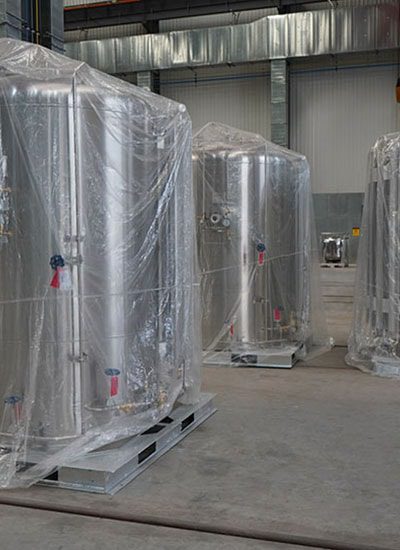
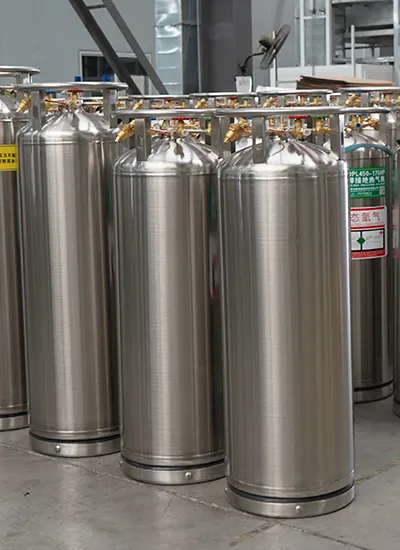
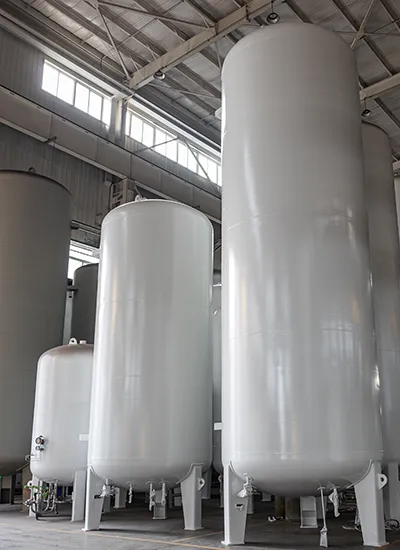
Industrial Applications
Liquid nitrogen vaporizers are essential in industries requiring controlled nitrogen environments:
- Food freezing and preservation
- Metal processing and heat treatment
- Electronics and semiconductor manufacturing
- Medical and pharmaceutical systems
- Chemical inerting and blanketing
Safety Considerations
- Pressure relief systems to prevent over-pressurisation
- Insulated pipelines to reduce heat loss
- Oxygen deficiency monitoring in enclosed spaces
- Proper ventilation during operation
Need a Reliable Liquid Nitrogen Vaporizer System?
Efficient cryogenic vaporization for reliable nitrogen gas supply.
Conclusion
The liquid nitrogen vaporizer operates through controlled heat transfer and phase change, ensuring safe and efficient conversion of cryogenic liquid into usable nitrogen gas. Its role is essential in modern industrial gas supply systems where reliability and continuous flow are critical.
TECHNICAL FAQs
FAQs About High-Performance Liquid Nitrogen Vaporizer
A liquid nitrogen vaporizer works by using heat from air or an external source to warm liquid nitrogen until it turns into nitrogen gas through phase change.
Cryogenic vaporizers transfer heat into very cold liquids like nitrogen, oxygen, argon, or LNG, causing them to evaporate into controlled gas flow for industrial use.
LN2 vaporizers produce nitrogen gas, LNG vaporizers convert natural gas, LOX vaporizers produce oxygen, and argon vaporizers supply inert argon gas for industrial processes.
LOX vaporizers are more risky because oxygen supports combustion and can increase fire hazards, while nitrogen mainly causes oxygen displacement in enclosed areas.
LNG vaporizers are used in power plants, gas pipelines, and industrial energy systems to convert liquid natural gas into usable fuel gas.
Safety depends on gas type, but nitrogen vaporizers are generally safer because nitrogen is inert and non-flammable, unlike oxygen or LNG systems.
Ambient air vaporizers use natural heat from the environment, while electric vaporizers use heating elements to provide controlled and stable vaporization.
The choice depends on the gas type, safety requirements, flow rate, and industry application such as food processing, welding, medical, or energy systems.
Liquid nitrogen boils at -196°C, LNG at around -162°C, liquid oxygen at -183°C, and liquid argon at -186°C, which affects how much heat is needed for vaporization.

No comment