

Compressed natural gas (CNG) cylinders are pressure vessels designed to store natural gas at high pressure for vehicle fuel systems and other approved applications. Selecting the right cylinder requires consideration of construction type, working pressure, capacity, applicable standards, installation requirements and intended service conditions.
This guide explains Type 1, Type 2, Type 3 and Type 4 CNG cylinders, relevant standards, common applications and the main factors to consider when specifying a CNG cylinder.
This guide focuses specifically on CNG cylinders. For a broader overview of industrial gas cylinder types, materials, standards, valves and safety requirements, see our Gas Cylinders Guide.
1. What Is a CNG Cylinder?
A CNG cylinder is a refillable pressure vessel designed to contain compressed natural gas under specified operating conditions. Unlike liquefied natural gas (LNG), which is stored as a cryogenic liquid, CNG remains gaseous and is stored under high pressure.
CNG cylinders are used in natural gas vehicles, including passenger cars, buses and trucks. Purpose-designed pressure vessels are also used in certain compressed natural gas storage, cascade and mobile gas supply systems. The applicable requirements depend on the specific equipment and intended use.
A cylinder assembly may include a pressure-retaining body, valve connection, identification markings and required protective or safety devices. The cylinder must be suitable for the gas, pressure, temperature range, installation environment and applicable regulations.
2. Types of CNG Cylinders
Type 1 CNG Cylinders
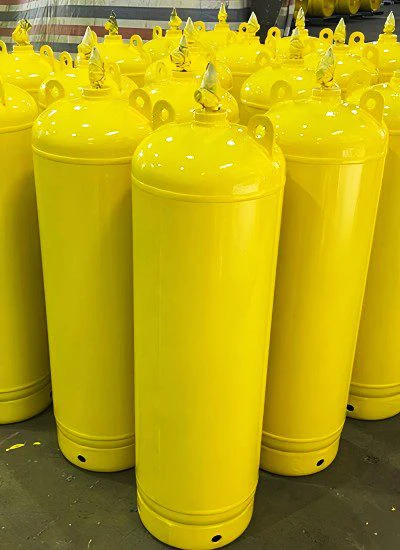
Type 1 cylinders have an all-metal pressure-retaining body, commonly made from seamless steel for CNG applications. The metal body carries the pressure load without composite overwrap.
- All-metal construction without composite reinforcement.
- Generally heavier than comparable composite cylinder designs.
- Established metal-cylinder manufacturing and inspection processes.
- Available in different capacities and pressure ratings according to the approved design.
Explore our ISO 11439 Type 1 CNG cylinders for product specifications and available manufacturing options.
Type 2 CNG Cylinders
Type 2 cylinders use a metal liner with composite reinforcement wrapped around the cylindrical body. The ends do not have the same composite coverage as the wrapped body. The metal and composite components work together to withstand the design pressure.
Type 3 CNG Cylinders
Type 3 cylinders have a metal liner, commonly aluminium, with full composite reinforcement around the body and ends. The composite structure carries a substantial part of the pressure load, allowing weight savings compared with many all-metal designs.
Type 4 CNG Cylinders
Type 4 cylinders use a non-metallic, typically polymer, liner with full composite reinforcement. The composite structure provides the principal pressure-bearing strength, while the liner provides a gas barrier. Permeation performance, design qualification, installation and service requirements are important selection considerations.
3. Type 1 vs. Type 2 vs. Type 3 vs. Type 4
The following table summarizes the principal construction differences. Actual weight, cost, capacity and service life depend on the specific design, materials, manufacturing quality and operating conditions.
| Feature | Type 1 | Type 2 | Type 3 | Type 4 |
|---|---|---|---|---|
| Construction | All-metal | Metal liner, partial composite wrap | Metal liner, full composite wrap | Non-metallic liner, full composite wrap |
| Pressure-Bearing Structure | Metal body | Metal and composite | Metal liner and composite | Composite structure |
| Relative Weight | Generally highest | Often lower than Type 1 | Often lower than Type 1 | Often among the lightest |
| Key Consideration | Weight and corrosion protection | Liner and composite integrity | Liner and composite integrity | Permeation and composite integrity |
This is a general comparison, not a substitute for certified product specifications or application-specific engineering advice.
4. What Is ISO 11439?
ISO 11439 is an international standard titled Gas cylinders — High pressure cylinders for the on-board storage of natural gas as a fuel for automotive vehicles. It specifies requirements for refillable high-pressure CNG cylinders intended for on-board vehicle fuel storage and addresses Type 1, Type 2, Type 3 and Type 4 constructions.
The standard uses 200 bar as a reference working pressure, while other working pressures may be permitted under the applicable design requirements. Confirm the edition, amendments, certification and approved operating conditions for the particular cylinder.
ISO 11439 should not automatically be assumed to cover every stationary CNG vessel, cylinder bundle, cascade or transport system. The applicable standards and regulations depend on equipment type, installation and destination market. See the ISO 11439 standard page for reference information.
5. CNG Cylinder Sizes and Working Pressure
CNG cylinders are available in different water capacities, dimensions and rated working pressures. Vehicle-cylinder selection depends on available space, required driving range, vehicle design and permitted installed weight. Storage and transportation systems require separate assessments of gas demand, storage capacity, charging and discharge rates, and system pressure.
- Water capacity: The internal volume of the cylinder, usually expressed in litres.
- Working pressure: The rated pressure under specified reference conditions.
- Test pressure: The pressure applied during a prescribed test.
- External dimensions: Length, diameter and connection arrangement.
- Tare weight: The empty cylinder weight, excluding the stored gas.
- Gas capacity: The quantity of gas stored under specified pressure and temperature conditions.
Water capacity is not the same as the volume of gas delivered. The quantity stored depends on pressure, temperature, gas composition and compressibility. Always use approved product data to confirm the rated pressure, dimensions and capacity.
6. Applications of CNG Cylinders
Natural Gas Vehicles
CNG cylinders store fuel for compatible passenger cars, taxis, buses and commercial trucks. The cylinder must be approved for the intended vehicle application and installed with suitable mounting arrangements, valves and required safety devices.
CNG Cascade Storage Systems
A CNG cascade system connects multiple pressure vessels through suitable manifolds and controls to store and dispense compressed natural gas. Such systems may be used in refuelling stations and other approved installations. The applicable requirements must be confirmed for the complete system; vehicle-cylinder standards should not automatically be assumed to cover stationary equipment.
Industrial and Mobile CNG Supply
Purpose-designed pressure-vessel equipment can deliver compressed natural gas to users without pipeline connections. Options may include approved cylinder bundles, tube trailers and other mobile storage systems. Selection depends on gas quantity, pressure, delivery frequency, transport regulations and unloading arrangements.
7. Advantages and Limitations of Type 1 CNG Cylinders
Advantages
- All-metal construction without composite overwrap.
- Established seamless-metal-cylinder manufacturing and inspection methods.
- Clear metal-body material identification and inspection requirements.
- Potential cost advantages in some applications, depending on design and manufacturing.
- Availability in different approved capacities and configurations.
Limitations
- Generally heavier than comparable composite designs.
- Requires appropriate corrosion protection and inspection.
- Weight and dimensions may affect vehicle payload and packaging.
- Must still meet the approvals and operating requirements for the intended application.
Type 1 cylinders should be evaluated against the complete system requirements rather than selected solely because they use metal construction or may have a lower initial price.
Looking for a Reliable Pressure Gas Supply Solution?
Whether you need compressed gas storage, transport, or on-site supply,
8. How to Choose the Right CNG Cylinder
- Define the application. Establish whether the cylinder is intended for a vehicle, stationary cascade, transport system or another use.
- Confirm the applicable standard. Identify the required standard, certification and market-specific regulations.
- Determine pressure and capacity. Calculate the storage requirement and confirm the rated pressure for the approved design.
- Evaluate dimensions and weight. Check installation space, mounting, payload and maintenance access.
- Review materials and quality controls. Confirm material specifications, traceability, manufacturing records and required tests.
- Check valves and safety devices. Verify connection compatibility and required pressure-relief or protective equipment.
- Confirm service life and inspection. Follow the cylinder markings, manufacturer instructions and applicable retirement requirements.
- Compare total cost. Consider purchase, installation, maintenance, inspection, weight and operating requirements.
9. CNG Cylinder Manufacturing and Quality Control
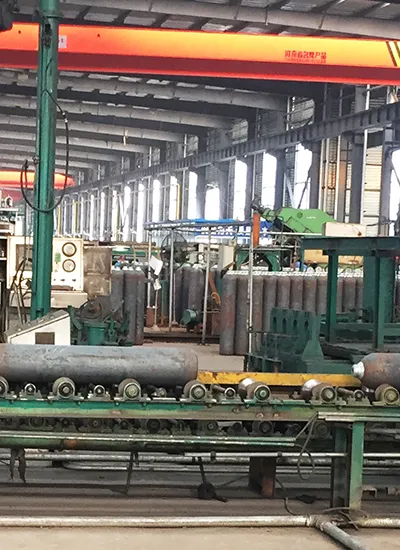
Manufacturing processes vary according to cylinder type, materials and approved design. Seamless steel Type 1 cylinders commonly involve steel preparation, hot forming, heat treatment, machining, surface treatment and prescribed inspection and testing operations.
Quality control may include dimensional inspection, material verification, heat-treatment records, wall-thickness measurements, non-destructive examination where required, pressure testing, leak testing and final marking. Composite cylinders require additional controls for liner manufacture, reinforcement materials, winding and curing where applicable, and design qualification.
Manufacturing and testing must follow the applicable standard and approved production specifications. Buyers should review the technical documentation for the exact cylinder rather than assume that all cylinder types require identical tests.
TECHNICAL FAQs
About CNG Gas Cylinders Guide
Type 1 CNG cylinders have an all-metal pressure-retaining body. Type 4 cylinders use a non-metallic liner with full composite reinforcement. Type 4 designs can offer substantial weight savings, while Type 1 designs avoid composite overwrap. The appropriate choice depends on the application and approved design.
Many Type 1 CNG cylinders use seamless steel construction. The material and manufacturing method should be confirmed against the specifications and certification of the particular cylinder.
No. ISO 11439 addresses high-pressure CNG cylinders for on-board automotive fuel storage. Stationary CNG storage, cylinder bundles and transport systems may be subject to different standards and regulatory requirements.
The required working pressure depends on the application, system design, filling conditions and applicable standard. The rated pressure should be confirmed from the approved product documentation, and all connected components must be compatible with the specified pressure.
Service life varies according to cylinder design, markings, applicable regulations and manufacturer instructions. Users should follow the specified inspection, maintenance and retirement requirements and never use a cylinder beyond its permitted service life.
Only when the specific cylinder is approved for that use and complies with the applicable pressure-vessel and installation requirements. Approval for vehicle storage does not automatically establish suitability for stationary CNG storage.
Provide the intended application, required standard, working pressure, water capacity, dimensions, quantity, destination market and required certifications or accessories. These details help the manufacturer assess suitable approved CNG cylinder configurations.
Conclusion
Selecting a CNG cylinder requires balancing construction type, pressure rating, capacity, weight, cost, applicable standards and service requirements. Type 1 cylinders offer an all-metal design, while Type 2, Type 3 and Type 4 cylinders use different composite reinforcement configurations to address weight and performance requirements.
Before purchasing, confirm the intended application, certification, technical specifications and service-life requirements with the manufacturer. Explore our Type 1 CNG cylinders or browse the CNG and natural gas cylinder range to review relevant products.