


What Are ISO Tank Containers?
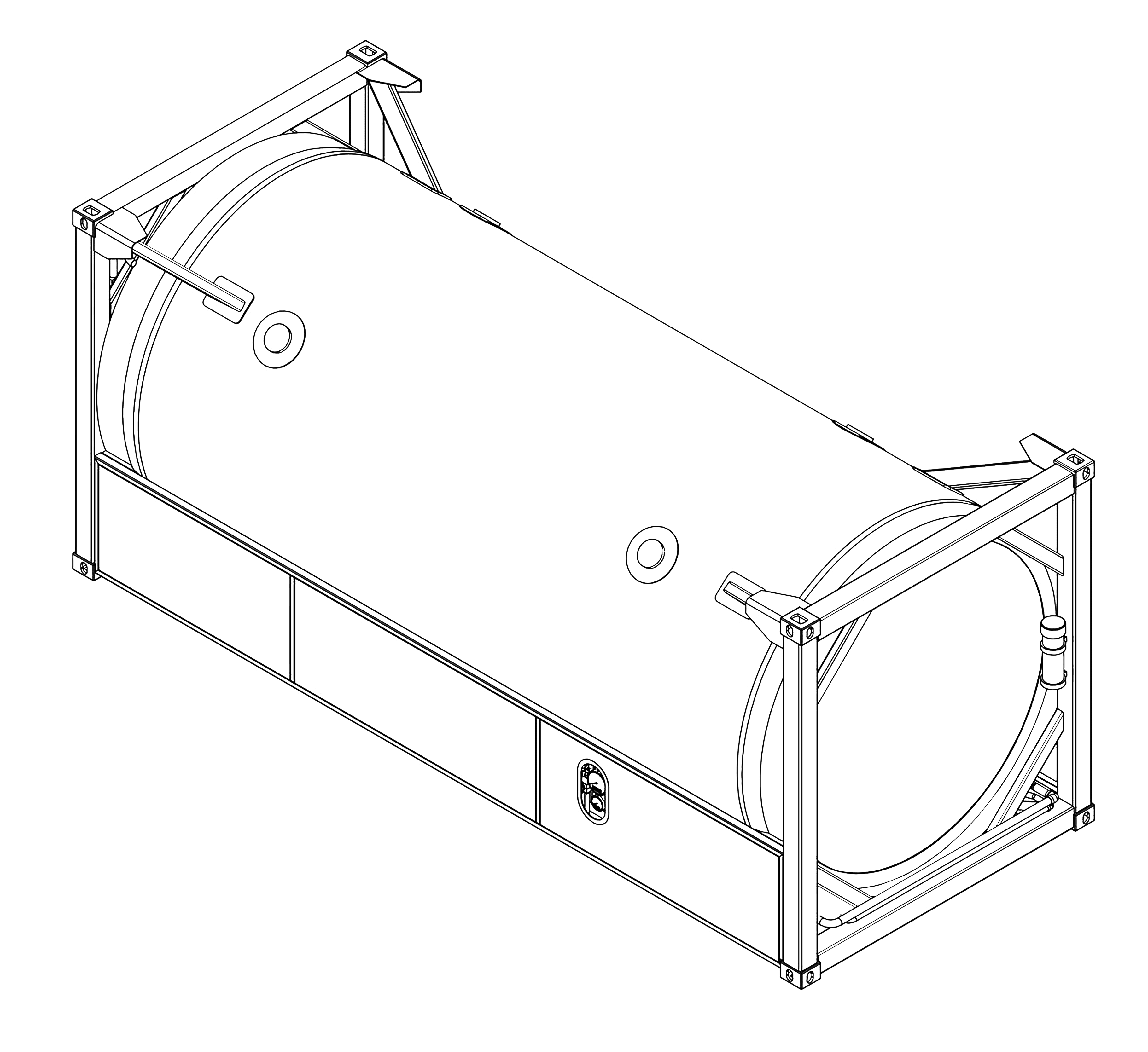
ISO tank containers are standardized intermodal pressure vessels designed for the bulk transportation and storage of liquids, gases, and powders. They are built in accordance with international structural and dimensional standards established by the International Organization for Standardization to ensure compatibility across global road, rail, and maritime transport systems.
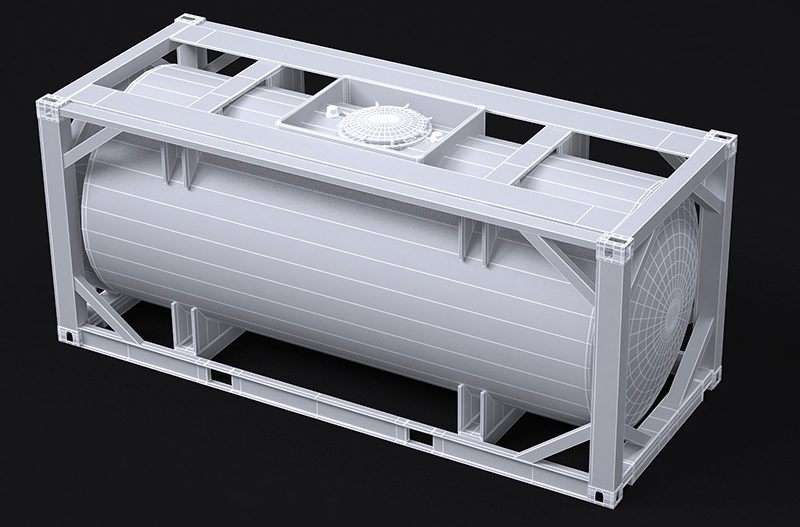
A typical ISO tank consists of:
- A stainless-steel pressure vessel
- A protective outer frame
- Thermal insulation system (for temperature-sensitive cargo)
- Integrated piping and safety systems
Standard capacity ranges between 14,000 and 26,000 liters, although specialized cryogenic models may vary.
ISO tanks are widely used for:
- Industrial chemicals
- Food-grade liquids
- Hazardous materials
- Cryogenic liquefied gases (LNG, LOX, LIN, LAr, LCO₂)
Their intermodal compatibility makes them one of the most efficient bulk transport solutions in global logistics.
Construction of a 40-ft LNG ISO Tank
A 40-foot cryogenic LNG ISO tank is engineered as a vacuum-insulated pressure vessel system designed for extremely low-temperature liquefied gases.
1. Structural Frame & Corner Castings
- ISO-compliant steel frame
- Standard corner fittings for stacking and lifting
- Certified for intermodal transport
Compliance typically follows ISO 1496-3 requirements.
2. Inner Vessel (Cryogenic Tank)
The inner vessel is manufactured from cryogenic-grade stainless steel and designed to withstand temperatures as low as −196 °C.
Key features:
- ASME pressure vessel design
- Internal surge baffles (optional)
- Pressure relief and burst disc systems
- Designed per ASME Section VIII
For LNG applications, tanks must comply with UN T75 classification.
3. Outer Jacket & Vacuum Insulation
The outer shell is typically carbon steel, enclosing:
- Multi-layer insulation (MLI)
- High vacuum space (≤ 0.1 Pa)
- Evaporation rate ≤ 0.35% per day
This vacuum-jacketed system minimizes heat ingress and ensures stable cryogenic retention during transport.
4. Piping & Valve System
Standard cryogenic ISO tanks include:
- Top filling valve
- Bottom discharge valve
- Pressure relief valve
- Level indicator
- Vaporizer port
- Pressure gauge
- Emergency shut-off device
Layout is engineered to comply with hazardous material transport codes.
Benefits of using ISO tank containers.
ISO tank containers offer several benefits over traditional methods of transporting bulk liquids and gases. They are more cost-effective, as they can be easily transported by road, rail, or sea without additional packaging or handling.
They are also more versatile, as they can transport various liquids and gases, including hazardous materials. Additionally, ISO containers are more environmentally friendly, reducing the need for single-use packaging and minimizing the risk of spills or leaks during transportation.
ISO Tank Containers are used for the storage and transportation of hazardous and non-hazardous substances such as liquids. powders and gases. ISO tanks consist of stainless-steel with insulation and an aluminum or polyurethane protective layer. These tanks are safe and secure for transporting different types of materials.
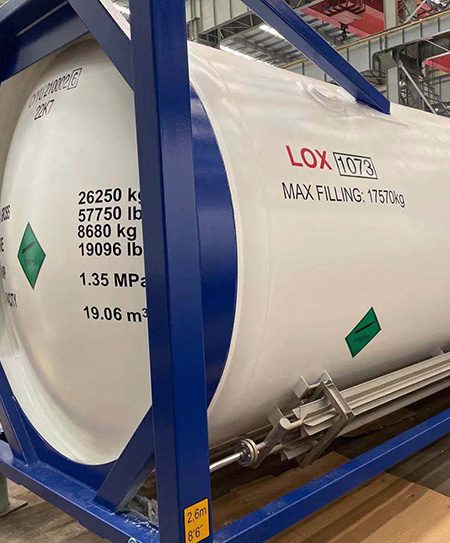
ISO tanks are designed to transport the following items:
- Liquids
- Gasses
- Powders
- Chemicals
- Perishable and non-perishable food items
- Alcohol
- Non-alcoholic liquids
ISO tank containers have become synonymous with efficiency and safety. Tanks can transport large quantities of bulk easily, and they are also incredibly durable. Tank containers have a lifespan of 20 to 35+ years.
How do ISO tank containers work?
ISO tank containers work by using a combination of pressure and gravity to transport bulk liquids and gases. The containers are filled through a top-mounted valve and can be pressurized to help move the contents out of the container. They also have a bottom discharge valve allowing easy unloading of the contents. ISO containers are designed to be compatible with a wide range of transportation modes, including trucks, trains, and ships, making them a flexible and efficient option for transporting bulk liquids and gases.
ISO certification for ISO tanks
The International Organization for Standardization (ISO) upholds industrial and commercial standards for various products and services. This ensures consistency in both quality and reliability.
When a tank container is manufactured, it must comply with the ISO standards’ size, durability, and strength. Each tank is strictly inspected, and only then is it certified. The manufacturer also issues a container safety certificate (CSC).
Types of ISO tank containers
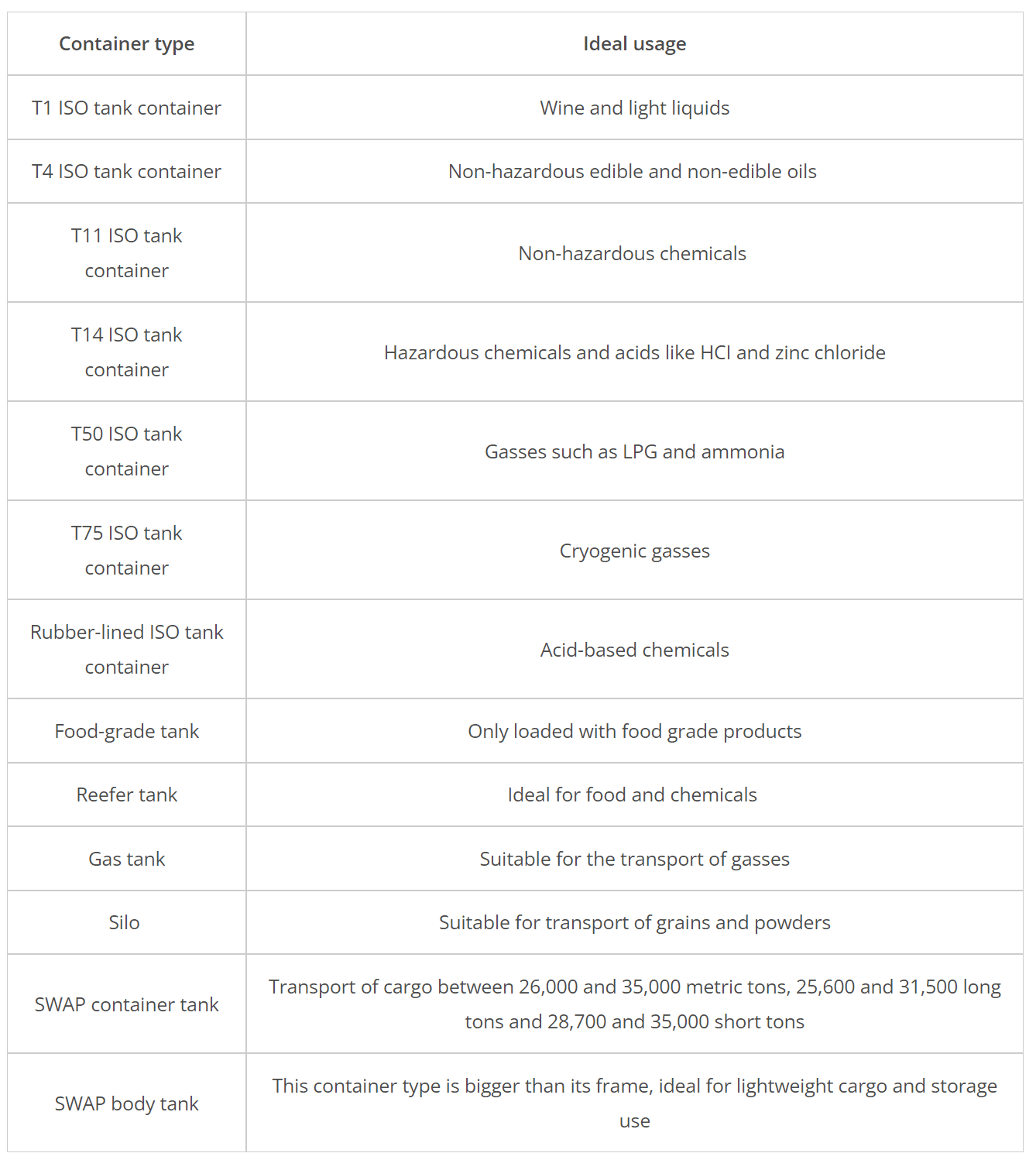
Before you go ahead and buy or lease tanks, you should know that there are specific tanks for specific types of cargo. The chart below shows the different tanks and what they can transport and store safely.
Benefits of using ISO tank containers.
ISO tank containers offer several benefits over traditional methods of transporting bulk liquids and gases. They are more cost-effective, as they can be easily transported by road, rail, or sea without additional packaging or handling. They are also more versatile, as they can transport various liquids and gases, including hazardous materials. Additionally, ISO tank containers are more environmentally friendly, reducing the need for single-use packaging and minimizing the risk of spills or leaks during transportation.
Certificates and Approvals
Cryogenic ISO tank containers for LNG, LIN, LOX, LAr, and LCO₂ must comply with international design and transport regulations to ensure safety, structural integrity, and global intermodal acceptance.
Key Certifications
- UN T75 – Approval for cryogenic liquefied gas transport under UN regulations.
- ISO 1496-3 – Structural and testing standard for tank containers.
- ASME Section VIII – Pressure vessel design and fabrication compliance.
- PED (2014/68/EU) – CE-marked approval for the European market.
- ADR / RID – European road and rail transport regulations.
- IMDG Code – Mandatory compliance for maritime transport.
- CSC Plate – Container Safety Convention structural approval.
- DOT (USA) – U.S. hazardous materials transport compliance.
Full certification ensures legal transport, operational safety, and global market access for cryogenic ISO tank containers.
Safety Considerations
Although ISO tanks are engineered for high safety margins, proper operational control is essential.
Key requirements:
- Periodic hydrostatic testing
- Vacuum integrity checks (for cryogenic tanks)
- Valve inspection and maintenance
- Proper cargo compatibility verification
- Certified operator training
Failure to maintain inspection schedules may result in compliance violations and safety hazards.

No comment