

ISO tank containers are specialized intermodal pressure vessels engineered for the safe transportation and storage of bulk liquids, gases, and powders. Designed according to international dimensional and structural standards, ISO tanks can be transported efficiently by road, rail, and maritime networks worldwide.
Modern industrial supply chains rely on ISO tank containers because they provide higher transportation efficiency, improved safety, reduced cargo handling, and lower environmental impact compared with traditional drums, cylinders, and bulk packaging systems.
For cryogenic transportation applications, ISO tanks require advanced engineering technologies, including vacuum insulation systems, stainless steel pressure vessels, and safety control systems to maintain extremely low temperatures during long-distance delivery.
ISO tank containers are widely used across industries including:
- Industrial gases
- LNG transportation
- Chemical processing
- Petrochemical logistics
- Food and beverage transportation
- Pharmaceutical manufacturing
- Clean energy applications
Cryogenic ISO tank containers are commonly designed for transporting liquefied gases such as:
- LNG (Liquefied Natural Gas)
- LOX (Liquid Oxygen)
- LIN (Liquid Nitrogen)
- LAr (Liquid Argon)
- LCO₂ (Liquid Carbon Dioxide)
Compared with conventional bulk transportation methods, ISO tank containers provide higher loading capacity, reduced contamination risk, improved operational safety, and long service life.
What Is an ISO Tank Container?
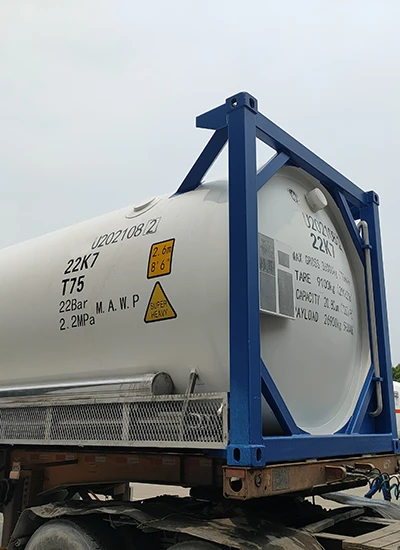
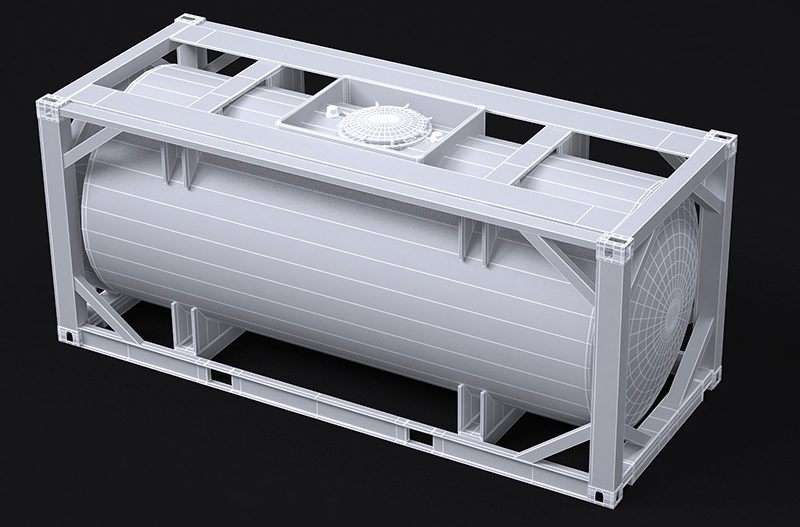
An ISO tank container is a cylindrical pressure vessel installed inside a standardized steel frame. The frame dimensions comply with international container standards, allowing the tank to be handled using existing container transportation infrastructure.
Unlike conventional storage tanks, ISO tank containers are designed for intermodal transportation, meaning they can be transferred between trucks, railway systems, and container ships without unloading the cargo.
A typical ISO tank container consists of the following major components:
1. Stainless Steel Inner Pressure Vessel
The inner vessel is the primary cargo containment structure. For cryogenic applications, it is usually manufactured from corrosion-resistant stainless steel such as 304L or 316L stainless steel.
Cryogenic stainless steel provides:
- Excellent low-temperature mechanical strength
- High corrosion resistance
- Long operational service life
- Compatibility with liquefied gases
2. Protective Steel Frame
The outer frame protects the pressure vessel and allows the tank to be transported using standard container handling equipment.
Main structural features include:
- ISO-compliant container dimensions
- Standard corner castings
- Crane lifting capability
- Forklift handling compatibility
- Maritime stacking capability
3. Thermal Insulation System
Cryogenic ISO tanks require advanced insulation systems to minimize heat transfer from the external environment.
Common insulation technologies include:
- High vacuum insulation
- Multi-layer insulation (MLI)
- Low thermal conductivity support systems
The insulation system reduces evaporation losses and helps maintain stable cargo temperatures during transportation.
4. Piping and Valve System
ISO tank containers include integrated piping and safety systems for filling, unloading, and pressure control.
Typical components include:
- Top filling valve
- Bottom discharge valve
- Pressure relief valve
- Pressure gauge
- Liquid level indicator
- Emergency shut-off system
- Gas vent connection
- Vapor return line
How ISO Tank Containers Work
ISO tank containers operate using controlled pressure and gravity-based unloading systems. Liquid or gaseous cargo is loaded through top-mounted filling valves and transported under carefully regulated pressure conditions. During unloading:
- Pressurization systems help discharge cargo efficiently
- Bottom discharge valves enable controlled transfer
- Pressure relief valves protect against overpressure conditions
- Insulated systems maintain cargo temperature stability
Cryogenic ISO tanks additionally use high-vacuum insulation technology to minimize heat ingress and reduce product evaporation during long-distance transport.
Main Types of ISO Tank Containers
1. T11 ISO Tank Containers
T11 tanks are commonly used for non-hazardous and lower-pressure liquid chemicals. These are among the most widely used chemical transport tanks globally.
2. T14 ISO Tank Containers
T14 tanks are designed for hazardous chemical transportation requiring higher pressure resistance and enhanced safety systems.
3. Cryogenic ISO Tank Containers (UN T75)
Cryogenic ISO tanks are vacuum-insulated pressure vessels used for transporting liquefied gases at extremely low temperatures, including:
- LNG (Liquefied Natural Gas)
- LOX (Liquid Oxygen)
- LIN (Liquid Nitrogen)
- LAr (Liquid Argon)
- LCO₂ (Liquid Carbon Dioxide)
These tanks are manufactured according to UN T75 transport requirements and ASME pressure vessel standards.
4. Food-Grade ISO Tanks
Food-grade ISO tanks are used for transporting edible liquids such as milk, juice, edible oils, wine, and liquid sweeteners. These tanks feature sanitary internal finishes and contamination-control systems.
Construction of a 40-ft LNG ISO Tank
A 40-foot LNG ISO tank is engineered as a vacuum-insulated cryogenic pressure vessel system designed for ultra-low-temperature liquefied gas transport.
1. Structural Frame & Corner Castings
The outer frame is manufactured from high-strength structural steel and designed according to ISO 1496-3 standards.
Key features include:
- ISO-compliant intermodal frame
- Standardized corner castings
- Forklift and crane handling compatibility
- Stacking capability for maritime transport
2. Inner Cryogenic Pressure Vessel
The inner vessel is fabricated using cryogenic-grade stainless steel capable of operating at temperatures as low as −196°C.
Typical engineering specifications include:
- ASME Section VIII pressure vessel design
- High corrosion resistance
- Optional anti-surge baffle system
- Pressure relief and burst disc protection
- MAWP design for cryogenic liquefied gases
For LNG transportation, tanks must comply with UN T75 classification requirements.
3. Vacuum Insulation System
The outer jacket typically consists of carbon steel enclosing a high-performance thermal insulation system.
The insulation structure generally includes:
- Multi-layer insulation (MLI)
- High vacuum space (≤ 0.1 Pa)
- Low thermal conductivity support system
- Static evaporation rate ≤ 0.35% per day
This vacuum-jacketed design minimizes heat transfer and maintains stable cryogenic temperatures during transportation and storage.
4. Piping & Valve System
Cryogenic ISO tank containers include integrated piping and safety control systems designed for hazardous material transport.
Standard components include:
- Top filling valve
- Bottom discharge valve
- Pressure relief valve
- Pressure gauge
- Liquid level indicator
- Emergency shut-off device
- Vapor return connection
- Gas vent system
Advantages of ISO Tank Containers
ISO tank containers provide significant operational and economic advantages compared with conventional bulk transport systems.
Key benefits include:
- Lower transportation costs
- Reduced cargo contamination risk
- Improved intermodal transport efficiency
- Enhanced hazardous material safety
- Reduced environmental impact
- Long operational lifespan (20–35+ years)
- Minimal cargo handling requirements
- High structural durability
Because ISO tanks are reusable and highly durable, they also reduce packaging waste and support sustainable industrial logistics.
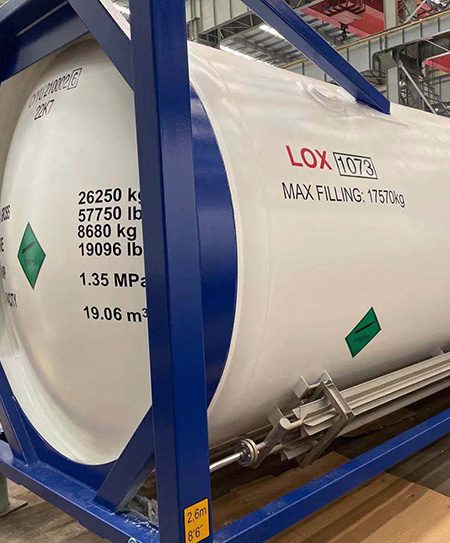
ISO tanks are designed to transport the following items:
- Liquids
- Gasses
- Powders
- Chemicals
- Perishable and non-perishable food items
- Alcohol
- Non-alcoholic liquids
ISO tank containers have become synonymous with efficiency and safety. Tanks can transport large quantities of bulk easily, and they are also incredibly durable. Tank containers have a lifespan of 20 to 35+ years.
ISO Tank Certifications & International Standards
Cryogenic ISO tank containers must comply with multiple international engineering and transport regulations to ensure safety, structural integrity, and legal global transportation.
Key certifications and approvals include:
- UN T75 – Cryogenic liquefied gas transport approval
- ISO 1496-3 – Tank container structural requirements
- ASME Section VIII – Pressure vessel design standard
- PED 2014/68/EU – European pressure equipment compliance
- ADR/RID – European road and rail transport regulations
- IMDG Code – Maritime dangerous goods transport compliance
- CSC Plate – Container Safety Convention certification
- DOT Regulations – U.S. hazardous transport compliance
Certification inspections are typically conducted by authorized third-party inspection agencies and classification bodies.
Safety Considerations
Although ISO tank containers are engineered with high safety margins, regular inspection and maintenance remain essential.
Important operational safety procedures include:
- Periodic hydrostatic pressure testing
- Vacuum integrity inspections
- Valve maintenance and leak testing
- Pressure relief system verification
- Cargo compatibility checks
- Certified operator training
- Emergency response procedures
Failure to maintain inspection schedules may result in safety hazards, operational downtime, and regulatory non-compliance.
Applications
ISO tank containers are widely used across global industrial supply chains for transporting bulk liquids and gases. For complete cryogenic logistics projects, manufacturers often combine ISO tanks with storage tanks, vaporizers, transfer systems, and gas supply equipment to create integrated cryogenic transport solutions.
Common applications include:
- LNG transportation
- Industrial gas distribution
- Petrochemical logistics
- Food-grade liquid transport
- Chemical processing industries
- Offshore energy projects
- Hydrogen and clean energy infrastructure
- Medical and pharmaceutical gas supply
The intermodal capability of ISO tanks makes them one of the most efficient bulk transport solutions in modern global logistics.
Custom Cryogenic ISO Tank Manufacturing
Modern cryogenic ISO tank manufacturers provide customized engineering solutions for LNG, LOX, LIN, LAr, and LCO₂ transportation applications.
Typical customization options include:
- 20-ft and 40-ft ISO tank configurations
- Customized pressure ratings
- Vacuum-insulated cryogenic systems
- ASME and PED compliant fabrication
- Offshore and marine transport design
- Global export certification support
Selecting an experienced ISO tank manufacturer helps ensure long-term reliability, regulatory compliance, and transportation safety.

No comment