

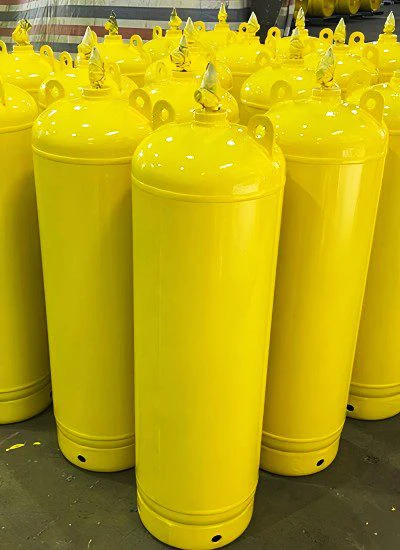
Y-Cylinders and ton containers are used to store and transport industrial gases, but they differ in construction, pressure rating, capacity and typical applications. A seamless high-pressure Y-Cylinder is generally designed for gases supplied at higher pressures, while a welded steel ton container is commonly associated with specific liquefied gases, particularly chlorine.
Understanding these differences helps industrial gas buyers, engineers and procurement teams select an appropriate vessel for their gas, supply requirements and operating conditions. This guide compares Y-Cylinders and welded steel ton containers, explains their common gas applications, and outlines the technical details to confirm before choosing a container.
Terminology note: Industry terminology varies by manufacturer and market. In this article, “Y-Cylinder” refers to a large-capacity seamless high-pressure gas cylinder, while “ton container” refers to a welded steel pressure vessel designed for approved gas services. Always confirm the actual vessel design, nameplate and applicable specifications.
For a broader overview of large-capacity equipment, explore our large-capacity gas cylinders and learn how different configurations support industrial gas storage and distribution.
What Is the Difference Between a Y-Cylinder and a Ton Container?
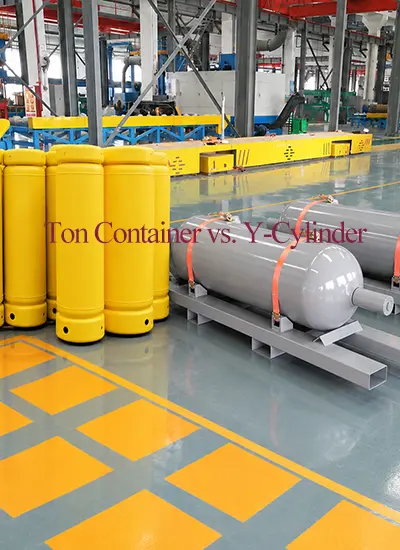
Y-Cylinders and Ton Containers differ in construction, working pressure, capacity and intended gas service. Y-Cylinders are typically seamless steel vessels used for high-pressure gas storage and delivery. Welded steel ton containers are designed for particular gas services and may be used to store liquefied gases under pressure.
| Comparison Factor | Y-Cylinder | Ton Container |
|---|---|---|
| Basic Design | A high-pressure gas vessel designed for specified industrial or specialty gas applications. | A large welded steel vessel designed for approved gas storage and transport applications, particularly for selected liquefied gases. |
| Construction | Typically manufactured from high-strength steel or other approved materials, depending on the model and applicable standard. | Typically constructed from welded steel, with valves and fittings configured for the intended gas service. |
| Working Pressure | Some models have working pressures around 16.6 MPa. The actual rating depends on the cylinder design, certification and intended gas. | Some models have working pressures around 2.0 MPa. The actual rating varies by container design, gas service and applicable standard. |
| Capacity | Available in different water capacities, including certain models around 440 L, 470 L or 880 L. | Available in various sizes, with capacities ranging from approximately 100 L to 926 L for certain models. Actual capacity and allowable filling mass depend on the vessel specifications and gas. |
| Gas Supply Method | Supply method depends on the gas properties and system design. The vessel may deliver gas in the approved phase and under the specified operating conditions. | Commonly used for selected liquefied gases. Liquid or gas withdrawal depends on the container design, valve arrangement and application. |
| Typical Applications | Selected industrial gases and specialty gases, provided the specific cylinder is approved for the gas and operating conditions. | Selected liquefied gases, including chlorine and ammonia in appropriately designed and approved containers. Other services require specific compatibility and regulatory confirmation. |
| Valves and Connections | Selected according to the gas, working pressure, cylinder standard and downstream delivery system. | Configured according to the gas service, container design, filling and withdrawal requirements, and applicable regulations. |
| Handling and Storage | Requires suitable lifting and securing arrangements, appropriate pressure-control equipment and storage procedures for the vessel and gas hazards. | Requires suitable lifting equipment, secure positioning and handling procedures appropriate to the container size, gas hazards and transport requirements. |
| Key Selection Considerations | Gas compatibility, certified working pressure, water capacity, valve configuration, supply rate and applicable standards. | Gas compatibility, vessel capacity, allowable filling mass, certified pressure rating, valve arrangement, transport regulations and withdrawal requirements. |
Important: These are general comparisons, not universal specifications. Actual pressure ratings, water capacities, filling limits and permitted gases must be verified against the vessel’s nameplate, applicable standards and manufacturer documentation.
Y-Cylinder: Construction, Pressure and Capacity
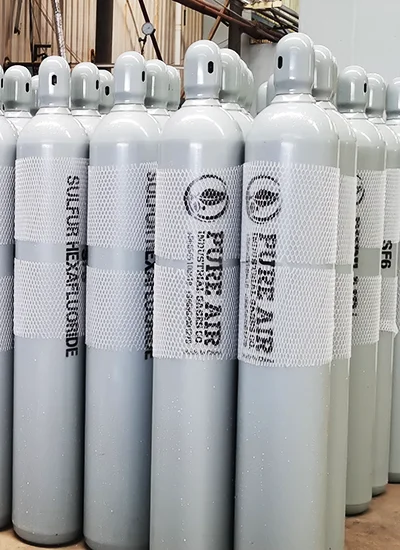
A Y-Cylinder is a large-capacity seamless gas cylinder used in industrial gas supply systems where a suitable high-pressure vessel is required. Seamless construction avoids a longitudinal welded shell seam, while the cylinder’s pressure rating and permitted gas service depend on its design, materials, manufacturing standard and certification.
Typical Y-Cylinder Specifications
Y-Cylinders are available in different sizes and pressure ratings. Certain models have water capacities of approximately 440 L or 470 L, while larger configurations, such as some 880 L models, are also available. Some models have a working pressure of approximately 16.6 MPa (166 bar).
These figures are examples rather than specifications for every Y-Cylinder. Buyers should confirm the actual water capacity, working pressure, test pressure, applicable design standard, valve configuration and approved gas service for the selected model.
Common Gas Applications for Seamless High-Pressure Y-Cylinders
Depending on the cylinder design, gas properties and manufacturer approval, Y-Cylinders may be used in selected industrial, specialty and electronic gas supply applications. The following table provides examples for technical evaluation; it is not a blanket statement that every Y-Cylinder is suitable for every listed gas.
Before choosing a vessel, review the Y-Cylinder gas compatibility requirements and confirm that the exact model, valve assembly and materials are approved for the intended gas.
| Gas | Formula | Application Context | Important Consideration |
|---|---|---|---|
| Nitrogen | N2 | Industrial processes and gas supply systems | Confirm pressure, purity and supply configuration. |
| Carbon dioxide | CO2 | Industrial processes and specialty gas supply | Confirm phase behavior, filling limits and vessel approval. |
| Nitrous oxide | N2O | Approved industrial or specialty gas service | Verify vessel certification and filling requirements. |
| Sulfur hexafluoride | SF6 | Electrical insulation and specialty gas applications | Confirm gas grade, pressure rating and environmental handling requirements. |
| Nitrogen trifluoride | NF3 | Electronics and semiconductor manufacturing | Requires an approved vessel and appropriate gas-handling equipment. |
| Carbon tetrafluoride | CF4 | Electronics and specialty gas applications | Confirm purity, valve configuration and approved service. |
| Hexafluoroethane | C2F6 | Selected semiconductor and specialty gas applications | Verify filling conditions and vessel compatibility. |
| Ammonia | NH3 | Selected industrial and specialty applications | Corrosivity, materials and service approval require careful review. |
| Chlorine | Cl2 | Approved chlorine supply systems | Highly toxic and corrosive; use only a specifically approved vessel and valve arrangement. |
| Hydrogen chloride | HCl | Chemical processing and specialty gas applications | Moisture sensitivity, corrosion and materials compatibility must be assessed. |
| Hydrogen fluoride | HF | Specialty chemical and electronic gas applications | Highly hazardous and corrosive; verify specific vessel approval and materials. |
| Fluoromethane | CH3F | Selected specialty gas applications | Confirm approved filling conditions and gas compatibility. |
| Difluoromethane | CH2F2 | Refrigerant and specialty gas applications | Check refrigerant-specific filling limits and vessel approval. |
| Trifluoromethane | CHF3 | Refrigerant and specialty gas applications | Confirm the approved service and applicable transport requirements. |
Gas compatibility notice: The gases above are examples of potential application contexts, not confirmation that all can be filled into a standard Y-Cylinder. The gas, vessel design, cylinder material, valve, filling method and applicable regulations must all be compatible. Highly toxic, corrosive, reactive or liquefied gases require particular attention to approved service conditions.
Welded Steel Ton Container: Pressure and Applications
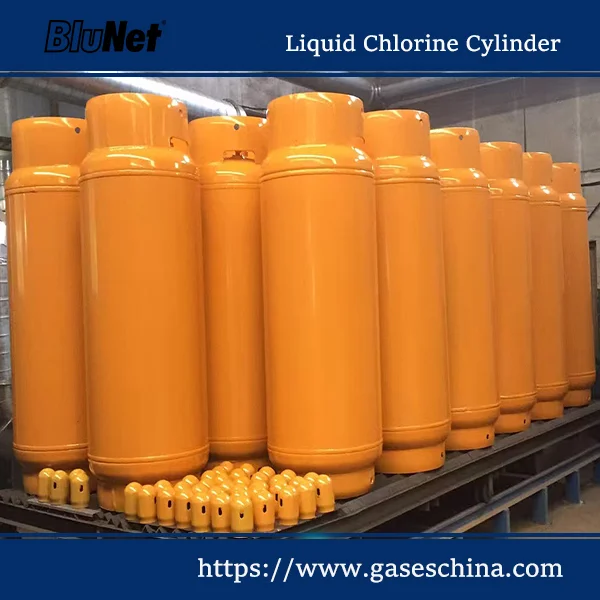
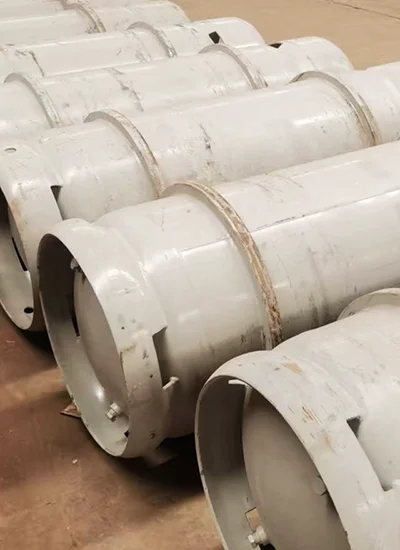
A welded steel ton container is a pressure vessel designed for specified gas services. Ton containers are widely associated with liquid chlorine supply, but other gases must only be stored or transported in a container whose design and certification explicitly permit that service.
Unlike seamless high-pressure Y-Cylinders, welded ton containers have a welded shell construction. Their pressure rating, internal volume, fittings and permitted filling quantity vary according to the design and intended gas service.
Typical Ton Container Specifications
Some welded steel ton containers are designed for working pressures around 2.0 MPa (20 bar), but this is only a representative example. It must not be treated as a standard rating for all ton containers or all gases.
Before ordering, confirm the vessel’s design standard, working and test pressures, water capacity, maximum permitted filling quantity, materials, valve arrangement, inspection status and approval for the intended gas.
Common Gas Applications for Welded Steel Ton Containers
The following gases may be encountered in particular ton-container supply contexts. Suitability is always specific to the vessel design and its approved service. Liquid chlorine is the most widely recognized ton-container application; the other examples below must not be assumed compatible with a standard chlorine ton container.
| Gas | Formula | Application Context | Important Consideration |
|---|---|---|---|
| Chlorine | Cl2 | Water treatment, chemical manufacturing and disinfection processes | A traditional ton-container application. Confirm chlorine-specific certification, filling limits, valves and handling procedures. |
| Ammonia | NH3 | Chemical processing and selected industrial applications | Only use a vessel specifically approved for ammonia service. |
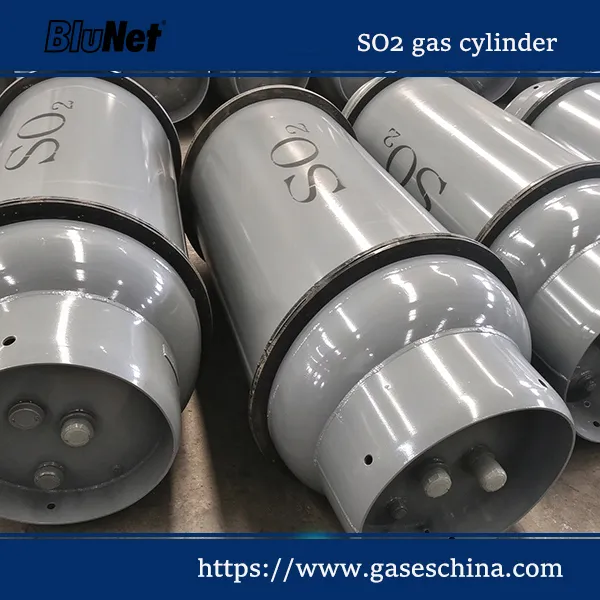
| Sulfur dioxide | SO2 | Chemical processing and selected industrial applications | Confirm vessel materials, pressure rating, filling requirements and gas-specific approval. |
| Refrigerant gases | Varies | Refrigeration and industrial cooling applications | Approval depends on the specific refrigerant, container design and filling limits. |
| Nitrous oxide | N2O | Selected industrial gas applications | Do not assume a conventional ton container is suitable; verify the approved design and filling conditions. |
| Hydrogen sulfide | H2S | Specialized chemical and industrial gas service | Extremely toxic; requires purpose-approved equipment and strict handling controls. |
| Nitrogen tetroxide | N2O4 | Specialized chemical applications | Highly toxic and reactive; use only equipment explicitly approved for this service. |
Important: This table is intended for preliminary comparison only. It does not establish that a standard welded ton container can be used for each gas listed. Obtain written confirmation of vessel suitability from the manufacturer or responsible technical authority before filling, handling or transporting any gas.
Y-Cylinder vs. Ton Container: Key Differences
Although both vessel types support industrial gas supply, they are not interchangeable. The correct choice depends on the gas, approved vessel design, operating pressure, required quantity, handling arrangements and relevant regulations.
| Factor | Y-Cylinder | Welded Steel Ton Container |
|---|---|---|
| Shell construction | Typically seamless steel | Welded steel |
| Pressure range | Some models are designed for high-pressure service, such as 16.6 MPa | Varies by design and gas service; some designs are rated around 2.0 MPa |
| Water capacity | Varies by model; examples include 440 L, 470 L and 880 L | Varies by design and intended gas service |
| Typical gas form | Depends on the gas and approved filling conditions; often used for high-pressure gas supply | Often associated with approved liquefied-gas service |
| Commonly recognized application | Selected industrial and specialty gases | Liquid chlorine and other specifically approved gases |
| Selection considerations | Pressure, purity, gas compatibility, supply volume and connection requirements | Gas-specific vessel approval, filling limits, corrosion resistance and handling requirements |
Pressure rating alone does not determine whether a vessel is suitable for a gas. A correct selection must account for gas properties, phase behavior, material compatibility, valve and relief-device requirements, filling limits and applicable transport regulations.
Need Help Selecting a Y-Cylinder?
Tell BluNet which gas you need to store or transport, the required filling quantity, and the destination market.
How to Choose the Right Gas Container
Before selecting a Y-Cylinder or welded steel ton container, review the following factors with your gas supplier and vessel manufacturer.
1. Confirm the Gas and Required Purity
Identify the exact gas, grade, purity and composition. Electronic specialty gases and corrosive gases may require specific cylinder materials, internal surface treatments, valve designs and cleanliness standards.
2. Check Working Pressure and Filling Conditions
Confirm the required operating pressure and the vessel’s approved working pressure. Also check test pressure, filling limits and whether the gas will be stored as a compressed gas or liquefied under pressure. These factors cannot be determined from the vessel’s size alone.
3. Evaluate Capacity and Gas Consumption
Estimate daily or monthly consumption, delivery frequency and the storage capacity needed to maintain operations. Water capacity is the internal volume of the vessel; it is not the same as the quantity of gas delivered. Actual gas quantity depends on the gas properties, filling conditions and applicable limits.
4. Verify Materials and Gas Compatibility
Check the cylinder or container material, valve, seals, fittings and any internal treatment against the intended gas. This is particularly important for toxic, corrosive, oxidizing, reactive or moisture-sensitive gases. Never use a vessel for a gas service that is not permitted by its certification and manufacturer instructions.
5. Review Standards, Inspection and Transport Requirements
Confirm the applicable manufacturing standard, certification, inspection status, pressure testing, marking and transport regulations for the destination market. Requirements can vary according to the vessel design, gas classification and jurisdiction.
Specifications to Confirm Before Ordering
When requesting a quotation, provide as much of the following information as possible to help your supplier identify a suitable vessel and gas supply configuration.
- Gas name, chemical formula and required purity grade
- Required water capacity and estimated gas consumption
- Working pressure, filling conditions and required gas quantity
- Vessel construction, design standard and certification requirements
- Valve type, outlet connection and any gas-specific fittings
- Material compatibility and internal treatment requirements, if applicable
- Delivery location, transport requirements and expected supply frequency
- Inspection, documentation and regulatory requirements for the destination market
Providing these details early helps reduce specification mismatches and supports a more efficient quotation and technical review process.
TECHNICAL FAQs
FAQ About Y-Cylinder vs. Ton Container
A Y-Cylinder is a high-pressure gas vessel commonly used to supply industrial and specialty gases. A Ton Container is generally a welded steel vessel designed for specific liquefied gases, often used for bulk storage and transport. Their construction, pressure ratings, capacities, valves and approved gas services differ.
Y-Cylinder working pressure depends on the specific design, gas service and manufacturer specifications. Some models are designed for pressures around 16.6 MPa, but this value must not be assumed for every Y-Cylinder. Always confirm the vessel nameplate, certification and technical documentation.
The working pressure of a Ton Container varies by design and intended gas service. Some models have a working pressure around 2.0 MPa, but the approved rating must be verified against the container nameplate, applicable standards and manufacturer documentation.
Y-Cylinders may be used for selected industrial and specialty gases, depending on the vessel design, pressure rating, internal materials, valve configuration and gas compatibility. Confirm that the specific cylinder is certified and approved for the intended gas before use.
Ton Containers are used for certain liquefied gases, including chlorine and ammonia in suitable approved containers. Other possible gas services depend on the vessel design and applicable regulations. Gas compatibility, filling limits, pressure ratings, valves and handling requirements must be verified for each application.
Choose based on the gas being supplied, required quantity, delivery frequency, working pressure, storage and handling facilities, applicable regulations, and the vessel’s certification and compatibility. Consult the supplier’s technical documentation to confirm the appropriate vessel for your application.
Industrial Gas Supply Solutions from BluNet
BluNet supplies industrial gases and gas supply solutions for a range of industrial and specialty applications. Choosing the right gas vessel requires more than comparing nominal capacity or pressure: the gas, vessel design, filling conditions and applicable standards must all match the intended service.
For Y-Cylinder requirements, review the Y-Cylinder product specifications and confirm the available model, capacity, pressure rating and gas compatibility with the technical team. For other gas containers, provide your gas specification, required quantity and destination market so the appropriate options can be evaluated.
Contact BluNet to discuss your industrial gas requirements, vessel specifications and supply options.

No comment