

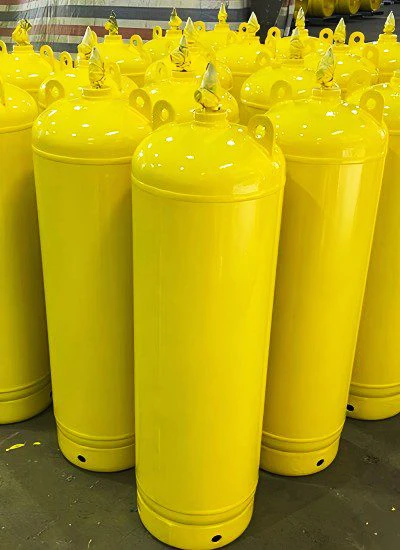
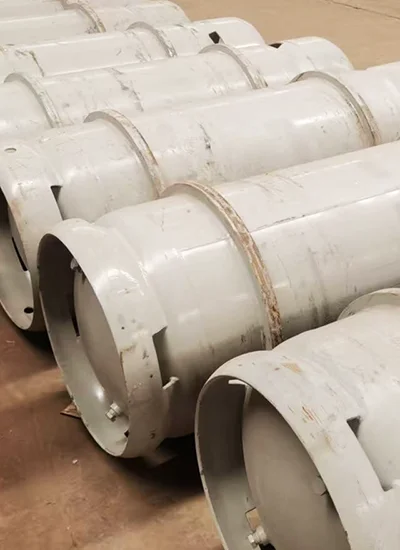
Y-Cylinder gas compatibility depends on more than the cylinder’s capacity or pressure rating. The gas properties, cylinder material, working pressure, valve configuration, filling ratio, temperature, purity requirements and applicable regulations must all be considered before a Y-Cylinder is selected or filled.
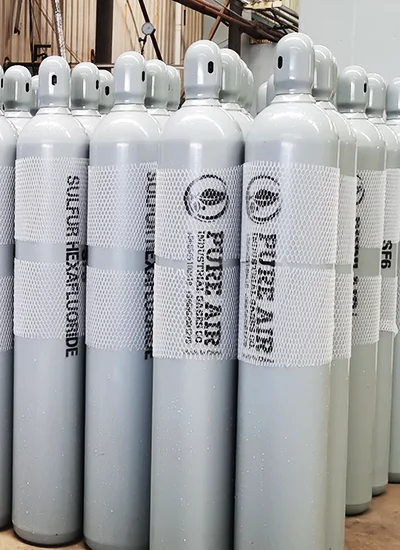
Y-Cylinders are available in different water capacities and configurations for selected industrial, specialty, electronic and refrigerant gases. Common gas applications include CO2, Cl2, HCl, N2O, NF3, SF6, CF4, NH3, CH3F, CH2F2, CHF3 and C2F6.
This guide explains the main factors used to evaluate Y-Cylinder gas compatibility, including gas type, filling ratio, actual filling quantity, valves, materials and application requirements. The information is for technical reference; final filling and transportation requirements must be confirmed for the specific cylinder, gas and destination market.
What Determines Y-Cylinder Gas Compatibility?
Several technical factors must be evaluated before selecting a Y-Cylinder for a particular gas.
- Gas properties: Chemical reactivity, toxicity, corrosiveness, flammability and physical properties affect cylinder selection.
- Material compatibility: The cylinder material and internal surface must be suitable for the intended gas.
- Working pressure: The filling pressure must remain within the cylinder’s rated working pressure.
- Filling ratio: Liquefied gases require gas-specific filling limits rather than simply filling the cylinder to its water capacity.
- Temperature: Gas pressure and liquid expansion can change significantly with temperature.
- Valve configuration: The valve, outlet connection, sealing materials and pressure-relief arrangement must be suitable for the gas.
- Regulatory requirements: Gas cylinders used for transport or commercial filling may be subject to specific national and international requirements.
Gases Commonly Used With Y-Cylinders
| Gas | Formula | Typical Application | Key Consideration |
|---|---|---|---|
| Carbon dioxide | CO2 | Food, welding, industrial processes | Liquid filling limits and temperature |
| Chlorine | Cl2 | Water treatment, chemical industry | Toxic/corrosive gas compatibility |
| Hydrogen chloride | HCl | Chemical processing, semiconductor industry | Corrosion and valve/seal compatibility |
| Nitrous oxide | N2O | Food, medical and industrial applications | Filling ratio and oxygen-compatible service requirements where applicable |
| Nitrogen trifluoride | NF3 | Semiconductor and photovoltaic manufacturing | High-purity service and contamination control |
| Sulfur hexafluoride | SF6 | Electrical and specialty applications | High-purity handling and valve compatibility |
| Carbon tetrafluoride | CF4 | Semiconductor manufacturing | Purity and contamination control |
| Ammonia | NH3 | Refrigeration and chemical industry | Material, valve and filling requirements |
| Methyl fluoride | CH3F | Specialty and refrigerant applications | Pressure and filling requirements |
| Difluoromethane | CH2F2 / R32 | Refrigeration | Pressure, temperature and liquid filling limits |
| Trifluoromethane | CHF3 / R23 | Refrigeration and specialty applications | High-pressure refrigerant service |
| Hexafluoroethane | C2F6 | Semiconductor manufacturing | High-purity service and contamination control |
Y-Cylinder Water Capacity and Gas Filling Quantity
One of the most common sources of confusion is the difference between water capacity and actual gas filling quantity.
The water capacity is the internal volume of the cylinder, normally expressed in liters. Because Y-Cylinders are available in different sizes, their water capacities can vary significantly.
Water capacity does not represent the amount of gas that can automatically be filled into the cylinder. The actual filling quantity depends on the physical state and properties of the gas, filling method, allowable pressure, temperature and applicable filling requirements.
For liquefied gases, a simplified preliminary calculation may be expressed as:
Approximate filling quantity = Cylinder water capacity × Applicable filling ratio
For example, if a gas has an applicable filling ratio of 0.75 kg/L, a cylinder with a 1,000 L water capacity would correspond to approximately 750 kg under a simplified calculation. This is only an example. The actual permitted filling quantity must be established according to the specific gas, cylinder, filling temperature and applicable regulations.
Gas-Specific Compatibility Considerations
CO2, N2O and Other Liquefied Gases
Liquefied gases require careful control of filling quantity because liquid thermal expansion can increase pressure as temperature rises. The cylinder should therefore be filled according to the applicable filling density or filling ratio rather than simply using its total water capacity.
Cl2 and HCl
Chlorine and hydrogen chloride require particular attention to corrosion resistance, valve materials, sealing components, cleanliness and handling procedures. The cylinder and valve configuration should be specifically suitable for the intended gas service.
NF3, SF6, CF4 and C2F6
Electronic and specialty gases may require high levels of cleanliness and contamination control. For high-purity applications, cylinder preparation, internal cleaning, evacuation, valve selection and filling procedures should be specified as part of the gas supply system.
NH3 and Refrigerant Gases
Ammonia and refrigerant gases require gas-specific consideration of pressure, temperature, filling density, materials and valve configuration. The selected cylinder should be matched to the intended gas and service conditions.
Does One Y-Cylinder Configuration Fit Every Gas?
No. A Y-Cylinder’s nominal capacity or working pressure does not automatically make one configuration suitable for every gas.
Different gases may require different valve configurations, sealing materials, internal preparation, markings, testing procedures or documentation. Toxic, corrosive, high-purity and refrigerant gases can have substantially different service requirements.
For this reason, the gas should be identified before selecting the final cylinder configuration.
Y-Cylinder Gas Compatibility Checklist
- Gas name and chemical formula
- UN number and dangerous-goods classification where applicable
- Gas purity requirement
- Required filling quantity
- Gas state during filling and storage
- Required working pressure
- Valve and outlet connection
- Material and sealing compatibility
- Required cylinder testing and certification
- Destination-country transportation requirements
Need Help Selecting a Y-Cylinder?
Tell BluNet which gas you need to store or transport, the required filling quantity, and the destination market.
Y-Cylinder Gas Compatibility and Cylinder Selection
Choosing a Y-Cylinder should be based on the complete gas service rather than capacity alone. BluNet can review the gas properties, required filling quantity, valve configuration and destination-market requirements to determine an appropriate cylinder specification.
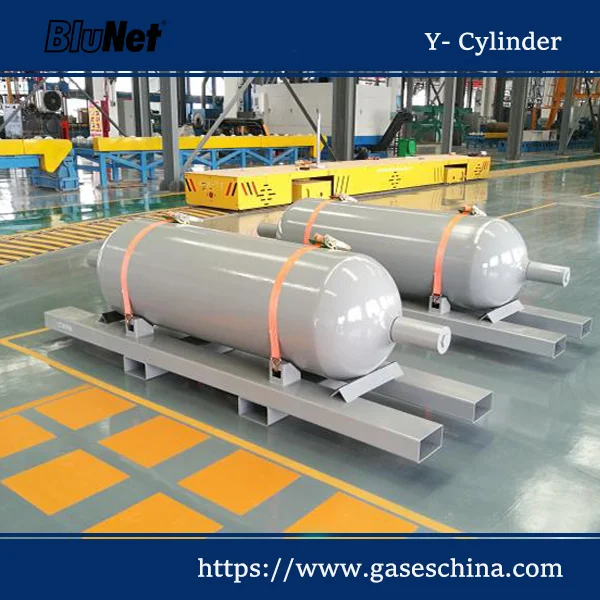
For the complete product specification, see the BluNet Y-Cylinder.
You can also review our Gas Cylinder Guide for information about cylinder types, capacities and applications.
TECHNICAL FAQs
FAQ About Y-Cylinder Gas Compatibility
No. Gas compatibility depends on the gas properties, cylinder material, pressure rating, valve configuration, filling requirements and applicable regulations.
No. Water capacity represents the internal volume of the cylinder. Actual filling quantity depends on the gas, its physical state, filling ratio or pressure requirements, temperature and applicable regulations.
A preliminary calculation may use the cylinder water capacity multiplied by the applicable filling ratio. The final filling quantity must be confirmed according to the specific gas, cylinder specification, filling temperature and regulatory requirements.
Yes, selected electronic gases such as NF3, SF6, CF4 and C2F6 can be supplied in suitable configurations. High-purity applications require appropriate cylinder preparation, cleanliness and valve configurations.
The gas name, UN number, purity, required filling quantity, cylinder capacity, working pressure, valve connection, destination country and certification requirements are useful for determining the appropriate configuration.

No comment