


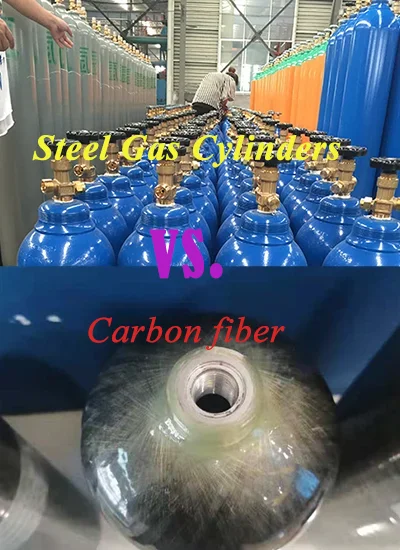
Carbon fiber composite gas cylinders and traditional steel gas cylinders are both widely used for high-pressure gas storage. However, they differ significantly in weight, structure, corrosion resistance, pressure performance, and lifecycle cost. As industries shift toward hydrogen energy, CNG mobility, and lightweight gas systems, carbon fiber cylinders are increasingly replacing steel in advanced applications.
• Weight reduction: up to 60–70% lighter than steel
• Working pressure: up to 300–700 bar (Type 3 / Type 4)
• Corrosion resistance: Excellent (no rust or oxidation)
• Typical applications: Hydrogen, CNG, SCBA, aerospace
• Standards: ISO 11119, EN 12245, DOT, TPED
1. What Is a Steel Gas Cylinder?
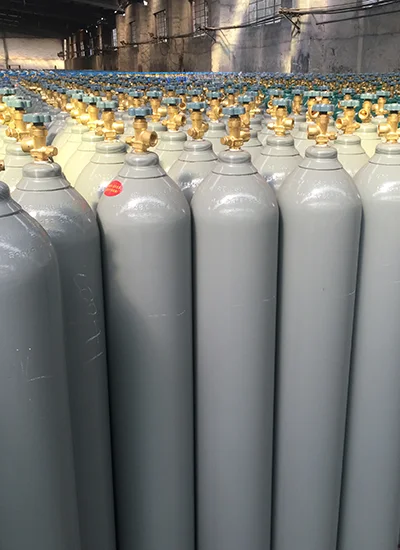
A steel gas cylinder is a seamless pressure vessel made from carbon steel or alloy steel. It has been the industry standard for decades due to its durability, cost efficiency, and mechanical strength.
Engineering Characteristics
- Isotropic metallic structure (uniform strength in all directions)
- High impact resistance and ductility
- Heavier mass due to thick wall requirements at high pressure
- Susceptible to corrosion without protective coating
Steel cylinders are widely used in industrial gas distribution, welding, and stationary storage systems.
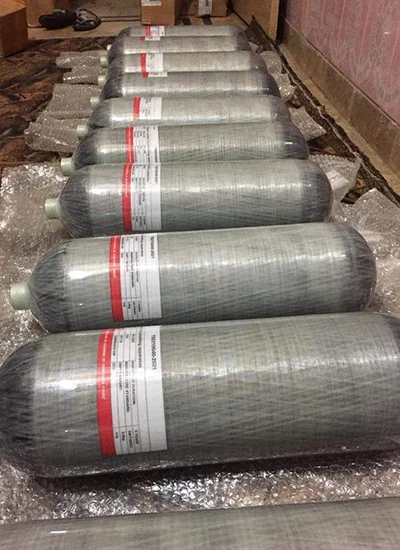
2. What Is a Carbon Fiber Gas Cylinder?
A carbon fiber gas cylinder is a composite pressure vessel consisting of a polymer or aluminum liner wrapped with high-strength carbon fiber reinforced resin. These cylinders are classified as Type 3 (aluminum liner) and Type 4 (polymer liner).
Engineering Structure
- Load-bearing carbon fiber composite overwrap
- Hoop + helical filament winding structure
- Inner gas-tight liner (aluminum or thermoplastic)
- Optimized stress distribution along fiber direction
Composite design allows engineers to align fiber orientation with stress paths, significantly improving strength-to-weight ratio compared to steel.
Need Carbon Fiber or Steel Gas Cylinders?
Get technical specifications, pricing, and OEM customization options for carbon fiber composite and steel gas cylinders for hydrogen, CNG, SCBA, and industrial applications.
3. Carbon Fiber vs Steel Gas Cylinders (Technical Comparison)
| Feature | Carbon Fiber Cylinder | Steel Cylinder |
|---|---|---|
| Weight | Ultra-light (up to 70% reduction) | Heavy |
| Pressure Capability | 300–700 bar (hydrogen optimized) | Up to ~300 bar typical |
| Corrosion Resistance | Excellent (no rust) | Requires coating / maintenance |
| Fatigue Life | High cycle durability | Moderate |
| Failure Mode | Progressive fiber fracture (controlled) | Ductile deformation then rupture |
| Cost | Higher initial cost | Lower initial cost |
| Best Use Case | Hydrogen, CNG, SCBA, aerospace | Industrial gas storage |
4. Engineering Principle: Why Carbon Fiber Is Stronger by Weight
Carbon fiber cylinders achieve high performance through anisotropic material design. Unlike steel, carbon fiber composites are engineered so that fibers align with principal stress directions.
- Hoop winding resists circumferential pressure stress
- Helical layers distribute axial loads
- Resin matrix binds fibers and transfers load
This allows carbon fiber cylinders to achieve significantly higher pressure ratings with much lower material mass.
5. Pressure & Safety Performance
Composite cylinders are designed under strict international standards such as ISO 11119, EN 12245, and DOT specifications. Safety testing includes:
- Hydrostatic pressure testing
- Burst pressure validation (typically 2.25× working pressure)
- Fatigue cycling tests
- Impact resistance tests
- Fire exposure testing
Steel cylinders rely on ductile deformation before rupture, while composite cylinders use controlled progressive failure mechanisms for safer energy release behavior.
6. Corrosion Resistance & Lifecycle Performance
Steel cylinders are prone to oxidation and require periodic inspection and coating maintenance. In contrast, carbon fiber composite cylinders are inherently corrosion-resistant due to their polymer and fiber structure.
This makes composite cylinders especially suitable for offshore, marine, humid, and chemically aggressive environments.
7. Industrial Applications
Steel Gas Cylinder Applications
- Industrial welding and fabrication
- Laboratory gas supply
- Medical oxygen storage
- Stationary industrial gas systems
Carbon Fiber Gas Cylinder Applications
- Hydrogen fuel storage (350–700 bar)
- CNG vehicle fuel systems
- SCBA firefighting systems
- Aerospace and defense systems
- Portable high-pressure gas systems
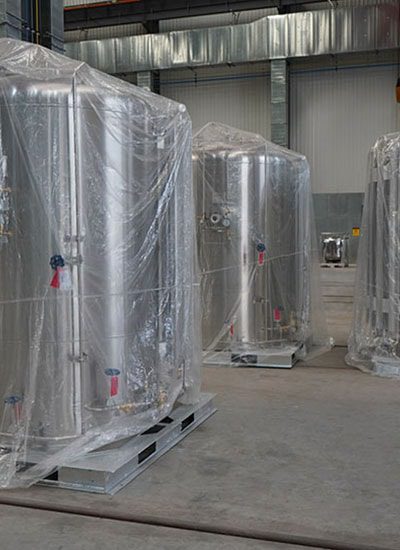
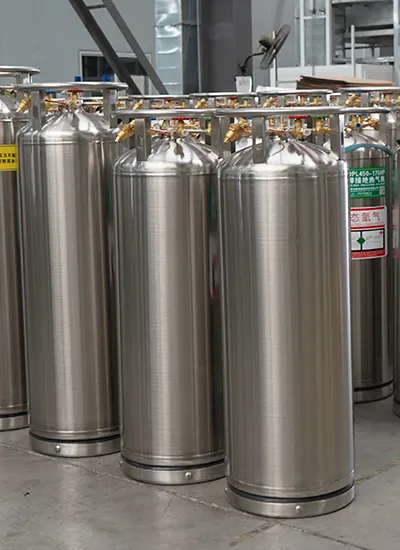
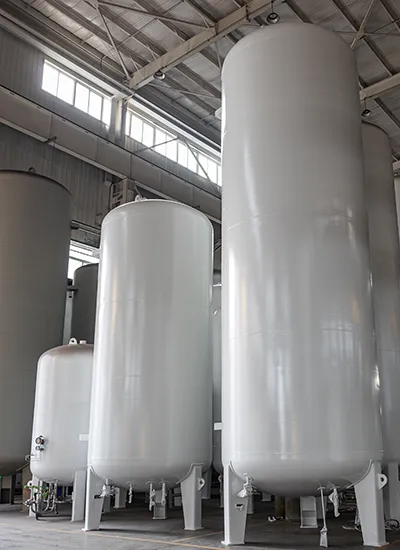
8. Hydrogen Energy & Future Trend
With the rapid growth of hydrogen energy and clean mobility systems, carbon fiber composite cylinders are becoming the global standard for high-pressure hydrogen storage due to their lightweight and high-pressure capability (up to 700 bar systems).
9. Cost vs Lifecycle Value
Although steel cylinders have lower upfront cost, carbon fiber cylinders provide better lifecycle value due to:
- Reduced transportation cost
- Lower maintenance requirements
- Higher payload efficiency
- Longer service life in mobile systems
10. Which Gas Cylinder Should You Choose?
The selection depends on application requirements:
- Steel cylinders: Best for low-cost, stationary industrial gas storage
- Carbon fiber cylinders: Best for lightweight, high-pressure, and mobile applications
TECHNICAL FAQs
About Carbon Fiber vs Steel Gas Cylinders
A carbon fiber gas cylinder is a composite pressure vessel made with a polymer or aluminum liner wrapped in carbon fiber reinforced material. It is commonly used for high-pressure gas storage in hydrogen, CNG, and SCBA applications.
Carbon fiber gas cylinders are lightweight composite cylinders designed for high-pressure applications, while steel gas cylinders are heavier metallic vessels known for durability and cost efficiency. Composite cylinders offer better weight reduction and corrosion resistance.
Yes, carbon fiber gas cylinders are safe when manufactured according to standards such as ISO 11119, EN 12245, and DOT regulations. They are tested through hydrostatic pressure, burst pressure, fatigue cycling, and fire resistance validation.
Carbon fiber cylinders use composite materials where fibers are aligned along stress directions. This engineered structure provides high strength with significantly lower material mass compared to steel, reducing weight by up to 60–70%.
Carbon fiber composite gas cylinders are typically designed for working pressures between 300 and 700 bar depending on Type 3 or Type 4 construction. They are widely used in hydrogen storage and CNG systems.
Carbon fiber gas cylinders are commonly used for hydrogen storage due to their lightweight structure, corrosion resistance, and high-pressure capability. Steel cylinders are mainly used in stationary industrial applications where weight is less critical.
Carbon fiber gas cylinders are used in hydrogen fuel systems, CNG vehicles, SCBA breathing apparatus, aerospace applications, and other high-pressure mobile gas storage systems where lightweight design is important.
Final Technical Takeaway
Carbon fiber and steel gas cylinders are designed for different use cases. Steel cylinders are a cost-effective and durable solution for general industrial gas storage where weight is not critical.
Carbon fiber composite cylinders are preferred for high-pressure and mobility applications, such as hydrogen, CNG, and SCBA systems, due to their lightweight structure and corrosion resistance.
The right choice depends on pressure requirements, application environment, and lifecycle cost.

No comment