

ASME Certified
Cryogenic Storage Tank Supplier
CRYOGENIC EQUIPMENT MANUFACTURER
Cryogenic Tank Manufacturer for Industrial Gas Storage
BluNet specializes in the supply and OEM manufacturing of vacuum insulated cryogenic storage tanks for industrial gas, LNG, medical, energy, and manufacturing applications.
Our cryogenic tank systems are designed for the storage of liquefied gases, including liquid oxygen (LOX), liquid nitrogen (LIN/LN₂), liquid argon (LAR), LNG, and other applicable cryogenic media.
As a cryogenic tank manufacturer, we focus on pressure vessel fabrication, vacuum insulation technology, structural design, and project-specific equipment requirements. Tank configurations can be selected according to storage capacity, operating pressure, installation conditions, and applicable standards.
Our manufacturing and supply capabilities support gas distributors, industrial facilities, EPC contractors, healthcare projects, and international equipment buyers.
For an overview of tank types and selection considerations, see our Cryogenic Tanks Guide.
- Quality
- Accuracy
- Safety
- Reliance
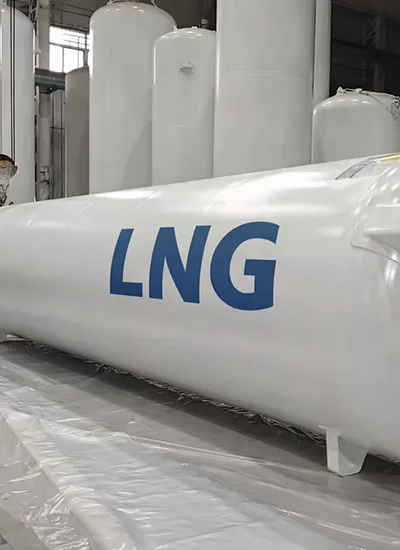
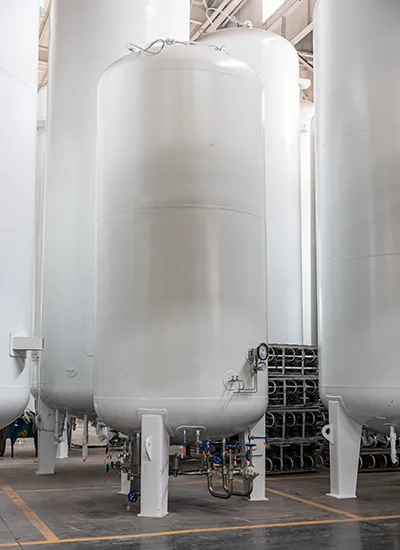
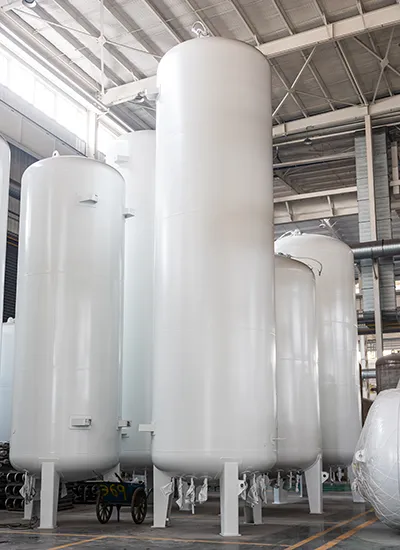
Cryogenic Tank Technical Specifications
BluNet supplies vertical and horizontal vacuum-insulated cryogenic storage tanks in different capacities and pressure configurations. The specifications below provide an overview of available design options. Final specifications depend on the storage medium, tank model, operating requirements and applicable design standards.
| Parameter | Specification |
|---|---|
| Tank Orientation | Vertical / Horizontal |
| Nominal Capacity | 5–200 m³, depending on tank model and configuration |
| Design Pressure | Available design-pressure options to be confirmed according to the selected tank model and applicable design code |
| Working Pressure | 0.8–3.5 MPa, where applicable; subject to tank model and design specification |
| Storage Medium | Liquid Oxygen (LOX), Liquid Nitrogen (LIN), Liquid Argon (LAr), LNG and Liquid CO₂, subject to tank design |
| Inner Vessel Material | Stainless Steel SS304 / SS316, according to project specifications |
| Outer Vessel Material | Carbon steel, with material grade selected according to design requirements |
| Insulation System | High-vacuum multilayer insulation (MLI) |
| Design Codes & Standards | ASME, applicable GB standards and PED requirements, depending on the project and certification scope |
| Accessories & Components | Valves, pressure-building circuit, liquid level gauge, pressure gauge and safety devices, according to configuration |
Note: The capacity and pressure ranges shown are indicative and do not mean every capacity is available at every pressure. Design pressure and working pressure are separate engineering parameters. Confirm the applicable values, materials, standards and accessories for the selected model before ordering.
Cryogenic Tank Types & Configurations
Different industrial applications require different storage configurations. BluNet can support the selection of cryogenic tanks according to capacity, pressure, installation space, storage medium, and operating requirements.
- Vertical vacuum insulated cryogenic storage tanks
- Horizontal cryogenic storage tanks
- Stationary LNG storage tanks
- Liquid oxygen storage tanks
- Liquid nitrogen storage tanks
- Liquid argon storage tanks
- Vacuum insulated MicroBulk tanks
- Custom cryogenic pressure vessel systems
Explore our cryogenic storage tanks for available product configurations.
For smaller-volume storage and distribution requirements, see our cryogenic MicroBulk tanks.
ENGINEERING & PRODUCTION
Cryogenic Tank Manufacturing Capabilities
Reliable cryogenic tank manufacturing requires coordinated engineering, material selection, pressure vessel fabrication, insulation processing, and quality inspection.
Each stage must be matched to the intended storage medium and project specifications.
1. Engineering Design & Material Selection
Cryogenic tank manufacturing begins with engineering review and material selection. The tank configuration and material specifications must be suitable for the stored medium, operating conditions and applicable pressure vessel requirements.
For each OEM project, the engineering requirements may cover:
- Tank capacity, orientation and overall dimensions
- Design pressure and working pressure requirements
- Inner vessel material, such as SS304 or SS316, where specified
- Outer vessel material and structural requirements
- Vacuum insulation configuration
- Process connections, valves and safety accessories
- Applicable design codes and inspection requirements
Material selection and engineering documentation are reviewed against the approved project specifications before fabrication.
2. Pressure Vessel Fabrication & Welding
The inner and outer vessels are fabricated according to the approved drawings and material specifications. Depending on the tank design and production scope, fabrication operations may include plate preparation, cutting, rolling, forming, fit-up and vessel assembly.
Welding is an important quality-control stage in pressure vessel production. Applicable welding procedures, welder qualifications and inspection requirements should be established according to the selected design code and project specifications.
Relevant manufacturing and inspection records may include:
- Material certificates and material traceability records
- Approved welding procedures (WPS), where applicable
- Welding procedure qualification records (PQR), where applicable
- Welder qualification records
- Weld inspection and non-destructive testing (NDT) reports, as required
- Dimensional inspection records
The specific welding processes, qualifications and NDT methods depend on the manufacturing facility, vessel design and applicable inspection requirements.
3. Vacuum Insulation & Assembly
Vacuum insulation is essential to reducing heat transfer into cryogenic storage tanks. The insulation system is installed between the inner and outer vessels according to the specified tank construction and insulation design.
Depending on the selected configuration, the insulation system may use multilayer insulation (MLI) within the annular space. Vacuum preparation and evacuation are carried out according to the applicable manufacturing procedure.
The assembly scope may include:
- Inner and outer vessel assembly
- Installation of the specified insulation materials
- Vacuum system connections and evacuation
- Piping and process connection installation
- Valve, pressure gauge and liquid level gauge installation
- Pressure-building and other specified auxiliary circuits
Vacuum condition and insulation-related inspection requirements should be verified and recorded according to the approved project quality plan.
4. Final Testing & Quality Inspection
Before delivery, cryogenic storage tanks are subject to the inspections and tests specified for the particular design and project. These activities help verify pressure vessel integrity, manufacturing quality and compliance with the approved technical requirements.
Depending on the applicable code and inspection plan, final quality control may include:
- Dimensional and visual inspection
- Required non-destructive testing (NDT)
- Pressure testing in accordance with the applicable code
- Leak testing of specified components and connections
- Vacuum testing and vacuum condition verification
- Inspection of valves, gauges and safety devices
- Nameplate and marking verification
- Review of final inspection and test documentation
The inspection scope and acceptance criteria are determined by the tank design, applicable standards and project requirements. Test methods and results are documented where required by the approved quality plan.
Manufacturing Documentation & Project Quality Records
For projects requiring quality documentation, the applicable manufacturing and inspection records can be reviewed and provided according to the agreed supply scope. Documentation may include:
- Approved technical drawings and specifications
- Material certificates
- Welding and NDT records, where applicable
- Pressure and leak test reports, as applicable
- Vacuum inspection records
- Final inspection documentation
- Equipment nameplate and applicable certification documents
The availability of individual documents depends on the selected manufacturing standard, inspection requirements and contractual scope.
Proven Project Experience
Cryogenic Tank Manufacturing Projects
BluNet supports OEM manufacturing projects for vacuum-insulated cryogenic storage tanks, serving industrial gas, LNG, medical and other industrial applications.
Our project experience covers different tank capacities, configurations and storage media, with manufacturing and inspection requirements tailored to individual project specifications




Why Work With BluNet ?
Cryogenic Tank Manufacturing & Export Support
Selecting a cryogenic tank manufacturer involves more than comparing tank capacity and price. Buyers should also evaluate engineering support, manufacturing quality, applicable standards, documentation, and project coordination.
OEM & Project-Based Supply
BluNet supports equipment sourcing and OEM project requirements for industrial gas storage applications. Tank specifications can be discussed according to the stored medium, required capacity, operating pressure, installation conditions, and destination market.
Technical Coordination
We work with customers to clarify technical requirements, equipment configurations, applicable standards, and project documentation before order confirmation.
International Export Support
Export support may include logistics coordination, export packaging, technical documentation, compliance information, and communication with overseas buyers and distributors.
QUALITY ASSURANCE
Cryogenic Tank Quality Control & Testing
Quality control is essential throughout cryogenic pressure vessel manufacturing. Inspection and testing requirements depend on the construction code, design conditions, customer specifications, and destination market.
Manufacturing Inspection
Manufacturing inspection may cover the following areas, depending on the approved inspection and test plan:
- Incoming material verification
- Material traceability
- Welding procedure and welder qualification records
- Weld visual inspection
- Non-destructive testing (NDT), where specified
- Dimensional inspection
- Assembly and component verification
- Documentation review
Pressure & Performance Testing
Testing is performed according to the applicable design code and project inspection requirements. Depending on the tank type, this may include:
- Hydrostatic or other specified pressure testing
- Pneumatic testing, where permitted and specified
- Leak testing
- Vacuum testing and inspection
- Safety valve verification
- Pressure and instrument checks
- Final dimensional and visual inspection
Not every test applies to every tank. The final inspection scope should be confirmed against the applicable code and approved test plan.
Cryogenic Bulk Tanks vs Dewars: Key Differences Explained
| Feature | Cryogenic Bulk Tanks | Cryogenic Dewars |
|---|---|---|
| Primary Use | Large-scale cryogenic liquid storage and supply | Smaller-volume storage and handling |
| Installation | Usually stationary | Portable or movable, depending on model |
| Storage Capacity | Designed for bulk storage requirements | Designed for smaller storage volumes |
| Typical Applications | Industrial gas supply, LNG facilities, manufacturing plants | Laboratories, medical use, research, and smaller-scale applications |
| Gas Supply | Can be integrated into continuous gas supply systems | Usually used for smaller or intermittent requirements |
| System Design | May include pressure-building, vaporization, and distribution equipment | Depends on the dewar type and dispensing arrangement |
For facilities requiring bulk liquid storage and a stable industrial gas supply, stationary cryogenic tanks are generally more suitable. For smaller quantities, laboratory use, or portable handling, cryogenic dewars may be the better option.Learn more about cryogenic dewars and their applications.
INDUSTRIAL APPLICATIONS
Cryogenic Storage Tank Applications
Cryogenic storage tanks support the safe storage and supply of liquefied gases across industrial, medical, energy, and manufacturing operations.
Tank configuration and accessories are selected according to the gas and application..
Industrial Gas Supply
Bulk storage of liquid oxygen, nitrogen, and argon for gas distribution networks and industrial production facilities.
LNG & Energy
LNG storage for satellite stations, industrial energy infrastructure, and applicable gas supply projects.
Medical Oxygen
Liquid oxygen storage for hospitals and healthcare facilities with centralized medical gas supply systems.
Food Processing
Liquid nitrogen storage for food freezing, preservation, and cryogenic processing applications.
Chemical Manufacturing
Cryogenic liquid storage for chemical production, inerting, cooling, and related industrial processes.
Semiconductor & Electronics Industry
Cryogenic gas storage systems supporting semiconductor fabrication and electronics manufacturing operations.
Cryogenic Tank Materials & Structural Design
Material selection is fundamental to cryogenic tank safety and service life. The materials used in the inner vessel, outer shell, piping, and structural components must be suitable for their respective operating conditions.Depending on the design, cryogenic tanks may incorporate:
- Stainless steel inner vessels
- Carbon steel outer shells
- Vacuum multilayer insulation systems
- Cryogenic-compatible valves and piping
- Low-temperature-compatible structural components
Key design considerations include pressure resistance, thermal performance, structural strength, vacuum integrity, corrosion protection, and compatibility with the stored medium.
Applicable Standards & Project Compliance
Cryogenic pressure vessels must be designed, manufactured, inspected, and documented according to the standards and regulations applicable to the project.Depending on the destination market and tank design, relevant requirements may include:
- ASME pressure vessel requirements
- CE marking and applicable PED requirements
- GB pressure vessel standards
- Project-specific technical specifications
- Third-party inspection requirements
- Customer documentation and traceability requirements
The applicable code and certification scope should be confirmed for each order. Certification availability should not be assumed to apply to every model or shipment.
WHAT THEY SAY?
Industrial Gases and Equipments
BluNet supported our industrial gas distribution network with a broad portfolio of equipment and delivered tailored liquid nitrogen storage solutions across Iran, together with full engineering support and after-sales technical service.

Islamic Republic of IranPayam Moghim
BluNet provided key technical support, including on-site assembly guidance and commissioning testing in Thailand, ensuring smooth project execution and system reliability.

Nicolas W.N2O Plant Thailind Inc.
BluNet always has what we need at the right price. Jon is a great help even when it’s hard to find. From the office to Tom or anyone else in the back, ordering some cryo tanks is always a pleasure.
John AlabertaIndustrial Factory
Global Export Experience
BluNet supplies cryogenic bulk storage tanks and industrial gas storage systems to international markets worldwide.
Export Support Includes:
- International logistics coordination
- Export packaging
- Technical documentation
- Compliance support
- Installation guidance
- OEM project management
- Distributor cooperation
- After-sales technical support
Need A Custom Cryogenic Storage Solution?
Discuss your LNG, LOX, LIN, LAR, or industrial gas storage project with our engineering team
Industries We Serve
Our vacuum insulated cryogenic bulk storage tanks are widely used across multiple industrial and commercial sectors.
- Industrial gas distribution
- LNG infrastructure
- Healthcare systems
- Semiconductor manufacturing
- Food & beverage processing
- Chemical industries
- Metal fabrication
- Energy projects
- Research laboratories
- Aerospace industries
China General Administration of Customs announced a new round of survey sample enterprises of China Export Leading Indicator. Ningbo BluNet International Co., Ltd is one of the enterprises on the list from 2019, providing fresh “China data” for this indicator survey in the future.
To prepare a suitable quotation, buyers should provide the stored gas, required storage capacity, design and working pressure, installation type, destination country, applicable standards, and any project-specific requirements.
Tank configurations can be discussed according to storage capacity, operating pressure, stored medium, installation conditions, piping arrangement, and project requirements. Final customization depends on engineering feasibility and applicable regulations.
BluNet supports international equipment buyers and project requirements through export coordination, technical communication, and documentation support.






TECHNICAL FAQs
About Cryogenic Tank Manufacturer
When choosing a manufacturer, look beyond the product price. Check its manufacturing capabilities, engineering experience, quality control procedures, and experience with international projects. You should also confirm that it can meet your required tank specifications, applicable standards, and delivery requirements.
Yes. BluNet supports OEM and project-based manufacturing requirements. We can review your needs for storage capacity, design pressure, tank dimensions, stored medium, connections, and accessories to determine a suitable configuration. Custom requirements are subject to technical review and manufacturing feasibility.
Our product range covers cryogenic storage tanks for liquid oxygen, liquid nitrogen, liquid argon, and LNG. Depending on the application, you can consider different capacities, pressure ratings, and vertical or horizontal configurations. Contact us to discuss the most suitable option for your project.
The required standards depend on the tank design and the country where it will be installed. Common requirements may include ASME, PED, and Chinese GB standards. Before ordering, confirm which standards apply to your tank and ask the manufacturer to provide relevant certificates and supporting documentation for the specific product.
Quality control starts with material inspection and continues through fabrication, welding, assembly, and final testing. Depending on the project requirements, inspections may include dimensional checks, non-destructive testing, pressure testing, and vacuum or leak testing. The inspection records and test documentation can be agreed upon before production.
Yes. BluNet works with overseas buyers and project customers. We can discuss technical specifications, applicable standards, export documentation, packing, and delivery arrangements according to the destination country and project requirements.
To help us prepare an accurate quotation, please provide the type of gas, required storage capacity, design or working pressure, preferred tank orientation, destination country, and any applicable standards. If you have technical drawings or an equipment specification, sharing them will help us review your requirements more efficiently.
A manufacturer is directly involved in producing the equipment, while a supplier may manufacture the tanks or source them from other factories. When evaluating a company, ask about its actual production responsibilities, quality control process, technical support, and certification arrangements so you understand exactly who is responsible for your equipment.