

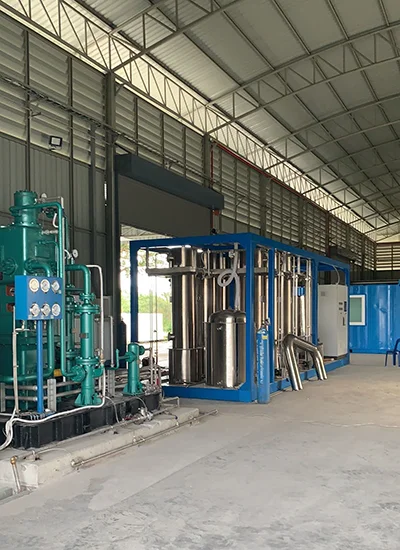
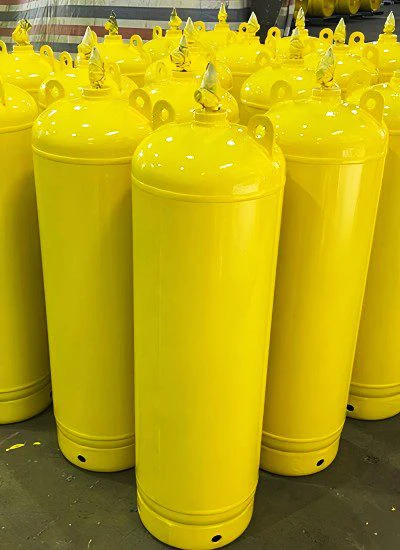

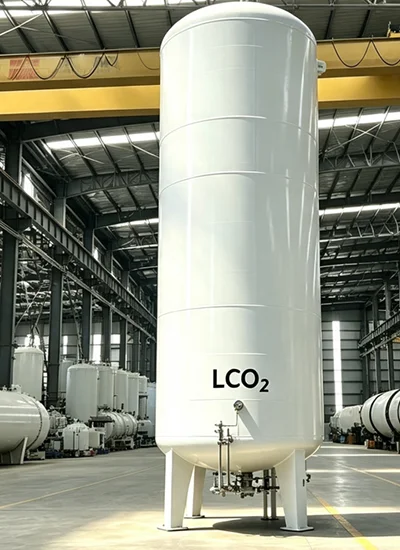
Liquid CO₂ storage tanks provide a reliable way to store and supply bulk liquid carbon dioxide for industrial and commercial applications. BluNet Industry supplies liquid CO₂ storage tanks in vertical and horizontal configurations, with capacities and pressure ratings selected according to gas consumption, installation conditions, applicable standards, and project requirements.
Our liquid carbon dioxide storage solutions are suitable for applications including food and beverage processing, dry ice production, welding, chemical processing, greenhouse CO₂ supply, and other bulk gas systems. For detailed product specifications, see our liquid CO₂ tank product page.
Liquid CO₂ Storage Tank Solutions
A liquid CO₂ storage system is designed to receive, store, and supply carbon dioxide in liquid form. Compared with individual high-pressure cylinders, bulk storage allows facilities with higher CO₂ consumption to maintain a continuous supply while reducing the frequency of cylinder handling and deliveries.
BluNet Industry provides liquid CO₂ storage tanks for different storage capacities, installation layouts, and operating requirements. Tank selection can be customized according to the required storage volume, design pressure, site conditions, filling method, delivery frequency, and applicable pressure-vessel requirements.
Liquid CO₂ Storage Tank Specifications
| Parameter | Typical Configuration |
|---|---|
| Stored medium | Liquid carbon dioxide (LCO₂) |
| Tank type | Double-wall pressure vessel |
| Configuration | Vertical or horizontal |
| Capacity | Multiple capacities available; customized designs possible |
| Design pressure | Selected according to operating conditions and applicable requirements |
| Inner vessel | Low-temperature pressure-vessel steel or specified material |
| Outer shell | Carbon steel or specified structural material |
| Insulation | Vacuum insulation system |
| Instrumentation | Pressure, level and temperature monitoring |
| Safety system | Relief valves and pressure-control devices according to design |
| Standards | According to destination, project specifications and applicable pressure-vessel codes |
Note: Final tank specifications, materials, pressure ratings, dimensions, insulation configuration and certification are determined according to the project design and applicable standards.
Vertical and Horizontal CO₂ Storage Tanks
Liquid CO₂ storage tanks are commonly supplied in vertical or horizontal configurations. The appropriate configuration depends on available space, storage capacity, foundation conditions, transport requirements, and the layout of the gas supply system.
Vertical Liquid CO₂ Tanks
Vertical tanks provide a relatively small ground footprint and can be suitable for facilities where installation space is limited. They are commonly used for bulk CO₂ storage where sufficient vertical clearance is available.
Horizontal Liquid CO₂ Tanks
Horizontal tanks can be suitable for sites with limited vertical clearance or specific foundation and equipment-layout requirements. The horizontal configuration can also simplify integration with certain unloading, piping, and distribution systems.
Liquid CO₂ Tank Design and Construction
A liquid CO₂ storage tank must maintain the required pressure and temperature conditions while limiting heat transfer from the surrounding environment. The tank design therefore combines a pressure vessel, outer shell, insulation system, instrumentation, valves, and safety devices.
Inner Vessel
The inner vessel contains the liquid CO₂ and is designed for the required low-temperature and pressure conditions. Material selection depends on the design temperature, pressure, applicable code, and project requirements.
Outer Shell
The outer shell provides structural protection for the insulated tank assembly. Its construction is selected according to the tank configuration, insulation system, environmental conditions, and applicable engineering requirements.
Insulation System
The insulation system reduces heat ingress into the stored liquid CO₂ and helps control pressure changes during storage. Vacuum-insulated construction is commonly used for bulk cryogenic and low-temperature storage applications.
Valves and Instrumentation
Depending on the system design, a liquid CO₂ storage tank can include liquid-level measurement, pressure gauges or transmitters, temperature monitoring, filling and withdrawal connections, pressure-control components, and pressure-relief devices.
Request a Liquid CO₂ Storage Tank Solution
Tell us your required capacity, operating conditions, and application. BluNet Industry can recommend a suitable liquid CO₂ storage tank and provide a customized quotation.
Liquid CO₂ Storage Tank Capacities
The required tank capacity should be determined from actual CO₂ consumption rather than selected only by the nominal storage volume. Daily consumption, peak demand, delivery frequency, required storage autonomy, available installation space, and supplier delivery conditions should all be considered.
For example, a facility with frequent liquid CO₂ deliveries may require less storage capacity than a remote facility where deliveries are less frequent. A higher-consumption operation may also require a larger tank or multiple storage tanks to maintain supply during peak demand.
BluNet Industry can supply liquid CO₂ storage solutions in multiple capacities and can work with customers to determine the appropriate configuration for a specific project.
Applications of Liquid CO₂ Storage Tanks
Food and Beverage Processing
Liquid CO₂ is widely used for beverage carbonation, food processing, cooling, freezing, and controlled-atmosphere applications. Bulk storage tanks provide a continuous CO₂ supply for facilities with regular consumption.
Dry Ice Production
Dry ice manufacturers use liquid CO₂ as the feedstock for producing solid carbon dioxide. A properly sized storage tank can provide the required bulk supply for continuous or batch production.
Welding and Metal Fabrication
CO₂ is used as a shielding gas in welding applications. Bulk liquid CO₂ storage can support centralized gas supply systems for fabrication facilities and other high-consumption operations.
Chemical Processing
Industrial processes may use carbon dioxide for chemical reactions, inerting, pH control, cooling, or other process requirements. Storage capacity and pressure-control requirements depend on the specific application.
Greenhouse CO₂ Supply
Controlled CO₂ supply can be used for greenhouse enrichment. Storage systems are selected according to greenhouse size, consumption profile, delivery schedule, and the requirements of the CO₂ distribution system.
Industrial Gas Supply Systems
Liquid CO₂ storage tanks can form part of a complete bulk gas supply system together with vaporizers, pumps, pressure-control equipment, piping, valves, and monitoring instruments.
How to Select a Liquid CO₂ Storage Tank
Choosing the right liquid CO₂ storage tank requires more than selecting a nominal capacity. The tank and supporting equipment should be matched to the facility’s consumption and operating conditions.
1. Determine CO₂ Consumption
Calculate average daily consumption, peak demand, seasonal variations, and expected future demand. This provides the basis for determining the required storage volume.
2. Determine Required Storage Capacity
Consider delivery frequency and the required number of days of storage. The selected capacity should provide sufficient operating reserve without unnecessarily increasing the footprint or capital cost of the installation.
3. Select the Design Pressure
The design pressure should be established from the required operating conditions, pressure-control strategy, filling conditions, safety requirements, and applicable pressure-vessel standards.
4. Choose Vertical or Horizontal Configuration
Evaluate available space, foundation requirements, transportation, installation access, piping layout, and required storage capacity before selecting the tank orientation.
5. Confirm Standards and Certification
The required pressure-vessel code, inspection, testing, certification, and documentation depend on the destination country and project specifications. These requirements should be established before manufacturing begins.
Liquid CO₂ Storage Tank Manufacturer
BluNet Industry designs and supplies liquid CO₂ storage tanks for industrial gas and bulk carbon dioxide applications. Our tank solutions can be configured according to storage capacity, pressure requirements, installation conditions, gas consumption, and applicable project standards.
We can support customers with tank configuration, technical specifications, equipment selection, and integration with related gas-supply equipment. For projects requiring a complete system, liquid CO₂ tanks can be combined with suitable pumps, vaporizers, pressure-control equipment, valves, and piping.
For detailed product information, visit the Liquid CO₂ Tank product page.

No comment