

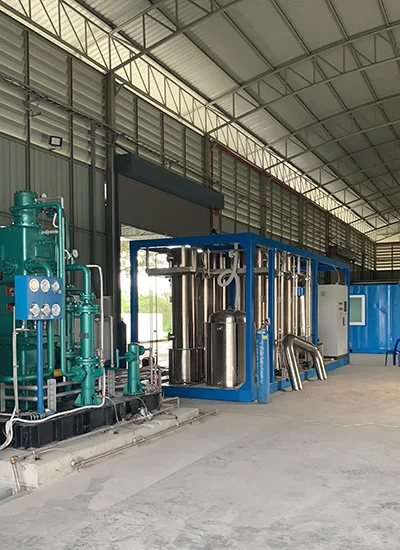
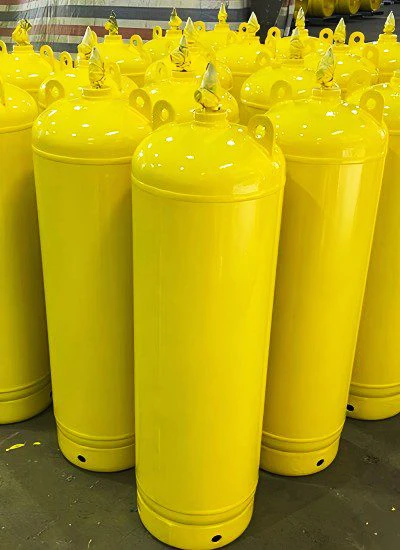
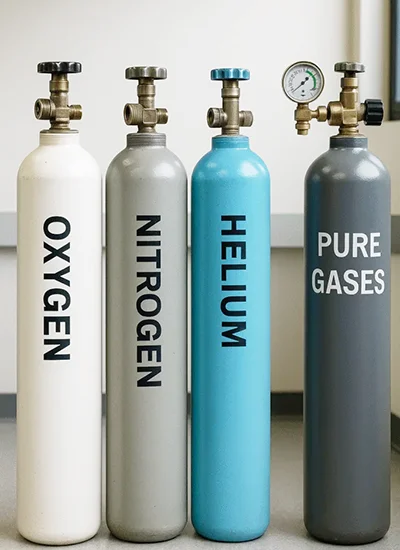

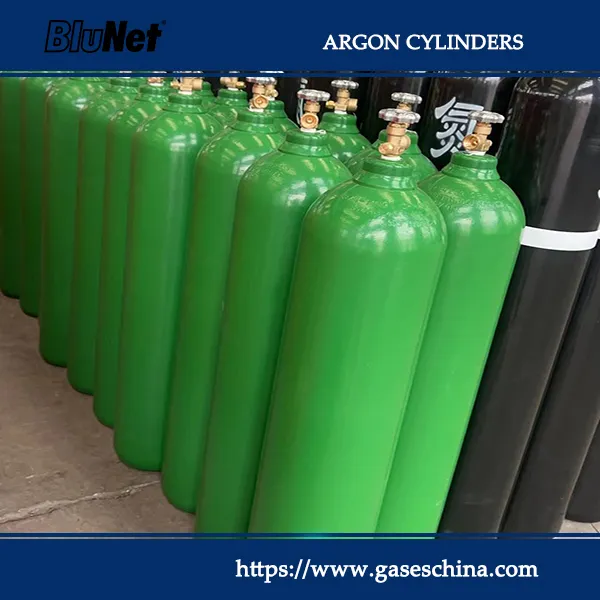
BluNet is a professional microbulk system manufacturer supplying integrated cryogenic gas storage and delivery systems for industrial, medical, food processing, electronics, laboratory, and other applications. Our microbulk systems combine cryogenic storage, pressure building, vaporization, piping, pressure regulation, instrumentation, and safety equipment to provide a reliable on-site gas supply.
Compared with conventional gas cylinders, a microbulk system can reduce cylinder handling and refill frequency while providing a centralized cryogenic gas storage system. Compared with large bulk cryogenic installations, microbulk systems can provide a more compact solution for facilities with moderate or growing gas consumption.
BluNet can configure and manufacture microbulk gas systems according to gas type, storage capacity, consumption rate, operating pressure, installation conditions, and downstream process requirements.
What Is a Microbulk Gas System?
A microbulk gas system is an on-site cryogenic gas storage and supply system designed for facilities with moderate or continuously increasing gas consumption.
Instead of supplying gas through multiple high-pressure cylinders, the system stores liquefied gas in a microbulk tank. The stored liquid is then vaporized and supplied to the customer’s process through a controlled gas distribution system.
A complete microbulk installation can include:
- Vacuum-insulated cryogenic storage tank
- Pressure-building system
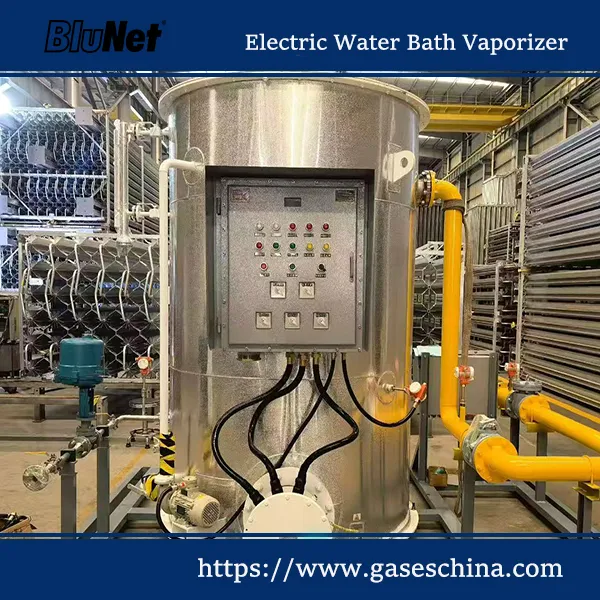
- Vaporizer
- Cryogenic piping
- Filling and venting connections
- Pressure regulation equipment
- Liquid-level measurement
- Pressure monitoring
- Safety relief devices
- Gas outlet and distribution connections
- Telemetry and monitoring equipment where required
Depending on the application and equipment configuration, microbulk systems can be designed for liquid nitrogen (LN₂), liquid oxygen (LOX), liquid argon (LAr), liquid carbon dioxide (LCO₂), and other compatible cryogenic gases.
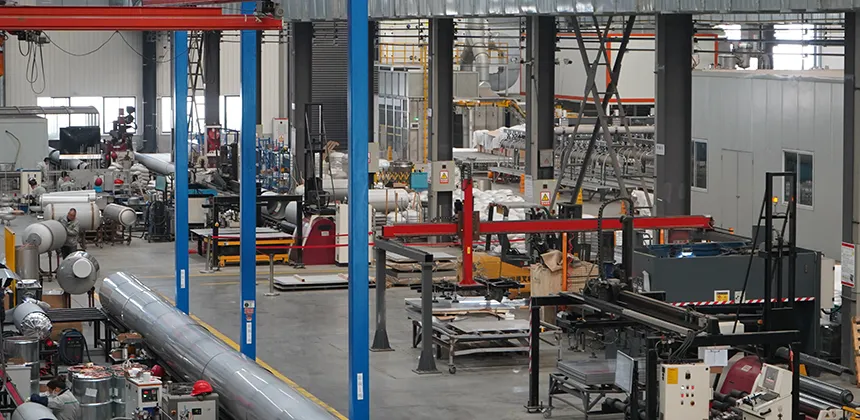
Microbulk System Manufacturing Capabilities
Manufacturing a complete microbulk system involves more than producing a cryogenic storage tank. The storage vessel, vacuum insulation, pressure-building circuit, vaporizer, cryogenic piping, valves, instrumentation, safety equipment, and gas outlet system must work together as an integrated gas supply installation.
BluNet provides manufacturing and engineering support for integrated microbulk gas systems, including:
- Cryogenic storage vessel manufacturing
- Vacuum insulation system fabrication
- Pressure-building systems
- Ambient or electric vaporization systems
- Cryogenic piping assemblies
- Pressure regulation systems
- Filling and venting systems
- Liquid-level measurement
- Pressure monitoring
- Safety relief equipment
- Gas outlet and distribution connections
- Skid or base-frame integration
- System testing and inspection
The final configuration is selected according to the gas, required storage capacity, consumption rate, working pressure, vaporizer capacity, installation conditions, and downstream gas requirements.
| Parameter | Manufacturing Range / Configuration |
|---|---|
| Gas Media | LN₂, LOX, LAr, LCO₂, N₂O and LNG, depending on system configuration |
| Tank Capacity | Approximately 500–7,000 L for microbulk tank configurations |
| Working Pressure | Approximately 0.8–3.5 MPa, depending on tank model and gas medium |
| Insulation | High-vacuum, multilayer insulation for reduced heat ingress and evaporation loss |
| Inner Vessel Material | Stainless steel, including 304/304L configurations according to gas, design requirements, and applicable standards |
| Monitoring | Level and pressure monitoring, with telemetry-ready configurations available |
| Vaporization | Integrated or matched cryogenic vaporization equipment selected according to required gas flow |
| Configurations | Vertical and application-specific microbulk storage configurations |
| Customization | OEM and project-specific configurations based on gas type, capacity, pressure, installation conditions, and applicable standards |
| Standards & Compliance | ASME, CE/PED, TPED, GB and other requirements depending on specification and destination market |
Actual tank dimensions, pressure ratings, insulation performance, instrumentation, and auxiliary equipment are selected according to the gas medium, required storage volume, gas consumption, peak demand, installation conditions, and applicable design standards.
Microbulk System Components
1. Vacuum-Insulated Cryogenic Tank
The cryogenic storage tank is the core component of a microbulk system. The inner vessel stores the cryogenic liquid, while the outer jacket provides the vacuum-insulated structure.
Vacuum insulation helps reduce heat transfer into the inner vessel and limits product evaporation. Tank capacity and pressure configuration are selected according to the gas consumption and operating requirements of the installation.
For projects requiring a complete gas supply solution, the microbulk tank can be integrated with the pressure-building circuit, vaporizer, piping, valves, instrumentation, and gas outlet system.
2. Pressure-Building System
A pressure-building circuit helps maintain the required pressure inside the storage vessel.
When tank pressure falls below the required operating range, a controlled amount of cryogenic liquid can be vaporized and returned to the vessel as gas. This process helps maintain stable storage pressure for gas delivery in suitable system configurations.
3. Vaporizer
The vaporizer converts cryogenic liquid into gas before the gas is supplied to the application.
Depending on gas demand and operating conditions, a microbulk system can incorporate an ambient air vaporizer or another suitable vaporization configuration.
Vaporizer selection depends on factors such as:
- Required gas flow
- Gas type
- Operating pressure
- Ambient conditions
- Continuous or intermittent demand
The vaporizer should be selected according to the actual process demand rather than simply the storage tank capacity.
4. Cryogenic Piping and Valves
Cryogenic piping connects the storage tank with the filling system, vaporizer, pressure-building circuit, gas outlet, and other system components.
Depending on the design, the piping arrangement may include:
- Liquid outlet lines
- Gas supply lines
- Fill connections
- Vent lines
- Pressure-building lines
- Safety relief lines
- Isolation valves
- Check valves
- Pressure regulators
The piping layout is engineered according to the required flow path, gas type, operating conditions, installation arrangement, and downstream application.
5. Instrumentation and Monitoring
Microbulk systems can incorporate pressure gauges, liquid-level indicators, monitoring instruments, and other control equipment.
Telemetry and remote monitoring can also be incorporated into suitable systems. These functions can help users monitor gas inventory and plan deliveries according to actual consumption.
How Does a Microbulk Gas System Work?
A typical microbulk gas supply process follows this sequence:
→
Tank Filling
→
On-Site Storage
→
Pressure Building
→
Vaporization
→
Pressure Regulation
→
Gas Distribution
→
Point of Use
1. Cryogenic Delivery and Tank Filling
The cryogenic liquid is delivered to the facility by a suitable tanker and transferred into the vacuum-insulated microbulk tank through the filling connection.
2. On-Site Cryogenic Storage
The liquid remains stored at cryogenic temperature inside the insulated vessel. The vacuum-insulated construction helps limit heat transfer and product evaporation.
3. Pressure Building
When required, the pressure-building circuit helps maintain the operating pressure inside the storage tank.
4. Vaporization
When the application requires gas, cryogenic liquid is directed through the vaporization system and converted into gas.
5. Pressure Regulation and Distribution
The gas passes through pressure-control equipment before entering the facility’s gas distribution system and reaching the production process.
This arrangement provides a centralized gas supply without the repeated replacement of individual cylinders.
Microbulk System vs. Gas Cylinders and Bulk Storage
Microbulk systems are generally suitable when gas consumption becomes too high for conventional gas cylinder delivery but does not require the capacity of a large bulk cryogenic storage installation.
| Gas Supply Method | Typical Use | Main Characteristics |
|---|---|---|
| Gas Cylinders | Low consumption | Flexible and portable, but requires frequent handling and replacement |
| Cylinder Bundles | Low to medium consumption | Higher gas inventory while still requiring cylinder management |
| Microbulk System | Medium and growing consumption | On-site cryogenic storage, fewer deliveries and continuous gas supply |
| Bulk Cryogenic Tank | High consumption | Large storage capacity for high-volume continuous demand |
The appropriate gas supply method depends on consumption, peak demand, required pressure, available installation space, delivery arrangements, and the specific requirements of the application.
Advantages of Microbulk Gas Systems
Continuous Gas Supply
A properly sized microbulk system can provide a stable gas supply without frequent cylinder changeovers.
Reduced Cylinder Handling
Replacing multiple cylinders with centralized cryogenic storage can reduce manual cylinder handling and simplify gas inventory management.
Lower Delivery Frequency
The larger on-site gas inventory can allow deliveries to be scheduled according to actual consumption rather than frequent cylinder replacement.
Reduced Product Loss
Centralized storage can reduce losses associated with residual gas and repeated cylinder changeovers.
Compact Installation
Compared with a large bulk storage installation, a microbulk system can provide substantial on-site storage within a relatively compact installation, depending on the required capacity and site conditions.
Automated Monitoring
Liquid-level monitoring and telemetry options can help users track inventory and plan refilling more efficiently.
Microbulk System Applications
Manufacturing
Liquid nitrogen, liquid oxygen and liquid argon can support manufacturing processes requiring a reliable on-site industrial gas supply.
Metal Fabrication and Welding
Argon, oxygen and other industrial gases can support welding, cutting and metal fabrication processes where continuous gas availability is important.
Food and Beverage Processing
Liquid nitrogen and carbon dioxide can be used for freezing, chilling, food processing and beverage applications.
Healthcare and Medical Facilities
Microbulk oxygen systems can support facilities requiring a dependable oxygen supply, subject to applicable medical-gas requirements and local regulations.
Electronics and Semiconductor Manufacturing
Nitrogen and argon can support inerting, purging and other controlled-atmosphere processes used in electronics and semiconductor manufacturing.
Laboratories and Research
Microbulk systems can provide a stable supply of cryogenic gases for laboratories, research facilities and other scientific applications.
Custom Microbulk System Engineering
Every facility has different gas consumption, pressure, installation and process requirements. For this reason, a microbulk system should be engineered around the actual operating conditions of the site.
BluNet can configure microbulk systems according to project-specific requirements, including:
- Gas type
- Storage tank capacity
- Working pressure
- Gas consumption rate
- Peak gas demand
- Vaporizer capacity
- Piping configuration
- Gas outlet pressure
- Filling connection
- Instrumentation
- Telemetry and monitoring
- Skid or foundation arrangement
- Gas distribution connections
- Safety equipment
For larger projects, the microbulk system can also be integrated with downstream gas distribution pipelines and other industrial gas storage solutions.
Information Required for Microbulk System Design
To select an appropriate microbulk system configuration, customers should provide as much of the following information as possible:
- Gas type
- Average gas consumption
- Peak gas demand
- Required gas flow
- Required outlet pressure
- Preferred or required storage capacity
- Installation location
- Available installation space
- Indoor or outdoor installation conditions
- Filling and delivery requirements
- Downstream process requirements
- Applicable local standards and regulations
Providing accurate consumption and pressure information helps engineers select the appropriate tank, vaporizer, piping arrangement and pressure-control configuration.
Microbulk System Manufacturing Process
1. Technical Requirement Analysis
BluNet reviews the gas type, consumption rate, required pressure, storage capacity, installation location, delivery method and applicable project requirements.
2. System Engineering and Design
Engineers determine the appropriate tank configuration, pressure rating, vaporizer capacity, piping arrangement, instrumentation and safety configuration based on the project requirements.
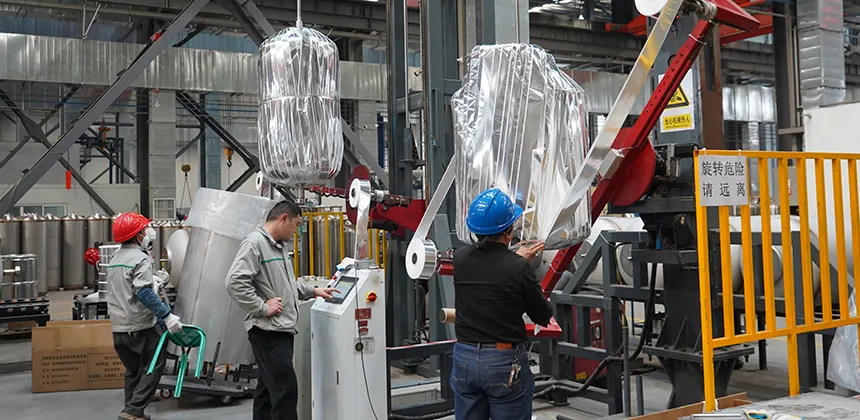
3. Component Manufacturing
The cryogenic vessel, vacuum jacket, piping assemblies and associated components are manufactured and prepared according to the approved design.
4. System Integration
The storage vessel is integrated with the pressure-building circuit, vaporizer, valves, instrumentation, gas outlet and other required components.
5. Inspection and Testing
Applicable pressure, vacuum, leakage, piping, instrumentation and other inspections are performed according to the project requirements.
6. Delivery and Installation Support
The completed system is prepared for shipment together with the technical documentation and installation information required for the project.
BluNet’s broader manufacturing capabilities include cryogenic vessel fabrication, vacuum insulation systems, pressure-vessel manufacturing, vacuum testing, leak testing and cryogenic piping systems.
Testing and Quality Control
Testing is an important part of manufacturing an integrated cryogenic gas supply system. The exact inspection and testing requirements depend on the equipment configuration, gas service, applicable standards and project requirements.
Depending on the system, applicable inspection activities may include:
- Pressure testing
- Vacuum testing
- Leak testing
- Piping inspection
- Valve and connection inspection
- Instrumentation checks
- System integration inspection
Project-specific documentation and inspection requirements can be reviewed during the engineering stage to ensure the system is prepared for its intended application and installation environment.
Why Choose BluNet as Your Microbulk System Manufacturer?
BluNet combines cryogenic equipment manufacturing with industrial gas storage and supply system engineering.
Our capabilities include:
- Microbulk tank manufacturing
- Cryogenic pressure vessel fabrication
- Vacuum insulation technology
- Gas supply system integration
- Cryogenic piping fabrication
- Vaporizer integration
- Pressure regulation
- Instrumentation and monitoring
- Quality inspection and testing
- OEM and project customization
- Export support for international projects
Rather than supplying only a storage tank, BluNet can provide an integrated microbulk gas supply system designed around the customer’s gas consumption, pressure requirements, installation conditions and downstream process.
This integrated approach can simplify project coordination by bringing the cryogenic storage, vaporization, pressure control, piping and monitoring requirements together within one engineered system.
Microbulk System Manufacturer for Industrial Gas Supply
A microbulk system can provide an effective alternative to conventional cylinder supply for facilities with moderate or continuously increasing gas demand.
By combining cryogenic storage, pressure building, vaporization, pressure regulation, monitoring and gas distribution, microbulk technology can provide a centralized gas supply while reducing cylinder handling and frequent changeovers.
BluNet manufactures and supplies custom microbulk gas systems for nitrogen, oxygen, argon, carbon dioxide and other compatible cryogenic gases. From individual microbulk tanks to integrated on-site gas supply systems, configurations can be developed according to application, capacity, pressure and installation requirements.
TECHNICAL FAQs
FAQs About Microbulk System Manufacturing
A complete microbulk system can include a vacuum-insulated cryogenic tank, pressure-building circuit, vaporizer, cryogenic piping, valves, pressure regulation equipment, filling and venting connections, instrumentation, safety devices, gas outlet connections, and monitoring or telemetry equipment where required.
Microbulk tank capacity should be selected according to factors such as gas type, average and peak consumption, required storage duration, operating pressure, delivery frequency, available installation space, and downstream process requirements.
Vaporizer selection depends on the required gas flow, gas type, operating pressure, ambient conditions, and whether gas demand is continuous or intermittent. The vaporizer should be sized according to actual process demand rather than tank capacity alone.
Yes. BluNet can configure microbulk systems according to gas type, storage capacity, working pressure, gas consumption rate, peak demand, vaporizer capacity, piping configuration, outlet pressure, instrumentation, telemetry, filling connections, and other project requirements.
Important information includes gas type, average and peak consumption, required gas flow, outlet pressure, storage requirements, installation location, available space, indoor or outdoor conditions, filling and delivery requirements, downstream process requirements, and applicable local standards or regulations.
Testing depends on the system configuration and applicable project requirements and may include pressure testing, vacuum testing, leak testing, piping inspection, valve and connection inspection, instrumentation checks, and system integration inspection.
Request a Custom Microbulk System
Looking for a microbulk system manufacturer for an industrial gas supply project? Send us your gas type, consumption, required pressure, storage requirements and installation conditions.
BluNet can evaluate the project requirements and develop a suitable microbulk system configuration covering cryogenic storage, pressure building, vaporization, piping, regulation, monitoring and gas distribution.
Contact BluNet for a technical consultation and customized microbulk system quotation.