

Argon (Ar) is a colorless, odorless, and chemically inert noble gas that makes up approximately 0.93% of the Earth’s atmosphere. Produced through cryogenic air separation, argon gas is widely used in industries that require oxidation control, contamination prevention, and stable high-temperature processing environments.
Because argon does not readily react with molten metals or sensitive materials, it has become one of the most important industrial gases for welding, metallurgy, semiconductor manufacturing, additive manufacturing, and energy-efficient construction systems.
In this guide, we explore the 10 most important industrial and commercial uses of argon gas, including real engineering applications, technical advantages, and industry-specific process details.
Why Is Argon Gas Used in Industry?
Argon is highly valued in industrial applications because of its exceptional inertness, low thermal conductivity, and stable shielding performance. Unlike oxygen, nitrogen, or carbon dioxide, argon does not react with molten metals at elevated temperatures, making it ideal for precision manufacturing environments.
Argon is commonly selected when industries require:
- Oxidation prevention during high-temperature processing
- Stable arc characteristics in welding operations
- Ultra-clean atmospheres for semiconductor production
- Improved thermal insulation in glazing systems
- Protection of reactive metals such as titanium and magnesium
High-purity industrial argon is commonly supplied at purity grades including:
- 99.99% Argon (4.0 Grade)
- 99.999% Argon (5.0 Grade)
- 99.9999% Ultra-High Purity Argon (6.0 Grade)
Semiconductor and laboratory applications typically require ultra-high purity (UHP) argon with extremely low oxygen and moisture content measured in parts per million (ppm).
1. Argon Gas in TIG & MIG Welding
The most widely known use of argon gas is in TIG (Tungsten Inert Gas) and MIG (Metal Inert Gas) welding processes. Argon acts as a shielding gas that isolates molten weld pools from atmospheric oxygen, nitrogen, and water vapor that could otherwise cause porosity, oxidation, and weld contamination.
Pure argon provides:
- Smooth arc starting characteristics
- Stable arc control
- Low spatter formation
- Cleaner weld appearance
- Improved penetration control
In TIG welding, 100% argon is commonly used for aluminum, titanium, magnesium, copper, and stainless steel fabrication.
For carbon steel MIG welding, argon is often blended with carbon dioxide. Common industrial shielding gas mixtures include:
- 75% Argon / 25% CO₂
- 90% Argon / 10% CO₂
- 98% Argon / 2% Oxygen
These mixtures improve arc stability while reducing excessive spatter and oxidation.
In aerospace and nuclear applications, ultra-high purity argon is frequently used to weld titanium and nickel alloys where contamination control is critical.
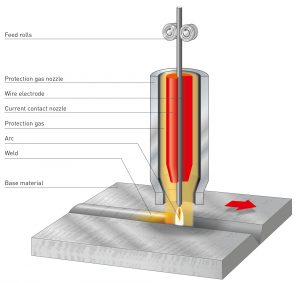
2. Stainless Steel & Steel Manufacturing
Argon gas plays a critical role in modern steelmaking, particularly in stainless steel refining and specialty alloy production.
One of the most important metallurgical processes is Argon Oxygen Decarburization (AOD), where argon is injected into molten steel together with oxygen to reduce carbon content while minimizing oxidation of chromium and other valuable alloying elements.
AOD technology helps manufacturers achieve:
- Improved stainless steel quality
- Lower alloy losses
- Better temperature control
- Reduced impurities
- Enhanced metallurgical consistency
Argon stirring is also used in ladle metallurgy to improve chemical homogeneity and remove dissolved gases from molten steel.
Modern steel plants commonly use bulk liquid argon systems connected to automated gas distribution networks for continuous production operations.
3. Semiconductor & Electronics Manufacturing
The semiconductor industry relies heavily on ultra-high purity argon gas for microelectronics and wafer fabrication processes. Even trace contamination can damage semiconductor components, making inert gas protection essential.
Argon is widely used in:
- Silicon crystal growth
- Wafer processing
- Sputtering and thin-film deposition
- Semiconductor etching systems
- Cleanroom atmosphere control
During sputtering processes, argon plasma ions bombard target materials to deposit ultra-thin conductive coatings onto semiconductor wafers.
Many semiconductor facilities require argon with oxygen and moisture impurity levels below 1 ppm to maintain manufacturing precision.
High-purity argon is also used in lithium battery manufacturing and advanced electronics assembly.
4. 3D Metal Printing & Additive Manufacturing
Argon gas is essential in metal additive manufacturing systems such as Selective Laser Melting (SLM) and Direct Metal Laser Sintering (DMLS).
Reactive metal powders rapidly oxidize when exposed to air at high temperatures. Argon creates an oxygen-controlled atmosphere that protects molten metal during the printing process.
Most industrial metal 3D printers maintain oxygen concentrations below 100 ppm inside the build chamber to ensure part quality and prevent oxidation defects.
Argon atmospheres help improve:
- Mechanical strength
- Surface finish quality
- Dimensional accuracy
- Corrosion resistance
- Powder reusability
Industries using argon-based additive manufacturing include aerospace, medical implants, automotive engineering, and precision tooling.
5. Heat Treatment & Furnace Protection
Industrial heat treatment operations frequently use argon gas to protect metal components during high-temperature processing.
Processes such as annealing, brazing, sintering, and vacuum heat treatment require oxygen-free environments to prevent surface scaling and material degradation.
Argon is especially valuable in vacuum furnaces because it remains stable at elevated temperatures and does not react with sensitive alloys.
Typical industrial applications include:
- Aerospace turbine components
- Tool steel heat treatment
- Medical-grade stainless steel processing
- Powder metallurgy
- Precision automotive components
In many high-performance furnace systems, argon dew point levels below -75°F are maintained to minimize moisture contamination during processing.
6. Titanium & Reactive Metal Fabrication
Titanium, zirconium, and magnesium are highly reactive metals that can absorb oxygen, hydrogen, and nitrogen during high-temperature fabrication processes.
Argon shielding is essential during:
- Titanium welding
- Vacuum arc remelting
- Reactive metal casting
- Aerospace component manufacturing
- Medical implant fabrication
In titanium welding operations, backside argon purging is often required to protect the root side of weld joints from oxidation.
Without proper argon shielding, titanium welds may develop discoloration, brittleness, and reduced corrosion resistance.
For critical aerospace applications, oxygen contamination levels must be tightly controlled to preserve mechanical integrity.
7. Insulated Glass & Energy-Efficient Windows
Argon gas is widely used in insulated glazing units (IGUs) for commercial and residential energy-efficient windows.
Because argon has lower thermal conductivity than normal air, it reduces heat transfer between glass panes and improves overall window insulation performance.
Argon-filled windows can help:
- Improve thermal insulation performance
- Reduce HVAC energy consumption
- Minimize condensation formation
- Enhance indoor comfort
- Improve acoustic insulation
Most double-glazed window systems use argon concentrations between 90% and 95% within the sealed cavity for optimal performance.
Argon-filled glazing systems are commonly used in green buildings, commercial towers, and energy-efficient residential construction projects.
8. Laser Technology & Scientific Equipment
Argon is used in various laser systems, spectroscopy instruments, and laboratory equipment requiring stable ionized gas environments.
Argon-ion lasers generate wavelengths commonly used in:
- Scientific research
- Biomedical applications
- Optical testing systems
- Holography
- Precision measurement instruments
In analytical laboratories, argon is also widely used in ICP (Inductively Coupled Plasma) spectroscopy systems for elemental analysis.
ICP systems use argon plasma temperatures exceeding 7,000 K to excite atoms for highly accurate material composition testing.
9. Food Packaging & Preservation
Argon gas is used in modified atmosphere packaging (MAP) systems to help preserve food quality and extend shelf life.
Because argon is denser than air, it effectively displaces oxygen inside packaging containers, reducing oxidation and slowing spoilage processes.
Argon is commonly used for:
- Wine preservation
- Premium beverage packaging
- Specialty food storage
- Oxidation-sensitive products
Compared with nitrogen, argon can provide improved oxygen displacement efficiency in certain packaging applications due to its higher density.
10. Lighting & Specialty Electronics
Argon gas is commonly used in incandescent bulbs, fluorescent lighting systems, plasma displays, and specialty electronic equipment.
Inside incandescent lamps, argon helps protect tungsten filaments from oxidation while reducing evaporation rates that shorten bulb lifespan.
Argon is also used in:
- Neon and plasma lighting
- Gas discharge tubes
- Scientific instruments
- Specialty electronic components
- Protective electronics manufacturing atmospheres
Its stable ionization characteristics make argon suitable for controlled plasma applications and high-voltage electrical systems.
Argon vs Nitrogen: Why Choose Argon?
| Property | Argon | Nitrogen |
|---|---|---|
| Chemical Reactivity | Highly inert noble gas | Moderately inert |
| Welding Performance | Excellent arc stability and clean welds | Limited shielding performance |
| Density | Heavier than air | Lighter than argon |
| Thermal Conductivity | Lower thermal conductivity | Higher thermal conductivity |
| Typical Applications | Welding, metallurgy, semiconductors | Food packaging, chemical inerting |
Industrial Argon Gas Supply Options
Industrial argon gas is supplied in multiple formats depending on consumption requirements and application conditions.
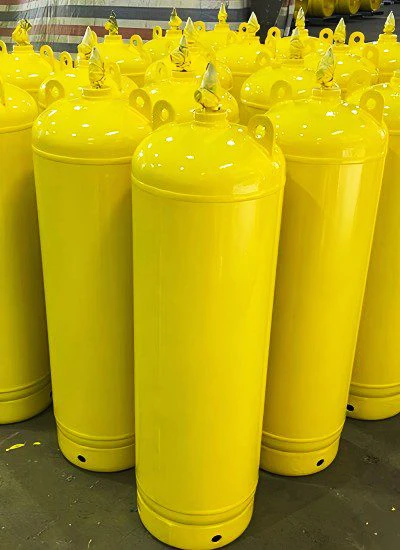
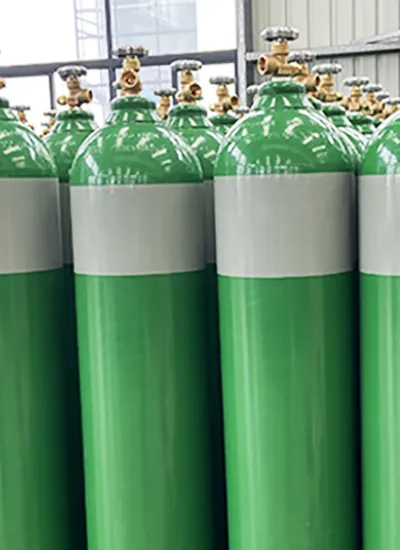
- High-pressure argon gas cylinders
- Liquid argon dewars
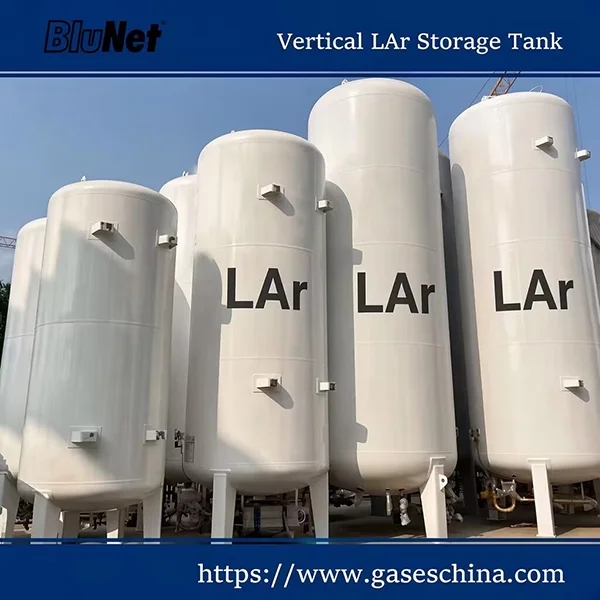
- Bulk liquid argon tanks
- Microbulk gas systems
- Ultra-high purity argon supply systems
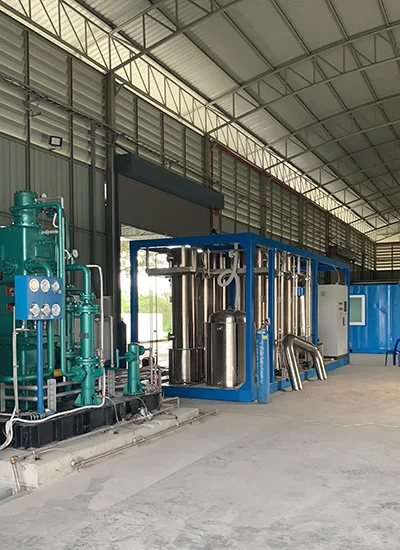
Large manufacturing facilities often use centralized bulk gas systems with automated pressure regulation and gas monitoring systems for continuous industrial operations.
High-purity argon distribution systems may include stainless steel piping, gas purification units, and moisture analyzers to maintain gas quality standards.
TECHNICAL FAQs
FAQs About Industrial Uses of Argon
Argon gas is mainly used for welding, steel manufacturing, semiconductor production, additive manufacturing, heat treatment, and energy-efficient glazing systems.
Argon provides a stable inert shielding atmosphere that protects molten metal from oxidation and contamination during welding processes.
No. Argon is a non-flammable and non-reactive noble gas.
High-purity argon is commonly used in semiconductor manufacturing, electronics, aerospace, laboratories, and advanced metal fabrication.
Industrial argon is commonly available in 99.99%, 99.999%, and ultra-high purity 99.9999% grades depending on application requirements.
Conclusion
Argon gas is one of the most important industrial gases used in modern engineering and manufacturing. Its inert properties, excellent shielding performance, and ability to create highly stable protective atmospheres make it essential across industries ranging from welding and metallurgy to semiconductor fabrication and additive manufacturing.
As advanced manufacturing technologies continue to evolve, the demand for high-purity argon gas and precision gas supply systems is expected to grow across global industrial markets.
Whether used in TIG welding, stainless steel refining, semiconductor production, or energy-efficient glazing systems, argon gas remains a critical component of modern industrial processes.

No comment