

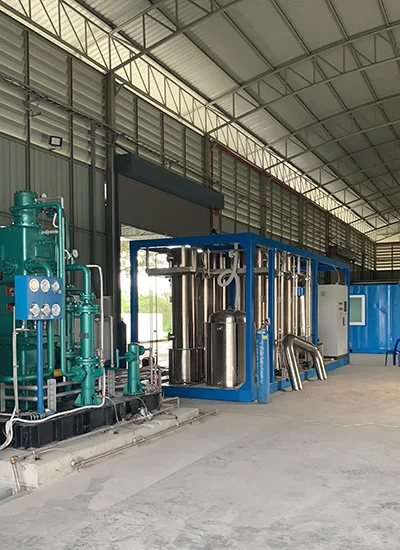
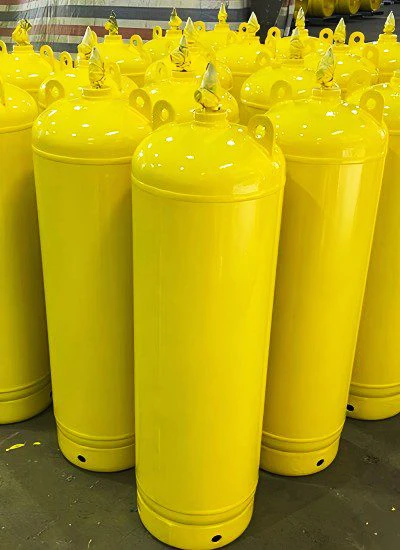
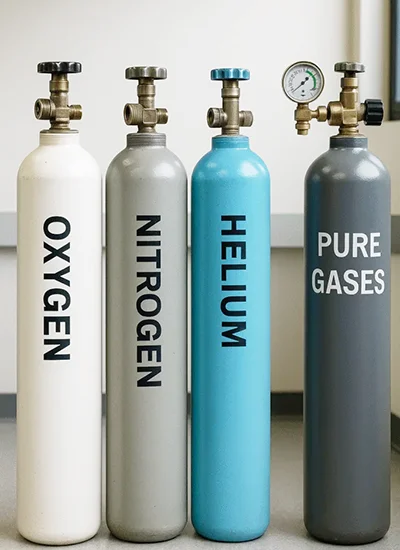
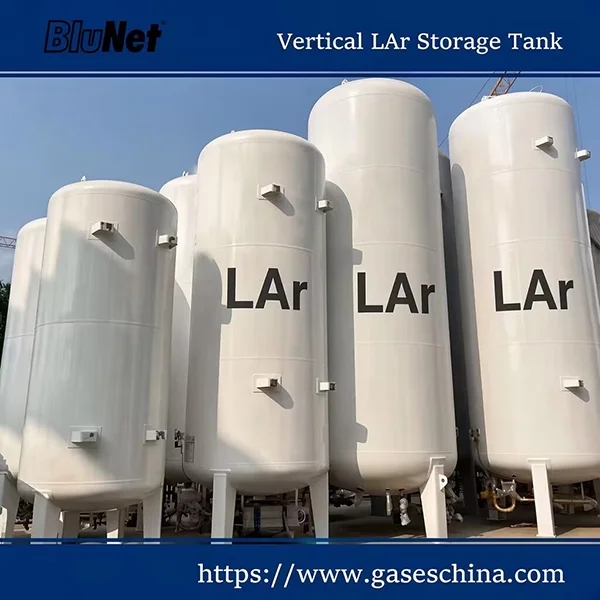
Cryogenic vessels are highly engineered cryogenic tanks and storage systems designed to safely store, transport, and handle liquefied gases at extremely low temperatures, typically below −150°C (−238°F). These include liquid nitrogen (LIN), liquid oxygen (LOX), liquid argon (LAR), liquefied natural gas (LNG), and liquid hydrogen (LH₂). Reliable cryogenic vessel manufacturers and cryogenic vessel suppliers are essential for industrial gas, LNG, hydrogen mobility, medical, and aerospace applications.
Industrial, energy, and medical sectors require high-performance cryogenic tanks manufacturer solutions that combine thermal efficiency, pressure safety, and compliance with international standards such as ASME, PED, DOT, EN, and ISO. Improper storage can lead to catastrophic pressure rise, oxygen deficiency hazards (ODH), hydrogen permeation, or material embrittlement. Therefore, only qualified cryogenic tank manufacturers and cryogenic tank suppliers should design, fabricate, and maintain these critical systems.
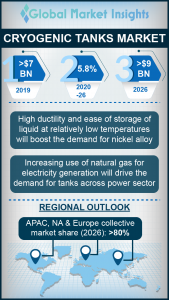
What Is a Cryogenic Vessel?
A cryogenic vessel is a thermally insulated container designed to safely store, transport, and handle liquefied gases at ultra-low temperatures. These vessels minimize heat ingress, maintain structural integrity, and control internal pressure for safe operation.
Types of Cryogenic Vessels
- Cryogenic Tanks: Large, stationary tanks for bulk storage of nitrogen, oxygen, LNG, or hydrogen.
- Cryogenic Dewars: Smaller, insulated containers for laboratories, hospitals, or research facilities.
- LNG Storage Tanks: Full-containment or membrane tanks for LNG storage at low temperatures and high pressures.
- Cryogenic Transport Vessels: Mobile ISO tanks, road tankers, or rail tankers for safe cryogenic liquid transport.
- Cryogenic Pressure Vessels: Vessels designed for high-pressure storage of hydrogen, helium, or industrial gases.
- Microbulk Vessels: Small intermediate storage tanks for steady supply to industrial or medical users.
- Cryogenic Bins: Portable containers for smaller quantities, e.g., cryopreservation or food freezing.
- Aerospace Cryogenic Tanks: Specialized tanks for rocket propellants like liquid hydrogen and oxygen.
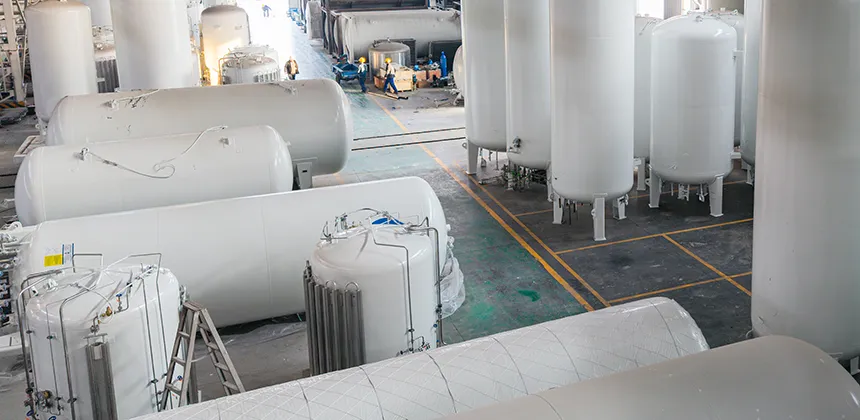
Top Cryogenic Vessel Manufacturers in the World (2026)
Answer: The leading cryogenic vessel manufacturers in 2026 are Chart Industries, Linde Engineering, DSW Industry, Cryofab Inc., INOXCVA, Wessington Cryogenics, VRV S.p.A., Cryolor, Air Products and Chemicals Inc., and Taylor-Wharton.
These companies are recognized globally for their engineering capability, LNG infrastructure solutions, hydrogen-ready cryogenic systems, and compliance with international standards such as ASME and PED.
Top Cryogenic Vessel Manufacturers (2026 List)
- Chart Industries — USA
- Linde Engineering / Linde plc — Germany / Ireland
- DSW Industry — China
- Cryofab Inc. — USA
- INOXCVA — India
- Wessington Cryogenics — United Kingdom
- VRV S.p.A. — Italy
- Cryolor — France
- Air Products and Chemicals, Inc. — USA
- Taylor-Wharton — USA
How We Evaluated These Manufacturers
Top Cryogenic Vessel Manufacturers & Suppliers (2026)
| Manufacturer | Country / Region | Founded | Key Cryogenic Products | Main Industries Served | LNG / Hydrogen Capability |
|---|---|---|---|---|---|
| Chart Industries | USA | 1992 | Bulk cryogenic tanks, ISO containers, transport trailers, vaporizers, heat exchangers | Industrial gas, LNG, hydrogen energy, aerospace | Yes – LNG & hydrogen fueling systems |
| Cryofab Inc. | USA | 1971 | Cryogenic vessels, dewars, hoses, valves, liquid gas tanks | Laboratory, medical, semiconductor, biotech | Limited hydrogen systems |
| DSW Industry | China | 2004 | Cryogenic storage tanks, microbulk tanks, LNG tanks, vaporizers, ISO tanks | Industrial gas, LNG, medical gas, energy, manufacturing | Strong LNG and liquid hydrogen storage capability |
| Cryogas Equipment Pvt. Ltd. | India | 1997 | Bulk cryogenic storage tanks, valves, vacuum insulated piping | Industrial gas, medical gas supply, research | LNG storage capability |
| Cryoquip Australia | Australia | Part of Cryogenic Industries | Cryogenic process equipment, LNG systems | LNG processing, industrial gases, well services | Strong LNG capability |
| Eden Cryogenics | USA | 1960s | Cryogenic vessels, cryopumps, cryostats, vacuum piping | Aerospace, laboratories, energy systems | Specialized cryogenic systems |
| FIBA Technologies | USA | 1958 | Gas containment systems, cryogenic storage equipment | Industrial gas, chemicals, offshore energy | Alternative fuels including LNG |
| Linde Engineering / Linde plc | Germany / Ireland | 1879 | Cryogenic storage tanks, process plant equipment, EPC systems | Industrial gas, electronics, energy, healthcare | Advanced hydrogen & LNG infrastructure |
| Wessington Cryogenics | United Kingdom | 1984 | Cryogenic vessels, research tanks, custom cryogenic systems | Scientific research, healthcare, green energy | Hydrogen storage projects |
| Gardner Cryogenic | USA | 1960s | Helium and hydrogen transport tanks | Hydrogen energy, helium logistics | Strong hydrogen transport capability |
| Suretank Group Ltd | Ireland | 1995 | Offshore tanks, cryogenic containers, pressure vessels | Energy, marine, infrastructure | LNG and energy storage systems |
| VRV S.p.A. | Italy | 1956 | Cryogenic bulk storage tanks, vaporizers, microbulk tanks | Healthcare, electronics, food industry, energy | LNG and hydrogen capable systems |
| Nikkiso Cryoquip | USA / Japan | Part of Nikkiso Group | Cryogenic pressure vessels, LNG process equipment | LNG industry, industrial gases, energy | Strong LNG systems expertise |
| Air Products and Chemicals, Inc. | USA | 1940 | Cryogenic tanks, vaporizers, industrial gas equipment | Manufacturing, healthcare, food processing | Hydrogen and LNG infrastructure |
| Taylor-Wharton | USA | 1742 (historical roots) | Cryogenic dewars, liquid nitrogen and oxygen tanks | Medical, laboratory, industrial gas | Limited LNG capability |
| Messer Group | Germany | 1898 | Cryogenic tanks, vaporizers, gas storage systems | Healthcare, food industry, manufacturing | Industrial LNG storage |
Leading Cryogenic Vessel Manufacturers & Suppliers
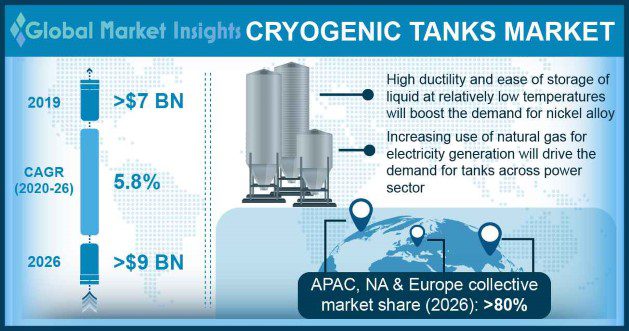
The top 15 cryogenic tank manufacturers & cryogenic storage equipment suppliers are Listed in the Cryogenic Tank Market Report.
Chart Industries
Chart Industries, Inc., headquartered in Ball Ground, Georgia, USA, is a leading global cryogenic vessel manufacturer and supplier serving the liquid-gas supply chain.
Chart designs and manufactures bulk cryogenic storage tanks, transport trailers, ISO containers, liquid cylinders, vaporizers, brazed-aluminum heat exchangers, and integrated LNG and hydrogen systems.
Their vacuum-insulated technologies and extensive service network support industrial gas, energy, aerospace, medical, and clean-energy markets worldwide, with manufacturing and service operations across the United States, Europe, India, and China.
Core Products
- Bulk cryogenic storage tanks & transport trailers
- ISO containers, liquid cylinders & microbulk systems
- Brazed aluminum heat exchangers and vaporizers
- LNG & hydrogen fueling systems and integrated cryogenic solutions
Quality & Standards
Chart prioritizes vacuum-insulation technology and holds industry certifications to ensure safe, reliable cryogenic storage and transfer equipment.
Applications
Products are used in industrial gas distribution, energy and LNG projects, aerospace, medical oxygen supply, and hydrogen/clean-energy infrastructure.
● Cryofab Inc.
Cryofab, Inc. is a cryogenics company and a leading cryogenic tank supplier in the global cryogenic equipment marketplace. The company manufactures and services cryogenic storage and accessories, offering both custom and standard fabrications to customers worldwide.
Core Products
- Cryogenic tanks, dewars, and vessels
- Hoses and valves of all sizes
- Storage and transport solutions for liquid helium, argon, liquid oxygen, liquid nitrogen, liquid hydrogen, and LNG
Quality & Standards
Cryofab provides products compliant with ASME, DOT, and PED standards. In-house cryogenic engineers assist with OEM or private label fabrication, supporting prototype and production runs for industrial, laboratory, medical, biotech, pharmaceutical, superconductivity, semiconductor, and homecare applications.
DSW Industry
Company Overview
DSW Industry is an emerging global supplier specializing in cryogenic storage and transportation systems for LNG, industrial gases, and clean energy applications. The company provides customized cryogenic equipment solutions designed for international markets and industrial projects requiring reliable performance with competitive pricing.
With strong manufacturing capabilities and export experience, DSW Industry supports customers across Asia, the Middle East, Africa, and other developing markets.
Key Strengths
- Cost-effective cryogenic storage solutions
- Flexible OEM and custom manufacturing capabilities
- International certifications and export support
- Broad range of cryogenic and LNG equipment
- Strong focus on customer-specific engineering solutions
Product Range
- Cryogenic liquid storage tanks
- LNG storage tanks
- Cryogenic ISO tank containers
- Cryogenic semi-trailers
- Microbulk storage systems
- Vaporizers and cryogenic pumps
- CNG tank containers
Best Applications
- LNG distribution projects
- Industrial gas supply systems
- Emerging market infrastructure projects
- Custom-engineered cryogenic systems
- OEM manufacturing partnerships
Competitive Advantage
Compared with many traditional Western suppliers, DSW Industry offers a strong balance between cost efficiency, engineering flexibility, and international manufacturing capability. This makes the company particularly attractive for buyers seeking customized cryogenic equipment with competitive project budgets.
● Cryogas Equipment Private Ltd
Cryogas Equipment Pvt. Ltd., based in India, is a prominent cryogenic storage tank manufacturer and supplier of cryogenic systems. The company produces a variety of storage solutions for the transportation and storage of industrial gases such as nitrogen, oxygen, and argon.
Core Products
- Bulk cryogenic tanks for industrial and medical gases
- Cryogenic valves and couplings
- Vacuum-insulated piping and transport solutions
Applications
Cryogas tanks are widely used in medical gas distribution, industrial gas supply, and research facilities. The company is known for providing reliable, cost-effective cryogenic solutions tailored to customer needs.
● Eden Cryogenics
Eden Cryogenics is a cryogenic vessel supplier specializing in cryogenic equipment. The company offers engineering, design, and manufacturing of cryogenic and high-vacuum systems, including cryogenic vessels, helium refrigerators, cryopumps and cryopump systems, heat exchangers, cryogenic compressor skids, cryogenic test systems, cryostats, vacuum-insulated piping, and custom-engineered systems.
Core Products & Services
- Cryogenic vessels and high-vacuum equipment
- Helium refrigerators, cryopumps, and cryostats
- Heat exchangers and compressor skids
- Vacuum-insulated piping and custom-engineered systems
- Cryogenic valves, couplings, and filters
Applications
Eden Cryogenics serves the energy, laboratory, and aerospace sectors, providing reliable, precision-engineered cryogenic solutions.
● Cryoquip Australia
For nearly 75 years, Cryogenic Industries, Inc. and its member companies have manufactured engineered cryogenic equipment and small-scale process plants for the liquefied natural gas (LNG), well services, and industrial gas industries.
Corporate Structure
Cryogenic Industries is the parent company of Nikkiso ACD, Nikkiso Cosmodyne, and Nikkiso Cryoquip, overseeing a group of 20 operating entities, including Nikkiso Cosmodyne India (formerly Rhine Engineering), Nikkiso ACD Cryo (Europe), Nikkiso Cryoquip Australia, Nikkiso Cryoquip—U.K., and Nikkiso Cryogenic Industries Service Companies.
Markets & Applications
The group provides cryogenic equipment solutions for LNG, industrial gases, and well services, supporting global customers with manufacturing and service capabilities.
● FIBA Technologies
FIBA Technologies, Inc. is a leading global gas containment equipment and cryogenic solutions provider serving industrial gas, chemicals, specialty gas, offshore oil and gas exploration, and alternative fuel industries. Founded in 1958, FIBA is focused on delivering safe, technologically advanced, and high-quality products to customers worldwide.
Core Focus
- Industrial gas and specialty gas containment equipment
- Cryogenic equipment for chemicals, LNG, and alternative fuels
- Offshore oil and gas exploration support systems
Commitment
FIBA Technologies continues to expand in markets requiring cryogenic equipment and services, maintaining excellence and driving innovation in the industry.
● Linde AG
Linde AG—now part of **Linde plc**, a global industrial gases and engineering leader—is one of the world’s largest suppliers of atmospheric and specialty gases and a major provider of cryogenic equipment, including cryogenic storage tanks and plant components. Linde Engineering has delivered more than 20,000 cryogenic tanks for liquefied gases with capacities ranging from 3,000 L to over 100,000 L and offers both standard designs and customized solutions for a wide range of applications.
Core Products
- Vacuum‑insulated cryogenic storage tanks for LIN, LOX, LAR, LNG and hydrogen
- Cryogenic process plant components (tanks, heat exchangers, coldboxes)
- Engineering and EPC services for gas production and handling facilities
Quality & Standards
Linde’s cryogenic tanks comply with international standards such as PED and ASME VIII and are engineered for secure storage and handling of liquefied industrial gases.
Applications
Products support a wide spectrum of industries, including industrial gas distribution, energy, water treatment, food & beverage, electronics manufacturing, healthcare, and clean energy infrastructure.
● Wessington Cryogenics
Wessington Cryogenics is an engineering-led, solutions-driven, and customer-focused cryogenic vessel manufacturer. Founded in 1984 and based in the UK, the company provides small tanks for industrial and medical research applications. Today, Wessington operates from a 70,000‑sq.-ft. facility with over 130 employees delivering cryogenic vessels worldwide.
Special Projects & Innovations
- Bespoke cryogenic vessels for particle physics research
- Specialized tanks for ‘Around the World’ ballooning records
- Cryogenic solutions for hydrogen and other green energy applications
Applications
Wessington Cryogenics serves industrial, medical, and green energy sectors, offering innovative, precision-engineered cryogenic storage and transport solutions.
● Linde Engineering / Linde plc
Linde is a leading global industrial gases and engineering company serving a wide range of end markets, including chemicals and energy, food and beverages, electronics, healthcare, manufacturing, metals and mining. Every day around the world, its people aim to make operations more productive by providing high‑quality solutions, advanced technologies, and services that help customers succeed while supporting sustainability, decarbonization, and environmental protection.
Core Expertise
- Industrial gases production and supply (oxygen, nitrogen, hydrogen, specialty gases)
- Engineering, procurement & construction (EPC) of gas processing and cryogenic plants
- Cryogenic storage tanks and plant components for liquefied gases
- Technologies for clean hydrogen, carbon capture, and energy transition solutions
Key Capabilities
Linde Engineering has supplied more than 20,000 cryogenic tanks for liquefied gases, with capacities ranging from small vessels to large tanks exceeding 100,000 L. These tanks and related cryogenic components are engineered to meet international safety standards such as PED and ASME VIII and are used for storing gases like liquid nitrogen (LIN), oxygen (LOX), argon (LAR), LNG, and liquid hydrogen.
● Gardner Cryogenic
Gardner Cryogenics designs and manufactures high-performance, highly reliable, long-lasting storage tanks used to transport hydrogen and helium molecules around the globe. With more than five decades of experience, Gardner provides customers with industry-leading technology, enabling them to move and store molecules with near-zero loss cost-effectively. The unique technology developed by Gardner provides the lowest heat leak for the highest yield when transporting, storing, and transferring helium and hydrogen.
Our experienced team of cryogenics experts works with our customers to leverage our technology to meet their specific storage, transportation, and budget needs.
● Suretank Group Ltd
Founded in 1995 in Co. Louth, Ireland, Suretank is a leading engineering solutions company with 27+ years of experience designing and manufacturing certified products, services, and solutions.
As one of the leading cryogenic tank suppliers, Suretank provides modular solutions (OSM), offshore tank and container solutions, and bespoke pressure vessel solutions for the energy, marine, infrastructure, and industrial sectors.
● VRV SpA
VRV S.p.A. designs and manufactures pressure cryogenic equipment for chemical, petrochemical, power, and cryogenic industries.
The Cryogenic Division engages in the design and manufacture of cryogenic equipment for the transport, storage, and distribution of liquefied technical gases, such as nitrogen, oxygen, argon, LNG (natural gas), hydrogen, and other hydrocarbons for use in industrial, healthcare, electronics, food, energy, and environmental applications. It offers standard cryogenic bulk storage tanks, shop-built engineered storage tanks, site-built custom-made storage tanks, cryogenic distribution equipment, micro bulk cryogenic tanks, ambient air vaporizers, nitrogen tanks, cryo solutions, turnkey systems, liquid helium dewars and tanks, homecare medical systems, and vacuum insulated piping.
● Nikkiso Cryoquip
Nikkiso Cryoquip, part of the Nikkiso Cryogenic Industries group, specializes in manufacturing cryogenic equipment for various industries, including LNG, industrial gases, and energy. The company provides highly reliable, cost-effective cryogenic storage and transportation solutions, including cryogenic pressure vessels, bulk storage tanks, and vaporization equipment. Nikkiso Cryoquip is committed to delivering safe and efficient cryogenic products, offering both off-the-shelf and customized solutions to meet the specific needs of its global customer base.
● Air Products and Chemicals, Inc.
Air Products and Chemicals, Inc. is a major global player in the industrial gases sector, providing cryogenic equipment for the storage and distribution of gases like oxygen, nitrogen, and hydrogen. The company’s cryogenic tanks and vaporizers are used across various industries, including healthcare, manufacturing, food and beverage, and energy. Air Products is known for its technological innovation and commitment to sustainability, delivering solutions that ensure safe, efficient, and cost-effective cryogenic storage and transportation.
● Taylor-Wharton
Taylor-Wharton is a long-established manufacturer of cryogenic equipment and pressure vessels. The company specializes in producing cryogenic tanks and dewars for medical, industrial, and laboratory applications. Taylor Wharton’s products are designed to meet rigorous safety standards, with a strong focus on reliability and durability. Their cryogenic solutions include liquid nitrogen tanks, oxygen tanks, and helium dewars. They have a reputation for offering high-quality, customizable products.
● Messer Group
Messer Group is a global industrial gas supplier, providing a range of cryogenic products and solutions for industries like healthcare, food and beverage, and energy. Messer offers a wide selection of cryogenic tanks, vaporizers, and other equipment for storing and transporting industrial gases. With a focus on providing reliable and sustainable solutions, Messer Group serves customers worldwide, helping them meet the growing demand for efficient cryogenic storage and distribution systems.
The organization offers many products, including bulk storage tanks, liquid helium dewars, self-pressurizing vessels, cryogenic equipment, ISO containers, and road tankers. It also offers an ever-increasing range of services, including custom designs, repairs, and refurbishments, as well as the provision of spares and accessories.
How to Evaluate a Cryogenic Vessel Supplier (2026 Buyer Checklist)
- ASME / PED certification
- Welding procedure qualification records (WPQR)
- NDT and vacuum testing capability
- Hydrogen compatibility (if applicable)
- Heat leak rate performance
- Vacuum retention performance
- Insulation system (perlite vs MLI)
- Shop-built vs site-built capacity
- ISO tank fabrication capability
- Microbulk production capacity
- Turnkey system integration
- Spare parts availability
- Field service engineering
- Re-vacuum and refurbishment capability
- Regulatory documentation traceability
Cryogenic Storage Equipment Market Overview
LNG, Hydrogen, and Industrial Gas Markets Driving Growth
The 2026 cryogenic vessel market is heavily influenced by LNG export expansion, hydrogen refueling infrastructure growth, semiconductor manufacturing development, carbon capture liquefaction projects, and aerospace cryogenic applications.
Hydrogen storage is reshaping cryogenic pressure vessel design requirements, emphasizing embrittlement resistance, permeability control, and ultra-low heat ingress.
Mission-Critical Cryogenic Vessels
Cryogenic vessels are mission-critical assets in energy, healthcare, industrial gas, and aerospace sectors. As global energy systems evolve toward LNG and hydrogen, the demand for compliant, thermally efficient, and mechanically robust cryogenic storage systems continues to rise. Selecting the right cryogenic vessel supplier requires evaluation beyond price — engineering pedigree, code compliance, thermal performance, and lifecycle service capability are decisive factors.
TECHNICAL QUESTIONS
FAQs About Cryogenic Vessel Manufacturers
A cryogenic vessel is a specialized pressure container designed to store and transport liquefied gases at extremely low temperatures. These vessels typically store gases such as liquid nitrogen (LIN), liquid oxygen (LOX), liquid argon (LAR), liquefied natural gas (LNG), and liquid hydrogen. Cryogenic tanks use vacuum insulation and advanced materials to minimize heat transfer and maintain stable temperatures.
Cryogenic tanks are typically manufactured according to international pressure vessel standards such as ASME Section VIII, PED (Pressure Equipment Directive), EN standards, and ISO specifications. Compliance with these standards ensures safe operation, structural integrity, and regulatory approval for transporting and storing liquefied gases.
Cryogenic vessels are commonly used to store liquefied industrial and medical gases including liquid nitrogen, liquid oxygen, liquid argon, liquefied natural gas (LNG), and liquid hydrogen. These gases require ultra-low temperatures to remain in liquid form, which cryogenic tanks maintain through high-performance insulation systems.
Cryogenic storage tanks are widely used in industries such as industrial gas supply, energy and LNG production, healthcare and medical oxygen systems, semiconductor manufacturing, aerospace applications, and food processing. They are also increasingly important in hydrogen energy infrastructure.
A cryogenic tank is specifically designed to operate at extremely low temperatures and typically includes vacuum insulation and multilayer insulation systems. Standard pressure vessels may store gases at high pressure but are not engineered for ultra-low temperature storage.

No comment