

Cryogenic tank materials must maintain structural integrity at temperatures below -150°C while operating under internal pressure and thermal cycling conditions. Material selection directly impacts safety, boil-off rate, lifecycle cost, and compliance with international standards such as ASME and ISO.
This engineering guide provides a structured material selection framework for cryogenic tanks used in LNG, liquid nitrogen (LN2), liquid oxygen (LOX), and hydrogen storage systems.
1. Engineering Requirements for Cryogenic Materials
- Maintains ductility at cryogenic temperatures (no brittle fracture)
- High fracture toughness under thermal stress
- Low thermal contraction and stable dimensional behavior
- Resistance to thermal cycling fatigue
- Compatibility with oxygen, hydrogen, and LNG environments
How to Select Cryogenic Tank Materials?
Cryogenic tank material selection depends on operating temperature, pressure, stored medium, insulation design, and service environment.
| Material | Cryogenic Performance | Typical Use Case | Engineering Risk |
|---|---|---|---|
| 304L Stainless Steel | Excellent toughness, stable at -196°C | LNG storage tanks, industrial cryogenic vessels | Low |
| 316L Stainless Steel | High corrosion resistance + hydrogen compatibility | Hydrogen storage systems | Low |
| Aluminum Alloy (5083 / 6061) | Lightweight, good cryogenic strength | Aerospace and mobile cryogenic systems | Medium |
| Carbon Steel | Becomes brittle at low temperature | Outer shell / support structures | High (not suitable for cryogenic contact) |
| Carbon Fiber Composite (CFRP) | High strength-to-weight ratio | Type III/IV hydrogen pressure vessels | Medium (design dependent) |
Carbon steel is generally not used for direct contact with cryogenic liquids because many grades lose ductility and fracture toughness at extremely low temperatures.
However, specially selected low-temperature carbon steels may be used in certain pressure vessel designs according to applicable standards and operating conditions.
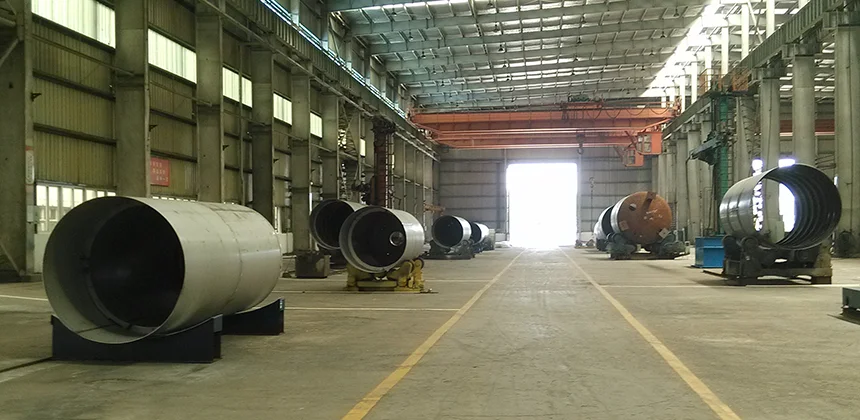
Stainless Steel for Cryogenic Tanks
Austenitic stainless steel is widely used for cryogenic tanks because it maintains
excellent toughness, ductility, and corrosion resistance at temperatures below
-150°C. The most common grades are 304L and 316L stainless steel.
304L Stainless Steel
304L stainless steel is the standard material for many cryogenic storage tanks,
including LNG, liquid nitrogen (LN₂), liquid oxygen (LOX), and liquid argon (LAr)
systems.
- Excellent low-temperature toughness down to -196°C
- Good weldability and pressure vessel fabrication performance
- Reliable under repeated thermal cycling
- Cost-effective for industrial cryogenic tanks
316L Stainless Steel
316L stainless steel provides similar cryogenic performance with improved
corrosion resistance. It is often selected for hydrogen storage, chemical,
marine, and more demanding environments.
- Higher corrosion resistance than 304L
- Excellent cryogenic toughness
- Suitable for hydrogen and aggressive environments
304L vs 316L Stainless Steel for Cryogenic Tanks
| Property | 304L | 316L |
|---|---|---|
| Cryogenic performance | Excellent | Excellent |
| Temperature capability | Down to -196°C | Down to -196°C |
| Corrosion resistance | Good | Higher |
| Typical applications | LNG, LN₂, LOX, LAr tanks | Hydrogen, chemical, marine systems |
| Cost | Lower | Higher |
Which Material Should Be Used?
304L stainless steel is suitable for most industrial cryogenic tanks due to its
balance of strength, toughness, weldability, and cost. 316L is preferred when
higher corrosion resistance or hydrogen compatibility is required.
3. Low-Temperature Material Behavior (Engineering Physics)
At cryogenic temperatures, most materials experience a transition from ductile to brittle behavior. This is known as the Ductile-to-Brittle Transition Temperature (DBTT).
- FCC metals (stainless steel, aluminum): remain ductile at low temperatures
- BCC metals (carbon steel): become brittle below transition temperature
This crystallographic behavior is the primary reason austenitic stainless steels are widely used in cryogenic pressure vessels.
4. Cryogenic Design Standards & Compliance
- ASME Boiler and Pressure Vessel Code (Section VIII)
- ISO 21028 – Cryogenic vessels requirements
- EN 13458 – Cryogenic storage equipment for gases
- EN 1251 / EN 13530 – LNG and industrial gas systems
Compliance with these standards ensures structural integrity under pressure, thermal cycling, and long-term storage conditions.
Material Selection and Cryogenic Insulation Design
Cryogenic tank performance depends on both material selection and insulation design.
The inner vessel material works together with vacuum insulation and thermal protection to reduce heat transfer and liquid boil-off.
- Inner vessel: 304L / 316L stainless steel for cryogenic strength
- Vacuum insulation: Reduces heat leakage during storage
- Multilayer insulation (MLI): Minimizes radiation heat transfer in advanced systems
- Outer shell: Provides structural protection
Even suitable cryogenic materials may experience high heat loss if the insulation system is poorly designed.
5. Cryogenic Failure Mechanisms
- Brittle fracture due to low-temperature embrittlement
- Thermal fatigue from repeated cooling and warming cycles
- Weld zone cracking in improperly treated joints
- Hydrogen embrittlement in high-pressure hydrogen systems
Proper material selection and welding procedure qualification (WPS/PQR) are critical to mitigate these risks.
6. Engineering Material Selection Logic
IF application = LNG storage (stationary)
→ Use 304L stainless steel + vacuum insulation

IF application = hydrogen mobile system
→ Use aluminum alloy or composite liner + CFRP overwrap

IF application = outer structural shell
→ Carbon steel acceptable (non-pressure boundary only)

IF application = aerospace cryogenic system
→ Aluminum alloys (5083 / 2219 preferred)
8. Material Selection by Cryogenic Tank Type
Different cryogenic liquids require specific material properties to ensure safety, low-temperature toughness, corrosion resistance, and long-term operational reliability. The following examples illustrate how material selection varies across different cryogenic storage applications.
LNG Storage Applications
LNG storage systems typically use 304L stainless steel for the inner vessel due to its excellent toughness and weldability at temperatures as low as -162°C. Carbon steel is commonly used for the outer shell structure, while vacuum insulation minimizes heat ingress and boil-off gas generation.
See how these materials are applied in industrial LNG storage tank systems .
Liquid Nitrogen Storage Applications
Liquid nitrogen storage systems require materials that maintain ductility at -196°C. Austenitic stainless steel is widely selected because it provides excellent fracture resistance and stable performance under repeated thermal cycling conditions.
Explore typical configurations of liquid nitrogen bulk storage systems .
Liquid Oxygen Storage Applications
Liquid oxygen storage equipment requires oxygen-compatible materials with high cleanliness standards and stable cryogenic performance. 304L and 316L stainless steel are commonly used for inner vessel construction to reduce ignition risk and ensure safety compliance.
Learn more about cryogenic liquid oxygen storage systems .
Liquid Argon Storage Applications
Liquid argon storage tanks typically feature 304L stainless steel inner vessels combined with vacuum-insulated double-wall construction. This ensures stable low-temperature performance and minimal heat leakage over long-term operation.
View engineering details of liquid argon cryogenic storage equipment.
LCO₂ Storage Applications
LCO2 storage systems operate at relatively higher temperatures compared to LNG or liquid nitrogen systems. Depending on pressure and corrosion requirements, carbon steel or stainless steel may be selected for safe and efficient storage.
Check typical solutions for liquid CO₂ storage tanks.
Cryogenic Tank Material Mapping Overview
| Cryogenic Medium | Typical Operating Temperature | Recommended Material | Application Context |
|---|---|---|---|
| LNG | -162°C | 304L Stainless Steel | Industrial LNG storage systems |
| Liquid Nitrogen (LN₂) | -196°C | 304L Stainless Steel | Bulk cryogenic nitrogen storage |
| Liquid Oxygen (LOX) | -183°C | 304L / 316L Stainless Steel | Oxygen-compatible storage systems |
| Liquid Argon (LAr) | -186°C | 304L Stainless Steel | Inert gas cryogenic storage |
| Liquid CO₂ | -20°C to -40°C | Carbon Steel / Stainless Steel | Pressurized CO₂ storage systems |
For a broader overview of cryogenic engineering systems, see our cryogenic tank design and engineering guide.
TECHNICAL FAQs
About cryogenic tank materials
Cryogenic tanks are commonly manufactured from austenitic stainless steel, aluminum alloys, and composite materials. These materials maintain toughness and structural stability at extremely low temperatures used in LNG, liquid nitrogen, and hydrogen storage systems.
Stainless steel is widely used in cryogenic tanks because it retains ductility and fracture resistance at cryogenic temperatures. Grades such as 304L and 316L are commonly used in LNG and industrial gas storage systems.
304L stainless steel is commonly used for LNG and liquid gas storage because of its excellent weldability and low-temperature toughness. 316L stainless steel provides improved corrosion resistance and is often preferred in hydrogen and marine environments.
Carbon steel becomes brittle at cryogenic temperatures because its crystal structure loses ductility under extreme cold conditions. This increases the risk of brittle fracture and makes carbon steel unsuitable for direct cryogenic fluid contact.
Yes, aluminum alloys are suitable for many cryogenic applications because they maintain good toughness and strength at low temperatures while offering lightweight performance. They are commonly used in aerospace and mobile cryogenic systems.
Composite materials such as carbon fiber reinforced polymers are used in Type III and Type IV cryogenic pressure vessels. They provide high strength-to-weight ratios for hydrogen storage and mobile gas transportation systems.
Hydrogen cryogenic storage systems commonly use 316L stainless steel, aluminum alloys, and carbon fiber composite materials because of their low-temperature toughness, corrosion resistance, and high-pressure performance.
Cryogenic tank materials are commonly designed according to ASME Boiler and Pressure Vessel Code, ISO 21028, and EN 13458 standards for cryogenic storage equipment and pressure vessels.
Common cryogenic tank failure mechanisms include brittle fracture, thermal fatigue, weld cracking, and hydrogen embrittlement. Proper material selection, welding procedures, and pressure testing are critical for safe operation.
8. Engineering Material Strategy
Cryogenic tank material selection is not based on cost alone, but on a combination of low-temperature toughness, fracture resistance, and system application requirements. Stainless steels remain the industry standard for stationary cryogenic storage, while aluminum alloys and composite materials are increasingly used in hydrogen and mobile energy systems.

No comment