


What Is a Cryogenic Liquid Cylinder?
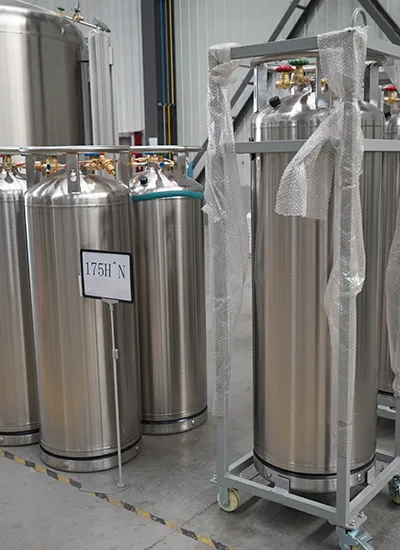
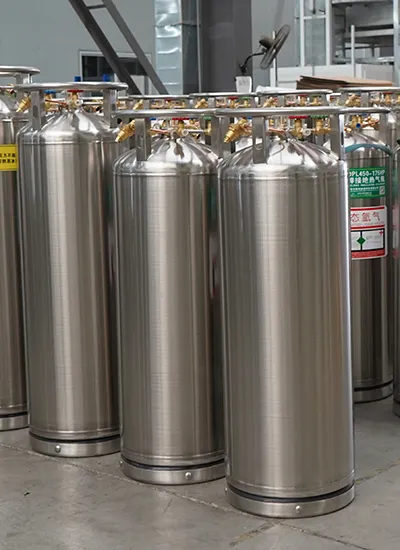
A cryogenic liquid cylinder is a pressure-rated, vacuum-insulated vessel designed for the storage, transportation, and controlled dispensing of liquefied industrial gases at extremely low temperatures. Unlike conventional non-pressurized Dewar vessels, cryogenic liquid cylinders incorporate pressure-control components that allow liquid or gas to be supplied according to application requirements.
These vessels are commonly used for storing and supplying liquid nitrogen (LN₂), liquid oxygen (LOX), liquid argon (LAr), carbon dioxide (CO₂), and liquefied natural gas (LNG), subject to the specific vessel design, pressure rating, material compatibility, and approved configuration.
Cryogenic liquid cylinders are widely used in industrial gas distribution, metal fabrication, healthcare, laboratories, food processing, and manufacturing facilities where a reliable supply of cryogenic liquids or vaporized gases is required.
When selecting a cryogenic liquid cylinder, buyers should consider more than nominal capacity. Important factors include geometric volume, effective filling volume, external dimensions, working pressure, maximum filling weight, liquid delivery rate, and valve configuration.
Common Cryogenic Liquid Cylinder Sizes and Capacities
Cryogenic liquid cylinders are available in different capacities to accommodate varying storage and consumption requirements. Smaller vessels are suitable for applications with moderate gas consumption, while larger configurations provide greater liquid inventory and may reduce replenishment frequency.
For industrial applications, capacity selection should be based on daily consumption, required supply pressure, delivery rate, available installation space, and replenishment arrangements.
BluNet supplies cryogenic liquid cylinder configurations with nominal geometric capacities of 175 L, 195 L, and 210 L, with different working pressure options to accommodate specific operating requirements.
Available Cryogenic Liquid Cylinder Models
| Capacity | Working Pressure | Available Models | Effective Volume |
|---|---|---|---|
| 175 L | 1.4 / 2.0 MPa | DSW-175/1.4, DSW-175/2.0 | 160 L |
| 195 L | 1.4 / 2.0 MPa | DSW-195/1.4, DSW-195/2.0 | 180 L |
| 210 L | 1.4 / 2.0 MPa | DSW-210/1.4, DSW-210/2.0 | 195 L |
All six configurations have an external diameter of 506 mm. The overall height varies according to vessel capacity, while net weight varies with the working pressure configuration.
Cryogenic Liquid Cylinder Dimensions Chart
External dimensions are important when planning equipment installation, transportation, and storage areas. The cylinder diameter determines the basic floor space required, while overall height affects clearance requirements and accessibility for filling and operation.
The following chart provides the actual dimensions and net weights of the six available cryogenic liquid cylinder configurations.
Technical Specifications
| Model | Dimensions (OD × H) (mm) | Net Weight (kg) | Working Pressure (MPa) | Geometric Volume (L) | Effective Volume (L) |
|---|---|---|---|---|---|
| DSW-175/1.4 | 506 × 1485 | Approx. 111 | 1.4 | 175 | 160 |
| DSW-175/2.0 | 506 × 1485 | Approx. 125 | 2.0 | 175 | 160 |
| DSW-195/1.4 | 506 × 1620 | Approx. 116 | 1.4 | 195 | 180 |
| DSW-195/2.0 | 506 × 1620 | Approx. 132 | 2.0 | 195 | 180 |
| DSW-210/1.4 | 506 × 1725 | Approx. 125 | 1.4 | 210 | 195 |
| DSW-210/2.0 | 506 × 1725 | Approx. 141 | 2.0 | 210 | 195 |
Note: Dimensions are expressed as external diameter × overall height. Net weights are approximate and should be confirmed against the final equipment configuration.
How to Compare Different Cryogenic Cylinder Dimensions
The three available capacity configurations share the same 506 mm external diameter, making them relatively consistent in terms of basic floor space requirements.
- 175 L cylinder: Overall height of 1,485 mm, suitable for applications requiring a relatively compact vertical configuration.
- 195 L cylinder: Overall height of 1,620 mm, offering additional geometric and effective storage capacity.
- 210 L cylinder: Overall height of 1,725 mm, providing the largest storage capacity among the listed configurations.
When comparing models, buyers should also account for the space needed for valves, connections, filling operations, ventilation, and routine maintenance. Actual installation clearance should follow the equipment drawings and applicable safety requirements.
Geometric Volume vs. Effective Volume in Cryogenic Cylinders
One important consideration when comparing cryogenic liquid cylinder sizes is the difference between geometric volume and effective volume.
Geometric volume refers to the nominal internal volume of the vessel. Effective volume refers to the specified usable filling capacity for the applicable configuration.
For example, the listed 210 L cryogenic liquid cylinder has a geometric volume of 210 L and an effective volume of 195 L. This distinction is important when estimating liquid inventory and planning replenishment schedules.
Buyers should avoid assuming that the nominal vessel capacity represents the actual allowable filling volume. Maximum filling weight and filling limits must be confirmed according to the stored medium and approved equipment specifications.
Maximum Filling Weight for Different Cryogenic Liquids
Maximum filling weight varies according to the type of cryogenic liquid, vessel capacity, working pressure, and equipment configuration. It is an important parameter for estimating storage inventory, transportation weight, and replenishment requirements.
The following table summarizes the specified maximum filling weights for different cryogenic liquids in the available configurations.
| Model | LOX (kg) | LAr (kg) | LN₂ (kg) | CO₂ (kg) | LNG (kg) |
|---|---|---|---|---|---|
| DSW-175/1.4 | 177 | 217 | 126 | — | 66 |
| DSW-175/2.0 | 173 | 212 | 123 | 154 | — |
| DSW-195/1.4 | 197 | 241 | 140 | — | 73 |
| DSW-195/2.0 | 197 | 241 | 140 | — | — |
| DSW-210/1.4 | 214 | 261 | 152 | — | — |
| DSW-210/2.0 | 214 | 261 | 152 | — | — |
Note: A dash indicates that no filling-weight value is listed for that model in the supplied specification. It does not establish that the configuration is suitable for the corresponding medium.
These figures demonstrate that the same nominal cylinder capacity can have different maximum filling weights depending on the stored cryogenic liquid and pressure configuration. Always confirm gas compatibility, filling limits, and applicable technical approvals before specifying a vessel for a particular medium.
Cryogenic Cylinder Working Pressure and Safety Specifications
Working pressure is a key factor in selecting a pressurized cryogenic liquid cylinder. It determines the operating pressure range for the vessel and influences the selection of pressure-control components and downstream connections.
The available configurations include 1.4 MPa and 2.0 MPa working pressure options.
| Specification | 1.4 MPa Model | 2.0 MPa Model |
|---|---|---|
| Working Pressure | 1.4 MPa | 2.0 MPa |
| Safety Valve Set Pressure | 1.6 MPa | 2.4 MPa |
| Burst Disc Rupture Pressure | 2.6 MPa | 3.6 MPa |
| Pressure Regulator Range | 0.27–1.10 MPa | 0.55–2.20 MPa |
Both configurations incorporate pressure-control and overpressure-protection components. The final selection should be based on the required operating conditions, connected equipment, stored medium, and applicable pressure vessel regulations.
Working pressure, safety valve set pressure, and burst disc rupture pressure are different technical parameters. They should not be used interchangeably when evaluating equipment suitability.
Liquid Delivery Rate and Valve Configuration
In addition to storage capacity and pressure rating, delivery performance is important for applications that require a consistent supply of cryogenic liquid or vaporized gas.
The supplied technical specifications include the following liquid delivery rates:
| Performance Parameter | Specification |
|---|---|
| Continuous Liquid Delivery Rate | 9.2 m³/h |
| Intermittent Liquid Delivery Rate | 40 m³/h |
| Intermittent Operating Duration | Approximately 5 minutes |
| Direct Liquid Supply | Available |
| Liquid Level Gauge | Float-Type Level Gauge |
| Exterior Finish | Polished Stainless Steel Outer Shell |
Note: Delivery rates and operating conditions should be confirmed against the manufacturer’s final technical documentation before engineering or procurement decisions.
Standard Valve Configuration
Valve configuration affects filling, pressure building, liquid withdrawal, gas delivery, and pressure monitoring. The listed equipment uses REGO valves for its standard configuration.
| Valve Description | Model | Manufacturer |
|---|---|---|
| Liquid Inlet/Outlet Valve | 9464DA | REGO, USA |
| Gas Outlet Valve | 9464DA | REGO, USA |
| Vent and Pressure Gauge Valve | 9464DA | REGO, USA |
| Pressure-Building Valve | 9464DA | REGO, USA |
| Combined Valve | RE-REG11 | REGO, USA |
How to Choose the Right Cryogenic Liquid Cylinder Size
Selecting the appropriate cryogenic liquid cylinder requires evaluating storage requirements, operating conditions, and the characteristics of the connected gas supply system.
1. Determine Daily Gas or Liquid Consumption
Start by estimating average daily consumption and peak demand. A facility with regular nitrogen or argon consumption may require a larger effective filling volume to reduce replenishment frequency.
For applications with fluctuating demand, consider both average consumption and short-term peak requirements.
2. Compare Geometric and Effective Capacity
Do not select equipment based solely on the nominal capacity stated in the model number. Compare the effective volume and maximum filling weight for the specific stored medium.
For example, the 175 L, 195 L, and 210 L configurations have effective volumes of 160 L, 180 L, and 195 L, respectively.
3. Check Installation Dimensions
Measure the available installation space and confirm that the cylinder can be positioned and operated safely. Consider the external diameter, overall height, access routes, valve clearance, and maintenance requirements.
4. Select the Appropriate Working Pressure
Choose between 1.4 MPa and 2.0 MPa configurations according to the required operating pressure and downstream equipment specifications.
Higher working pressure is not automatically better. The selected rating must be compatible with the entire supply system and the intended cryogenic liquid.
5. Evaluate Delivery Requirements
Determine whether the application requires direct liquid withdrawal, gas supply, or both. Compare the required delivery rate with the equipment’s rated performance and consider whether an external vaporizer or additional pressure-control equipment is necessary.
6. Confirm Gas Compatibility and Applicable Standards
Different cryogenic liquids have different temperature, pressure, material compatibility, and filling requirements. Confirm the vessel’s approved service medium, valve materials, safety devices, certifications, and transport requirements before ordering.
Cryogenic Liquid Cylinder vs. Dewar vs. Bulk Storage Tank
Although these three equipment types are used in cryogenic storage applications, their structures and operating principles differ.
| Equipment Type | Main Characteristics | Typical Applications |
|---|---|---|
| Non-Pressurized Dewar | Vacuum-insulated vessel, generally open-neck, without normal pressurized liquid delivery operation. | Laboratories, sample storage, and small-volume applications. |
| Pressurized Cryogenic Liquid Cylinder | Pressure-rated vacuum-insulated vessel with safety devices and controlled liquid or gas delivery. | Industrial gas supply, medical facilities, and manufacturing operations. |
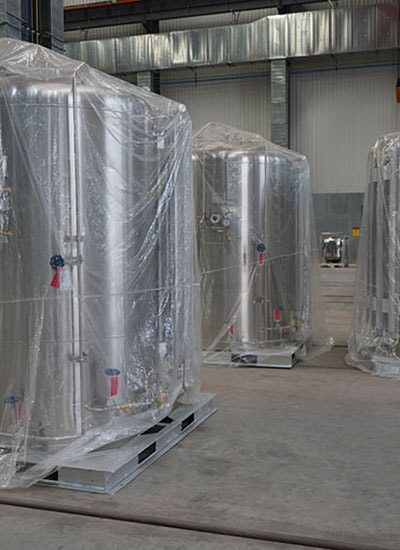
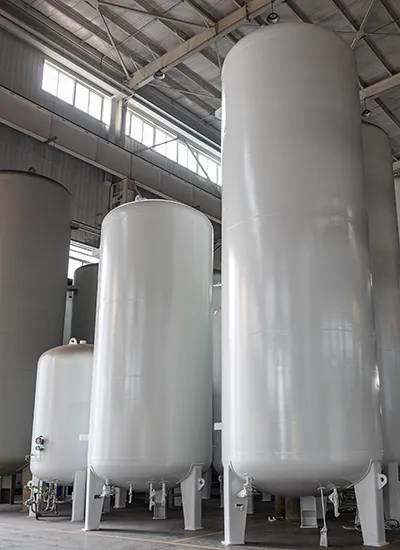
| Bulk Cryogenic Storage Tank | Larger stationary vacuum-insulated storage system with supporting supply equipment. | Industrial plants, centralized gas supply, and high-volume consumption. |
A conventional Dewar is generally suitable for smaller storage and laboratory requirements. A pressurized cryogenic liquid cylinder is more appropriate when controlled pressure and liquid or gas delivery are required.
For facilities with higher and continuous consumption, a stationary bulk storage system may provide a more suitable long-term solution.
When Should You Consider a Bulk Cryogenic Storage System?
As industrial gas consumption increases, individual cryogenic liquid cylinders may become less convenient for maintaining an uninterrupted supply. A bulk storage system can help centralize storage and supply for multiple production areas.
Consider evaluating a bulk liquid nitrogen storage system when:
- Daily nitrogen consumption is consistently high.
- Frequent cylinder replenishment creates additional operating costs.
- Multiple production lines require a centralized gas supply.
- A higher and more consistent gas delivery capacity is required.
- The facility has sufficient space for stationary cryogenic storage equipment.
A typical industrial liquid nitrogen supply system may include:
- Vacuum-insulated liquid nitrogen storage tank.
- Ambient air vaporizer or another suitable vaporization system.
- Pressure regulation and control equipment.
- Gas distribution pipelines and connection accessories.
- Safety devices and monitoring components.
Explore BluNet’s liquid nitrogen bulk tank solutions for larger storage and industrial nitrogen supply requirements.
For a broader overview of storage and distribution equipment, visit our industrial gas storage solutions page.
Cryogenic Liquid Cylinder Solutions from BluNet
BluNet provides industrial gas products and cryogenic storage equipment for international customers, including solutions for liquid nitrogen, liquid oxygen, liquid argon, and other industrial cryogenic applications.
Our cryogenic liquid cylinder offering includes 175 L, 195 L, and 210 L geometric capacity configurations, with 1.4 MPa and 2.0 MPa working pressure options.
Key configuration features include:
- Multiple capacity and pressure configurations.
- Vacuum-insulated cryogenic vessel construction.
- Model-specific effective filling volumes and maximum filling weights.
- Liquid inlet/outlet and gas outlet connections.
- Pressure-building and pressure-control components.
- REGO valve configurations.
- Custom specifications and valve arrangements subject to technical confirmation.
Whether you need a cryogenic liquid cylinder for nitrogen supply, oxygen storage, argon applications, or other approved cryogenic services, the equipment should be selected according to actual operating conditions and applicable technical requirements.
Contact BluNet to discuss your required capacity, working pressure, storage medium, and delivery configuration. Our team can help evaluate suitable cryogenic liquid cylinder options for your application.
How to Choose the Right Liquid Nitrogen Dewar?
Get a customized liquid nitrogen dewar solution tailored to your storage and operational needs.
TECHNICAL FAQs
About Cryogenic Liquid Cylinder Sizes
Cryogenic liquid cylinders are available in different capacities depending on the manufacturer and application. The configurations covered in this guide include 175 L, 195 L, and 210 L geometric volumes, with effective filling capacities of 160 L, 180 L, and 195 L, respectively.
The 175 L model has a geometric volume of 175 L and an effective volume of 160 L. The 210 L model has a geometric volume of 210 L and an effective volume of 195 L. Both have an external diameter of 506 mm, but the 210 L model is taller.
According to the listed specifications, the DSW-210 models have an external diameter of 506 mm and an overall height of 1,725 mm. The net weight is approximately 125 kg for the 1.4 MPa version and 141 kg for the 2.0 MPa version.
Geometric volume refers to the nominal internal vessel capacity, while effective volume is the specified usable filling capacity. For example, a 195 L geometric-volume cylinder has an effective volume of 180 L in the listed configuration.
The listed configurations are available with working pressures of 1.4 MPa and 2.0 MPa. The appropriate option depends on the intended service, required operating pressure, and connected equipment.
Not exactly. Both can use vacuum-insulated double-wall construction, but conventional non-pressurized Dewars and pressurized cryogenic liquid cylinders have different operating principles. Cryogenic liquid cylinders are pressure-rated vessels equipped with pressure-control and safety devices for controlled liquid or gas delivery.
Some cryogenic liquid cylinder configurations are designed for specific liquefied gases, including liquid nitrogen, liquid oxygen, liquid argon, carbon dioxide, or LNG. However, not every model is suitable for every medium. Always confirm approved gas service, pressure rating, material compatibility, and filling specifications.
Evaluate daily consumption, effective filling volume, maximum filling weight, working pressure, delivery rate, and installation space. The selected vessel should also meet the applicable requirements for the intended cryogenic liquid and operating environment.

No comment