

LNG boil-off gas (BOG) rate is the percentage of liquefied natural gas that naturally evaporates each day because of unavoidable heat entering a cryogenic storage or transportation system. BOG is one of the most important performance indicators for LNG storage tanks, LNG ISO containers, and LNG carrier cargo tanks because it directly affects product loss, operating costs, pressure control, and storage safety. Understanding and reducing the LNG boil-off gas rate is essential when selecting or designing industrial LNG storage systems.
What Is LNG Boil-Off Gas?
In an LNG storage tank or LNG carrier cargo system, heat ingress causes a portion of liquefied methane to vaporize. This vapor is called boil-off gas (BOG).
BOG is a normal thermodynamic process in all cryogenic systems and must be actively managed to maintain safe pressure levels.
Since boil-off gas is primarily influenced by insulation quality and storage tank design, selecting the right LNG storage tank for industrial use is one of the most effective ways to reduce daily evaporation losses.
LNG Boil-Off Gas Rate Formula
BOG Rate (%) = (Daily vaporized LNG mass / Total LNG inventory) × 100
Heat-based engineering model:
BOG mass flow = Q / hvap
- Q = heat leak into LNG system (W)
- hvap = latent heat of LNG (~510 kJ/kg)
LNG Boil-Off Gas Rate by System Type
| LNG System Type | Typical BOG Rate (per day) | Key Reason |
|---|---|---|
| Full containment LNG storage tank | 0.05% – 0.1% | Large volume, low surface area ratio |
| LNG ISO container | 0.1% – 0.3% | Higher heat ingress per volume |
| LNG carrier cargo tank | 0.1% – 0.15% | Marine sloshing + thermal cycling |
Factors Affecting LNG Boil-Off Gas Rate
The actual LNG boil-off gas (BOG) rate varies depending on tank design, insulation performance, operating conditions, and storage practices. Understanding these factors helps engineers minimize LNG losses, improve storage efficiency, and extend holding time in industrial LNG storage systems.
1. Tank Capacity
Large industrial LNG storage tanks generally have lower boil-off gas rates than smaller tanks because they have a lower surface-area-to-volume ratio. Less surface area is exposed relative to the stored LNG volume, reducing heat ingress and daily evaporation losses.
2. Vacuum Insulation Performance
High-quality vacuum insulation combined with multilayer insulation (MLI) significantly reduces thermal conduction, convection, and radiation. Maintaining vacuum integrity throughout the service life of a cryogenic tank is essential for achieving consistently low BOG rates.
3. Ambient Temperature
Environmental temperature has a direct influence on heat transfer into the LNG tank. Facilities operating in hot climates typically experience higher thermal loads, increasing the natural vaporization rate compared with installations in cooler regions.
4. Holding Time
Holding time is the period during which LNG can remain stored without venting or pressure relief. Tanks with lower boil-off gas rates generally provide longer holding times, reducing product losses during storage and transportation.
5. Tank Filling Level
Partially filled LNG tanks usually experience greater vapor space, allowing pressure to build more quickly. Maintaining an appropriate filling ratio can improve thermal stability and reduce unnecessary boil-off under normal operating conditions.
6. Tank Design and Construction
Modern double-wall LNG storage tanks utilize stainless steel inner vessels, carbon steel outer shells, vacuum insulation, and optimized support structures to minimize thermal bridges. Advanced tank design improves insulation efficiency, lowers boil-off gas generation, and enhances overall storage performance.
What Causes LNG Boil-Off Gas?
1. Cryogenic Heat Ingress
Heat transfer through tank walls due to imperfect insulation systems such as vacuum insulation or multilayer insulation (MLI).
2. Surface Area to Volume Ratio
Smaller LNG systems experience higher relative heat loss.
3. Ambient Temperature Conditions
Higher environmental temperatures increase thermal leakage into LNG systems.
4. LNG System Movement
Transport vibration and sloshing increase transient heat transfer.
LNG Boil-Off Gas Management Systems
- BOG compressor systems – compress vapor for fuel or pipeline use
- Recondensation units – convert vapor back into liquid LNG
- LNG reliquefaction systems – refrigeration cycle recovery
- Pressure control valves – maintain tank safety limits
How to Reduce LNG Boil-Off Gas Rate
- Use vacuum-insulated cryogenic tanks
- Apply multilayer insulation (MLI) for radiation reduction
- Optimize tank geometry to reduce surface-area ratio
- Minimize thermal bridge design flaws
- Use LNG recondensation or BOG recovery systems
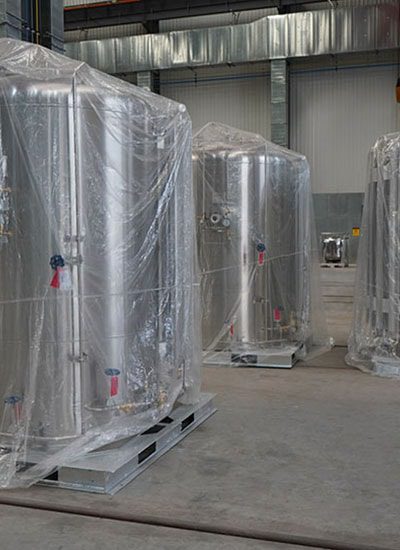
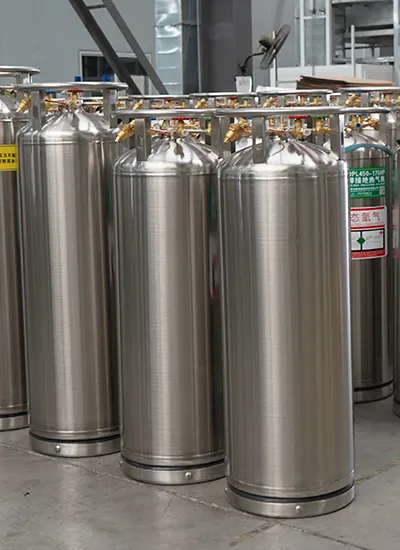
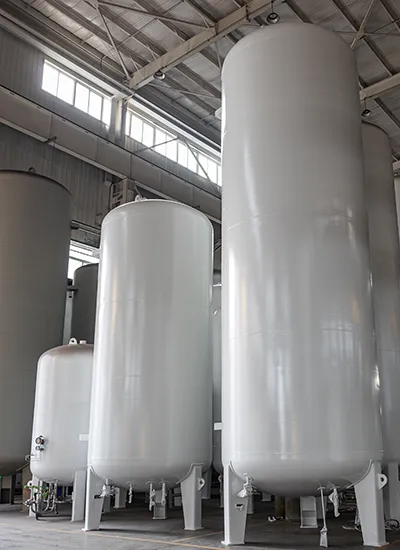
Explore LNG Storage & BOG Control Systems
Whether you need bulk storage, transport, or on-site supply,
LNG Storage vs Transport Boil-Off Behavior
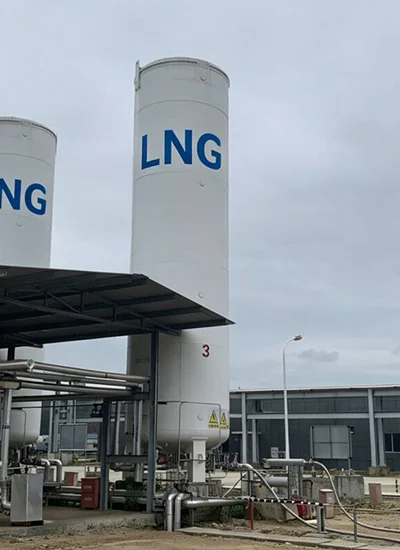
Stationary LNG storage tanks generally have lower boil-off rates compared to mobile LNG ISO containers or marine LNG carriers due to stable thermal conditions and reduced dynamic heat loads.
| Feature | LNG Storage Tanks | LNG Transport Tanks |
|---|---|---|
| Main Purpose | Long-term LNG storage | LNG transportation and distribution |
| BOG Rate | Lower due to larger capacity and lower heat input | Generally higher due to movement and environmental changes |
| Design Priority | Maximum thermal efficiency | Mobility, safety, and heat leak reduction |
| BOG Management | Recovery, compression, or re-liquefaction | Pressure control and safe gas utilisation |
Engineering Standards Related to LNG BOG
- NFPA 59A – LNG production and storage safety
- API 625 – LNG tank systems design
- EN 1473 – LNG installations engineering guidelines
Related LNG Resources
TECHNICAL FAQs
About LNG boil-off gas rate
LNG boil-off gas (BOG) is the natural gas vapor, mainly methane, generated when liquefied natural gas absorbs heat in cryogenic storage or transport systems such as LNG storage tanks, ISO containers, and LNG carrier cargo tanks operating at approximately -162°C. This vaporization occurs due to unavoidable heat ingress through insulation systems such as vacuum insulation or multilayer insulation (MLI).
LNG boil-off gas rate is the percentage of LNG that evaporates into vapor per day due to heat ingress in cryogenic LNG systems. It is a key performance indicator for LNG storage tanks, LNG ISO containers, and LNG carrier cargo tanks, reflecting insulation efficiency, tank design, and ambient thermal conditions.
LNG boil-off gas rate can be calculated as (daily vaporized LNG mass divided by total LNG inventory) multiplied by 100. In engineering design, it is also estimated using heat ingress divided by the latent heat of vaporization of LNG, where heat ingress is driven by thermal conduction, convection, and radiation through cryogenic tank insulation systems.
Typical LNG boil-off gas rates range from 0.05% to 0.1% per day in large full-containment LNG storage tanks, due to lower surface-area-to-volume ratios and advanced insulation systems. LNG ISO containers and smaller cryogenic transport systems typically experience 0.1% to 0.3% per day due to higher relative heat ingress. LNG carrier cargo tanks generally fall between 0.1% and 0.15% per day depending on design and operational conditions.
LNG boil-off gas is primarily caused by heat ingress into cryogenic systems. This includes thermal conduction through tank walls, imperfect vacuum or multilayer insulation (MLI), ambient temperature exposure, and increased surface-area-to-volume ratio in smaller tanks. Additional factors such as LNG sloshing, pressure fluctuations, and transport vibration in ISO containers or LNG carriers can also increase boil-off generation.
LNG boil-off gas is managed using BOG compressor systems, LNG recondensation units, and reliquefaction systems that convert vapor back into liquid LNG. In LNG terminals and ships, boil-off gas may also be used as fuel gas. Pressure control valves and safety systems maintain safe operating pressure inside LNG storage tanks and cryogenic vessels.
LNG boil-off gas is important because it directly affects storage efficiency, energy loss, and safety in LNG supply chains. Uncontrolled boil-off increases tank pressure and reduces usable LNG inventory. Effective management using insulation optimization and BOG recovery systems improves operational efficiency and reduces product loss in LNG storage and transport infrastructure.
Summary
LNG boil-off gas rate is a fundamental performance indicator of cryogenic LNG systems. It is primarily driven by heat ingress and directly influenced by insulation design, system scale, and operational conditions. Proper BOG management using compressors, recondensation, and advanced insulation systems is essential for safe and efficient LNG storage and transport.
 Rate: Definition, Calculation, Causes, and Control Systems)
No comment