

Liquefied Natural Gas (LNG) is increasingly critical for industrial energy, transportation fuel, and urban gas supply due to its efficiency and low carbon emissions. Selecting the right LNG storage solution requires understanding types of LNG tanks and types of LNG tank based on capacity, operational pressure, temperature, safety standards, and application. This guide provides a detailed technical overview with industry best practices, ensuring compliance with ASME, EN 1473, and CODE 2000.
1. Above-Ground LNG Tanks
Description: Large cylindrical vessels installed above ground, commonly used at LNG terminals and industrial facilities for bulk storage.
- Capacity: 500 – 100,000 m³
- Operating Pressure: 0.5 – 1.5 bar
- Temperature: -162°C (cryogenic LNG storage)
- Construction: Double-wall with vacuum or perlite insulation, secondary containment
- Compliance: ASME Section VIII, EN 1473
- Key Features: Boil-off gas (BOG) recovery system, advanced safety valves, leak detection sensors
Applications: LNG import/export terminals, peak-shaving facilities, large-scale industrial gas supply plants
Advantages: High storage capacity, accessible for maintenance, reliable cryogenic containment, energy-efficient boil-off management
2. Underground LNG Tanks
Description: Installed below ground level, these tanks provide enhanced safety against fire, environmental hazards, and physical impact. They are ideal for urban or high-security industrial locations.
- Capacity: 500 – 10,000 m³
- Operating Pressure: 0.5 – 1 bar
- Construction: Reinforced concrete vaults, double containment with insulation
- Safety Features: Fire-resistant, seismic protection, emergency pressure relief valves
Applications: Urban LNG distribution stations, industrial plants, secure military facilities
Advantages: Low visual impact, high safety, consistent LNG temperature control, minimal boil-off loss
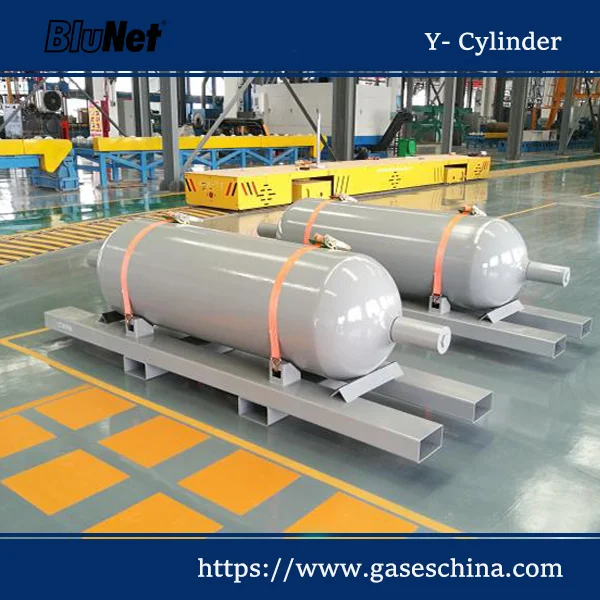
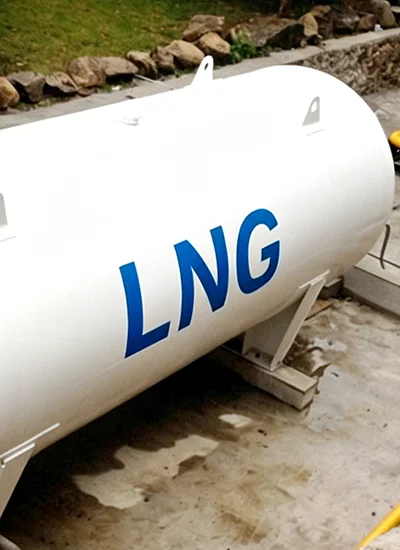
3. Horizontal LNG Tanks
Description: Cylindrical, horizontally mounted tanks, often skid-mounted for easy transport and modular installation. Suitable for medium and small-scale LNG applications.
- Capacity: 10 – 1,000 m³
- Construction: Cryogenic steel with vacuum or perlite insulation
- Applications: Remote industrial sites, small LNG refueling stations, temporary storage
Advantages: Modular, cost-effective, easy to relocate, scalable for increasing demand
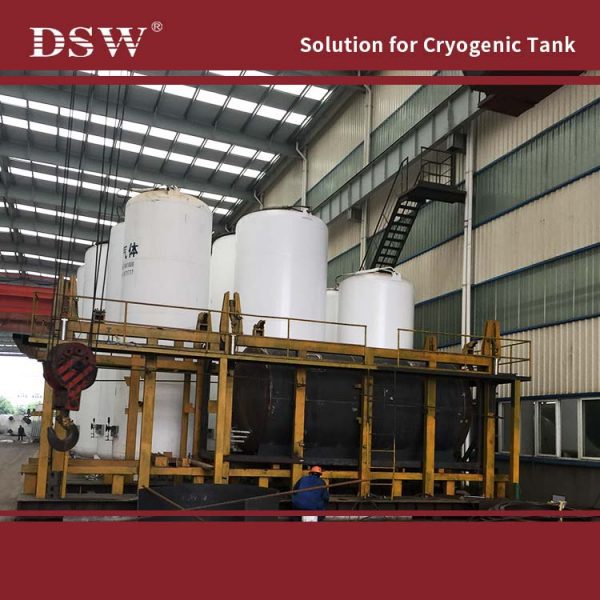
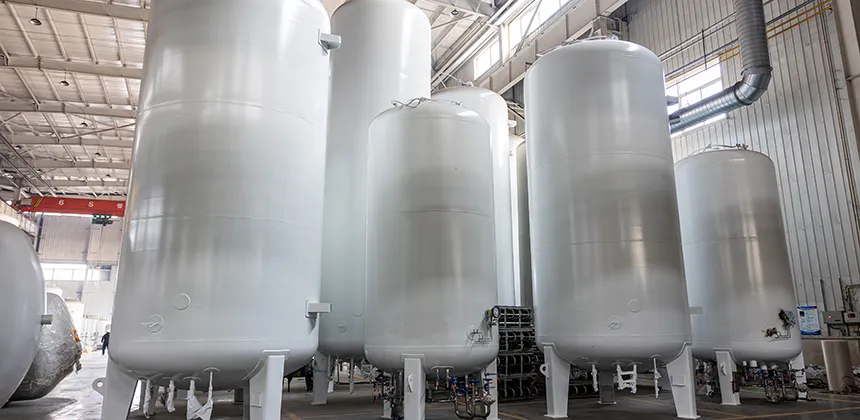
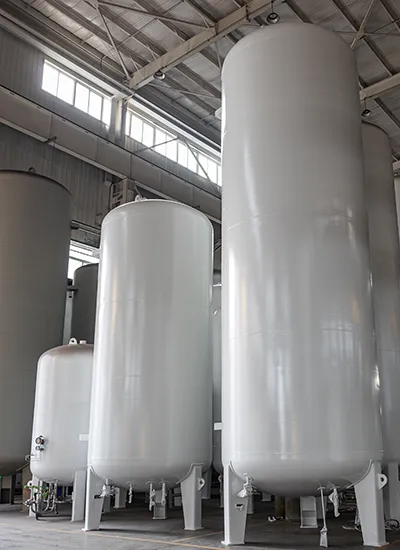
4. Vertical LNG Tanks
Description: Upright cylindrical vessels ideal for sites with limited land area. These tanks efficiently manage space while maintaining optimal LNG storage conditions.
- Capacity: 50 – 5,000 m³
- Features: Boil-off gas recovery system, advanced thermal insulation, automated monitoring
- Applications: LNG satellite stations, municipal gas distribution, small industrial plants
Advantages: Space-efficient, precise cryogenic control, compatible with automated fueling systems
5. LNG ISO Tank Containers
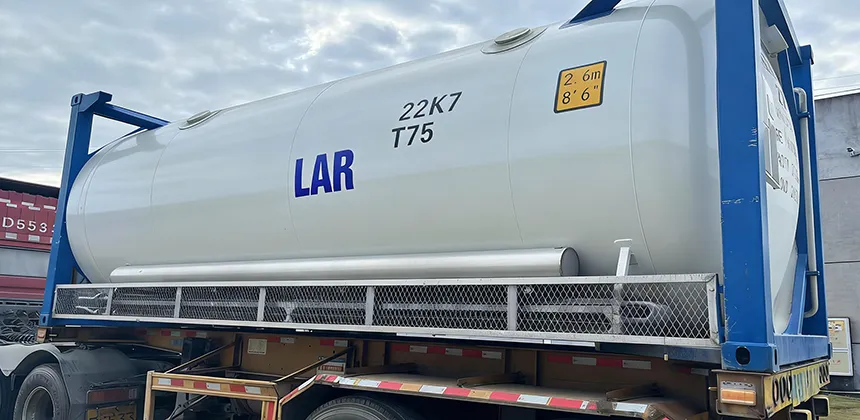
Description: Standardized intermodal tanks for transport by road, rail, or sea. They allow safe LNG delivery from production sites to remote distribution points.
- Capacity: 18 – 26 m³ per ISO container
- Construction: Vacuum-insulated inner vessel within ISO-standard frame
- Applications: LNG distribution, temporary storage at industrial sites, fueling stations
- Advantages: Rapid deployment, flexible logistics, minimal boil-off during transport
6. Mini and Small-Scale LNG Tanks
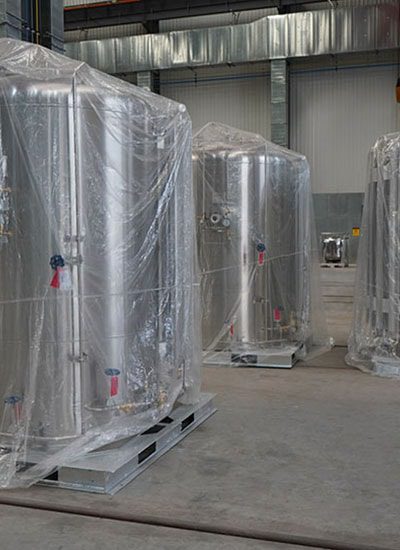
Description: Compact vacuum-insulated LNG storage tanks designed for small-scale and decentralized LNG applications. Depending on the configuration, they can be supplied as standalone storage tanks or integrated into skid-mounted LNG supply systems.
- Capacity: 1 – 50 m³
- Applications: Small factories, commercial and industrial facilities, hospitals, remote sites, and LNG fueling applications
- Construction: Vacuum-insulated, stationary, skid-mounted, or containerized configurations
- System options: Pressure-building, vaporizers, valves, piping, instrumentation, and LNG dispensing equipment
Advantages: Cost-effective, space-saving, easy installation and operation
7. Vacuum-Insulated LNG Tanks (High-Efficiency)
Description: High-efficiency cryogenic tanks using advanced vacuum insulation to minimize thermal loss and boil-off gas, ensuring long-term storage stability.
- Capacity: 10 – 5,000+ m³
- Applications: LNG trading, precision industrial use, high-value gas storage
- Features: Double-wall vacuum insulation, long-term LNG containment, monitoring sensors
- Standards: ASME, EN 1473, CODE 2000
- Advantages: Maximum energy efficiency, enhanced safety, minimal LNG loss
Technical Comparison Table of LNG Tank Types
| Tank Type | Capacity (m³) | Operating Pressure (bar) | Construction / Insulation | Applications |
|---|---|---|---|---|
| Above-Ground | 500 – 100,000 | 0.5 – 1.5 | Double-wall, vacuum / perlite | Terminals, peak-shaving, industrial supply |
| Underground | 500 – 10,000 | 0.5 – 1 | Reinforced concrete vault, double containment | Urban stations, secure sites |
| Horizontal | 10 – 1,000 | 0.5 – 1 | Cryogenic steel, vacuum/perlite | Remote industrial, small refueling stations |
| Vertical | 50 – 5,000 | 0.5 – 1 | Advanced insulation, BOG recovery | Satellite stations, municipal supply |
| ISO Tank Container | 18 – 26 | 1 | Vacuum-insulated, ISO frame | Distribution, transport, refueling |
| Mini / Micro | 1 – 50 | 0.5 – 1 | Vacuum-insulated, skid-mounted | Remote industrial, hospitals |
| Vacuum-Insulated High-Efficiency | 10 – 5,000+ | 0.5 – 1.5 | High vacuum, double-wall | Industrial, trading, high-precision storage |
Looking for a Reliable Bulk Storage or Transport Solution?
Whether you need bulk storage, transport, or on-site supply,
How to Choose the Right LNG Tank
When selecting an LNG tank, consider:
- Required storage capacity and expected consumption
- Site constraints: land space, seismic activity, security
- Safety compliance with ASME, EN, and CODE 2000
- Boil-off gas (BOG) management requirements
- Transportation and logistics considerations
- Integration with LNG refueling, satellite, or industrial systems
TECHNICAL FAQs
About Types of LNG Tanks
The main types of LNG tanks and LNG tank solutions include above-ground, underground, horizontal, vertical, ISO containers, mini/micro, and vacuum-insulated tanks, used for industrial, transport, and small-scale cryogenic storage applications.
Choosing the right LNG tank depends on storage capacity, available site space, operational pressure, safety standards, boil-off gas management, and intended application, whether for industrial plants, transportable LNG solutions, or small-scale use.
Boil-off gas (BOG) is the natural vaporization of LNG due to heat ingress. Modern LNG tanks, including vacuum-insulated and cryogenic storage tanks, incorporate BOG recovery and management systems for operational efficiency and safety.
LNG tanks comply with international standards including ASME Section VIII, EN 1473, and CODE 2000, ensuring structural integrity, operational reliability, and safe storage of cryogenic LNG.
Yes, LNG ISO containers are standardized, vacuum-insulated tanks suitable for intermodal transport and temporary cryogenic storage at industrial, remote, or small-scale sites.
Key safety considerations include proper boil-off gas management, pressure relief systems, leak detection, compliance with ASME or EN standards, and maintaining proper insulation and structural integrity.
LNG can be safely stored for days to months depending on tank type, insulation efficiency, and boil-off gas management. Vacuum-insulated tanks minimize loss and maintain LNG quality over extended periods.
End Notes
Understanding the types of LNG tanks and types of LNG tank is essential for safe, efficient, and compliant LNG storage and transport. By selecting the correct tank type based on capacity, location, and application, operators can maximize energy efficiency, minimize boil-off loss, and meet stringent safety standards.

No comment