

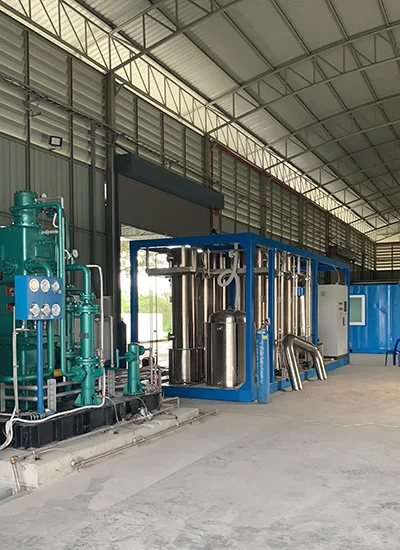
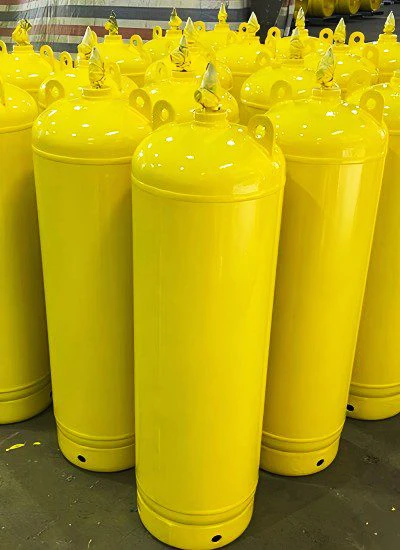
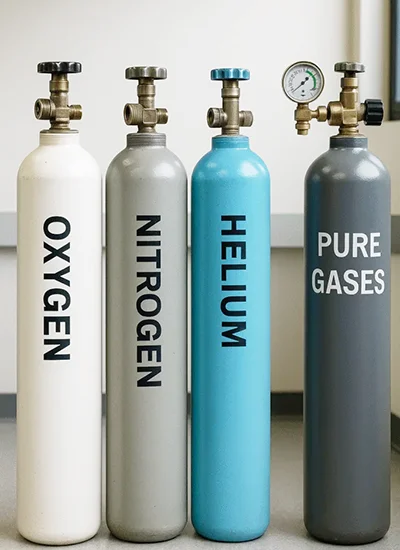
Industrial gases can be supplied in several different ways, from portable gas cylinders and cylinder bundles to microbulk tanks, bulk cryogenic storage systems, on-site gas generation and pipeline supply. Choosing the right supply method depends on more than gas consumption alone. Gas type, required purity, flow rate, operating pressure, delivery frequency, storage space, production continuity and future demand all affect the appropriate solution.
For a small workshop, gas cylinders may provide the flexibility required for intermittent use. A manufacturing plant with continuous nitrogen consumption may benefit from a microbulk or bulk cryogenic system. Large facilities with stable, high-volume demand may consider on-site generation or pipeline supply.
This guide explains the main industrial gas supply methods and the factors that should be considered when selecting a system for a manufacturing plant, laboratory, food-processing facility, hospital, chemical plant, electronics facility or other industrial application.
| Supply Method | Typical Use | Main Advantage | Main Consideration |
|---|---|---|---|
| Gas Cylinders | Low or intermittent consumption | Flexible and portable | Frequent handling and replacement |
| Cylinder Bundles | Higher gas demand than individual cylinders | Higher capacity with centralized connection | Still requires cylinder logistics |
| Liquid Cylinders / Dewars | Low to medium liquid-gas demand | Compact cryogenic storage | Requires cryogenic handling |
| Microbulk | Continuous medium-volume consumption | Reduces cylinder changeovers | Requires site tank and delivery access |
| Bulk Cryogenic Supply | High and relatively stable demand | Large on-site storage capacity | Higher installation and infrastructure requirements |
| On-Site Generation | Continuous demand with suitable gas requirements | Gas is produced at the customer’s facility | Equipment, utilities and maintenance are required |
| Pipeline Supply | Very large, continuous industrial demand | Direct continuous supply | Only practical where suitable production infrastructure exists |
What Determines the Right Industrial Gas Supply Method?
There is no single supply method that is suitable for every industrial gas user. Major industrial gas suppliers provide different supply modes because customer requirements vary substantially in volume, purity, pressure, flow rate and availability. Linde, for example, describes supply options ranging from cylinders through bulk storage and on-site production, while Air Liquide and Air Products similarly provide packaged, microbulk, bulk, on-site and pipeline solutions.
Before selecting a supply method, evaluate the following requirements.
1. Gas Consumption
Determine both average and peak consumption.
- Gas consumption per day
- Gas consumption per month
- Average flow rate
- Peak flow rate
- Continuous or intermittent consumption
- Expected future consumption
Average consumption alone may not be enough. A process may have relatively low daily consumption but require a very high instantaneous flow rate. In that situation, the storage and vaporization system may need to be designed around peak demand rather than average consumption.
2. Gas Purity
Purity requirements can significantly affect the appropriate supply method.
Welding, cutting and general manufacturing may require different gas grades from semiconductor, pharmaceutical, laboratory or electronics applications. The supply system should therefore be selected according to the required gas specification rather than simply the gas name.
3. Required Pressure
Determine the required pressure at the point of use as well as the pressure required within the storage and distribution system.
A cryogenic liquid storage system, for example, may require pressure-building equipment, pressure regulation and a vaporizer before the gas enters the plant distribution pipeline.
4. Availability and Production Continuity
If gas interruption can stop production, supply reliability becomes a major design factor.
Facilities with critical gas consumption may require:
- Primary and backup supply
- Reserve inventory
- Automatic changeover
- Dual vaporizer configuration
- Emergency cylinder or bundle connections
- Remote tank-level monitoring
- Planned automatic replenishment
For bulk systems, remote telemetry can be used to monitor inventory and support delivery planning. Some industrial gas suppliers combine remote monitoring with automatic replenishment services.
5. Site Conditions
The physical site can also determine which supply method is practical.
Consider:
- Available installation area
- Foundation requirements
- Delivery truck access
- Tank location
- Pipeline distance
- Vent and relief discharge arrangements
- Electrical utilities
- Cooling water or other utilities where applicable
- Maintenance access
- Safety requirements
1. Gas Cylinder Supply
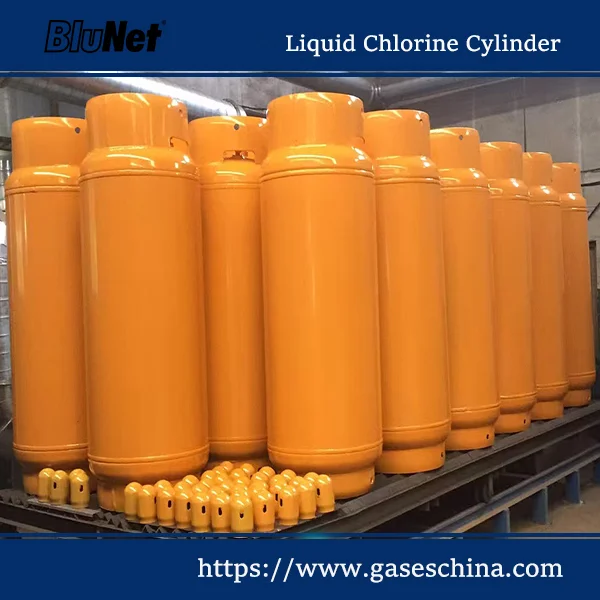
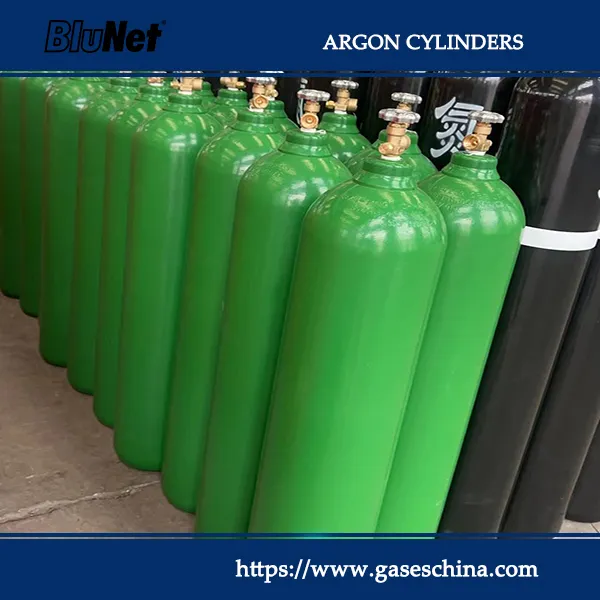
Gas cylinders are one of the most flexible methods of supplying industrial gases. Compressed gases such as nitrogen, oxygen, argon, hydrogen and helium can be stored in high-pressure cylinders, while other gases may be supplied in cylinders designed for liquefied or dissolved products depending on their physical properties.
Cylinders are particularly useful where gas consumption is relatively low, intermittent or distributed across different areas of a facility.
Advantages of Gas Cylinders
- Low initial infrastructure requirement
- Portable supply
- Easy to deploy at different work locations
- Suitable for intermittent gas consumption
- Available in different capacities and pressure ratings
- Suitable for many gas types and purity grades
Limitations of Gas Cylinders
- Frequent cylinder replacement may be required
- Manual handling can increase labor requirements
- Storage space is required for full and empty cylinders
- Production can be interrupted during cylinder changeover
- Residual gas may remain when cylinders are returned
- Delivery frequency can become significant at higher consumption levels
For a factory with rapidly increasing gas consumption, cylinders may eventually become inefficient from a logistics and handling perspective even if the gas itself remains suitable.
2. Cylinder Bundles
Cylinder bundles, also called cylinder packs or gas bundles, connect multiple cylinders through a common manifold. They provide more gas inventory than a single cylinder while retaining the packaged-gas concept.
Bundles can be useful when gas demand is higher than practical individual-cylinder use but not yet suitable for a liquid bulk system.
Typical Applications
- Metal fabrication
- Welding
- Cutting
- Maintenance operations
- Construction sites
- Backup gas supply
- Facilities with limited cryogenic tank space
A cylinder bundle can also serve as a backup supply for a bulk or microbulk installation where continuity of supply is important.
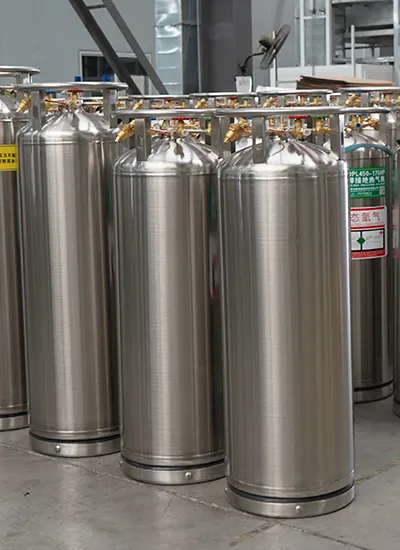
3. Liquid Cylinders and Cryogenic Dewars
Liquid cylinders and cryogenic dewars are designed to store liquefied gases at cryogenic temperatures. Common applications include liquid nitrogen, liquid oxygen, liquid argon and other cryogenic products.
Unlike a conventional compressed-gas cylinder, a cryogenic vessel normally uses double-wall construction and insulation to reduce heat transfer into the stored liquid.
These vessels can provide substantially more gas capacity than conventional compressed-gas cylinders of similar external size, depending on the gas and vessel configuration.
They are useful for laboratories, medical facilities, food processing, industrial operations and other applications where liquid cryogenic products are needed but a permanent bulk tank is not justified.
When Should You Consider a Cryogenic Dewar?
- Liquid gas is required at the point of use
- Gas consumption is low to moderate
- Portability is important
- A permanent bulk tank is not practical
- The facility needs temporary or supplementary cryogenic storage
4. Microbulk Gas Supply
Microbulk systems are designed to bridge the gap between packaged gas and larger bulk storage. A compact cryogenic storage tank is installed at the customer’s facility and periodically replenished by a delivery vehicle.
This approach can reduce the need for individual cylinder handling and can provide a more continuous gas supply. Air Products describes microbulk as a solution that provides some of the advantages of bulk supply for smaller-volume users, while Linde also identifies microbulk as an alternative to cylinder-based supply.
How Does a Microbulk System Work?
A typical microbulk installation includes:
- Cryogenic storage tank
- Tank valves and instrumentation
- Pressure-building system where required
- Economizer or pressure-control components where applicable
- Vaporizer for gaseous applications
- Pressure regulation
- Gas distribution pipeline
- Tank filling connection
- Level monitoring system
The stored liquid can be vaporized and delivered as gas to the production process, or supplied in liquid form where the application requires it.
Advantages of Microbulk
- Fewer cylinder changeovers
- Reduced cylinder handling
- On-site gas inventory
- Potentially more convenient delivery management
- Suitable for continuous or semi-continuous consumption
- Can be equipped with remote inventory monitoring
5. Bulk Cryogenic Gas Supply
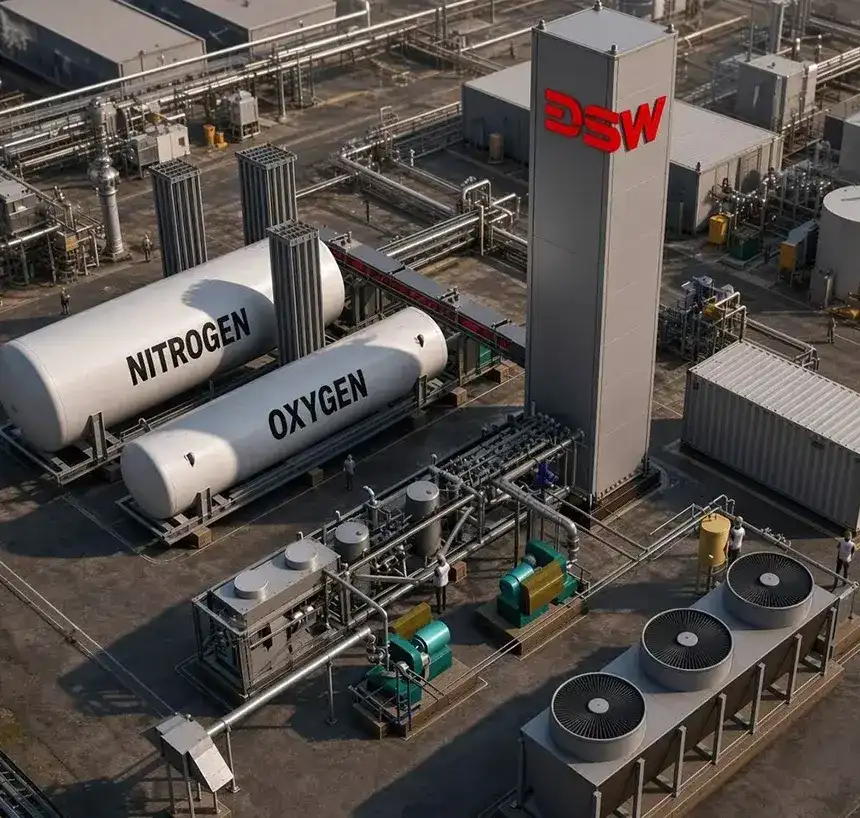
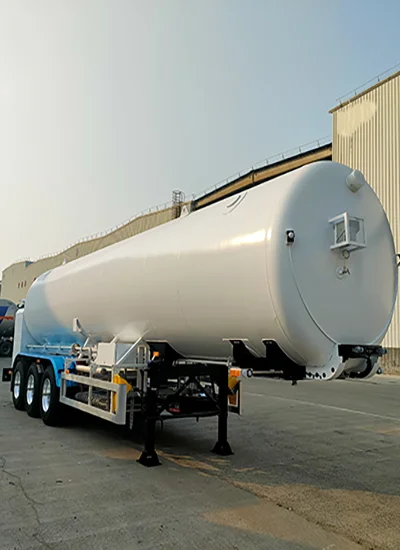
Bulk cryogenic supply is designed for larger gas requirements. In a typical system, a cryogenic tanker delivers liquid gas to a vacuum-insulated storage tank installed at the customer’s site.
Industrial gases such as nitrogen, oxygen, argon and carbon dioxide can be supplied in liquid form through bulk storage systems. Linde describes bulk delivery as transferring cryogenic liquid from delivery tankers into vacuum-insulated storage vessels at the customer’s site.
Typical Bulk Gas System
Bulk Cryogenic Tank
↓
Pressure Building / Pressure Control
↓
Liquid Outlet
↓
Vaporizer
↓
Pressure Regulation
↓
Gas Pipeline
↓
Production Equipment
For liquid applications, the product may be transferred directly from the storage vessel through a cryogenic pipeline. For gaseous applications, the liquid is vaporized before entering the gas distribution system.
Advantages of Bulk Supply
- Large on-site gas inventory
- Fewer deliveries compared with packaged-gas supply
- Suitable for high and stable consumption
- Centralized gas storage
- Can support automated inventory monitoring
- Suitable for integrated gas distribution systems
Bulk Supply Considerations
- Tank installation area
- Foundation and site preparation
- Cryogenic tanker access
- Filling connection location
- Vaporizer capacity
- Pipeline design
- Safety and separation requirements
- Future capacity requirements
6. On-Site Gas Generation
On-site generation produces the required gas at or near the customer’s facility rather than relying entirely on delivered gas.
Depending on the gas and required purity, technologies may include pressure swing adsorption (PSA), membrane separation, vacuum pressure swing adsorption (VPSA), cryogenic air separation and other gas-generation processes.
On-site systems are particularly relevant where gas demand is continuous and relatively predictable, and where the required purity, pressure and flow can be achieved economically by the selected technology. Air Products describes on-site systems as being designed around customer-specific purity, pressure and flow requirements.
Potential Advantages
- Reduced dependence on delivered gas
- Continuous production at the facility
- Potential reduction in gas delivery logistics
- Production can be designed around specific purity and flow requirements
- Useful for facilities with stable long-term demand
Potential Limitations
- Equipment investment
- Electricity or other utility consumption
- Maintenance requirements
- Operator requirements
- Gas purity limitations depending on technology
- Backup supply may still be required
On-site generation should therefore be evaluated using total cost of ownership rather than comparing only the nominal cost of generated gas with the purchase price of delivered gas.
7. Pipeline Gas Supply
Pipeline supply is generally associated with very large and continuous industrial gas requirements where production facilities and customer facilities can be connected through dedicated pipeline infrastructure.
Major industrial gas companies operate pipeline networks supplying gases such as nitrogen, oxygen and hydrogen to large industrial customers. Air Liquide, for example, operates extensive industrial gas pipeline infrastructure in major U.S. industrial regions.
Pipeline supply can provide continuous gas availability without requiring a customer to manage conventional on-site bulk storage in the same way as a standalone tank-based system.
Typical Pipeline Applications
- Large chemical plants
- Petrochemical facilities
- Refineries
- Steel plants
- Large electronics facilities
- Integrated industrial parks
- Other high-volume continuous processes
However, pipeline supply is highly dependent on geographical location and the availability of appropriate production and distribution infrastructure.
How Do You Choose Between Cylinder, Microbulk and Bulk?
The most useful way to compare these options is to look at the entire gas supply operation rather than gas price alone.
| Factor | Cylinder | Bundle | Microbulk | Bulk | On-Site |
|---|---|---|---|---|---|
| Flexibility | High | High | Medium | Low–Medium | Low–Medium |
| Manual Handling | High | Medium | Low | Low | Low |
| On-Site Storage | Small | Medium | Medium | Large | Depends on system |
| Infrastructure | Low | Low–Medium | Medium | High | High |
| Continuous Supply | Limited by inventory | Better | Good | Very good | Very good |
| Delivery Dependence | High | High | Medium | Medium | Low–Medium |
| Best Fit | Low/intermittent demand | Small–medium demand | Medium demand | High demand | Stable continuous demand |
Important: this table is a general engineering comparison, not a universal capacity threshold. The actual selection should be based on gas type, consumption profile, purity, pressure, site conditions, local delivery infrastructure and project economics.
How to Compare the Total Cost of Different Supply Methods
Gas purchase price is only one component of the total cost of an industrial gas supply system.
A proper comparison should consider:
- Gas purchase cost
- Delivery charges
- Tank or cylinder rental
- Equipment investment
- Installation cost
- Foundation and site preparation
- Pipeline installation
- Electricity consumption
- Maintenance
- Labor for cylinder handling
- Inventory management
- Emergency deliveries
- Production downtime
- Gas losses and residual product
For example, replacing cylinders with microbulk may change more than the gas price. It can also reduce cylinder changeovers, handling and inventory management. Microbulk systems are specifically promoted by industrial gas suppliers as an alternative to conventional cylinder supply for appropriate applications.
Supply Method Selection by Application
Metal Fabrication and Welding
Small workshops may use individual cylinders, while larger welding operations may use cylinder bundles, liquid cylinders or microbulk systems depending on gas consumption and process requirements.
Common gases include argon, carbon dioxide, oxygen, nitrogen and gas mixtures.
Food Processing
Food processing may use nitrogen, carbon dioxide or other gases for modified-atmosphere packaging, freezing, chilling, carbonation and other applications.
Supply selection depends heavily on consumption volume, process continuity and required gas quality.
Electronics Manufacturing
Electronics applications can require high-purity gases and tightly controlled supply conditions. Depending on demand, supply may involve cylinders, bulk liquid systems, on-site generation or dedicated infrastructure.
Pharmaceutical and Medical Applications
Gas purity, certification, supply continuity and regulatory requirements can become particularly important. The supply system should be designed around the applicable application and local requirements rather than selecting equipment based only on capacity.
Chemical and Petrochemical Plants
Large chemical facilities may require continuous oxygen, nitrogen, hydrogen or other industrial gases. Depending on scale and location, bulk, on-site production or pipeline supply can become more appropriate than packaged gas.
Laboratories and Research Facilities
Laboratories often require a wide range of gases with different purity specifications. Cylinders and liquid cylinders can provide flexibility, while centralized systems may be appropriate for larger facilities.
When Should a Factory Move From Cylinders to Microbulk?
There is no single consumption number that applies to every facility. Instead, consider the operational problems created by packaged-gas supply.
A transition to microbulk may be worth evaluating when:
- Cylinder deliveries become frequent
- Operators spend significant time changing cylinders
- Gas interruptions affect production
- Large areas are required for cylinder storage
- Gas consumption is relatively stable
- A permanent tank can be installed safely
- The customer wants automated inventory monitoring
- The facility expects continued production growth
The economic case should compare the total cost of both systems over an appropriate period rather than comparing only the delivered gas price.
When Should You Consider Bulk Cryogenic Storage?
Bulk storage becomes more attractive as gas demand increases and becomes more predictable.
Consider bulk storage when:
- Gas consumption is high
- Gas demand is continuous or relatively stable
- Frequent cylinder handling is inefficient
- The site has sufficient space for a cryogenic tank
- Cryogenic tanker access is available
- A vaporizer and pipeline system can be installed
- Supply continuity is important
- Remote inventory monitoring is beneficial
Bulk systems can provide a large on-site inventory and reduce the frequency of individual gas-package handling. The appropriate tank capacity and vaporization system should be determined from the customer’s consumption profile and operating requirements.
When Should You Consider On-Site Gas Generation?
On-site generation deserves consideration when gas demand is continuous and sufficiently predictable to justify the equipment and utility requirements.
Key questions include:
- What is the required gas purity?
- What is the average flow rate?
- What is the peak flow rate?
- How many hours per day does the process operate?
- How many days per year does the facility operate?
- What utilities are available?
- What is the electricity cost?
- What backup gas supply is required?
- What is the expected equipment lifetime?
- What maintenance capability is available?
On-site generation is therefore a system-level investment decision rather than simply a gas-price comparison.
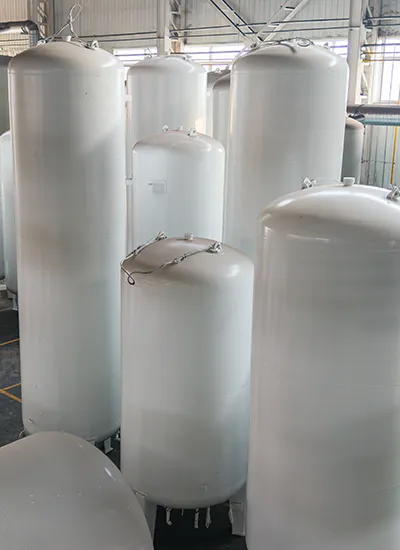
Liquid Nitrogen Cryogenic Tank
BluNet liquid nitrogen cryogenic tank solution for reliable LN₂ storage and distribution.

Vacuum-insulated LNG Cryogenic Tank
BluNet LNG cryogenic tank solution for reliable LNG storage and distribution.
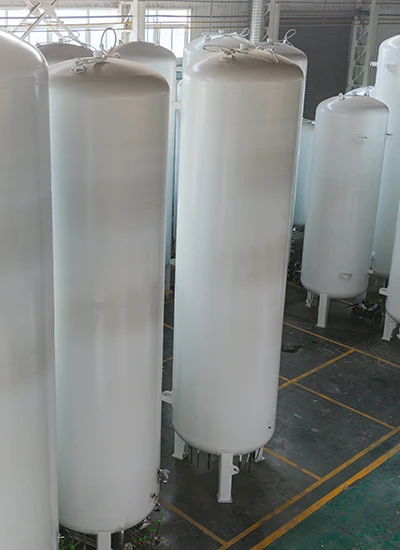
LCO2 Cryogenic Bulk Tank
BluNet LCO₂ cryogenic tank solution for reliable liquid CO₂ storage and distribution.
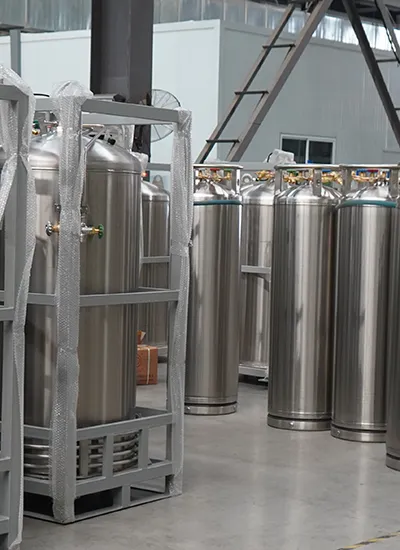
Vacuum-insulated Microbulk System
BluNet Microbulk system for reliable on-site industrial gas storage and supply.
Why Backup Gas Supply Is Important
Even a well-designed primary gas supply system may require a backup strategy for critical applications.
Possible backup arrangements include:
- Cylinder manifold
- Cylinder bundle
- Liquid cylinder
- Secondary cryogenic tank
- Emergency delivery connection
- Standby vaporizer
- Alternative gas-generation equipment
The appropriate backup system depends on how much gas is required during an interruption and how long the facility must remain operational.
Remote Monitoring and Gas Inventory Management
Modern bulk and microbulk systems can incorporate tank-level monitoring and telemetry. Remote monitoring can provide information about inventory levels and help identify when replenishment is required.
For facilities where gas interruption can affect production, inventory monitoring can be integrated into the overall supply-management strategy. Linde, for example, describes telemetry systems that can provide real-time stock-level monitoring and support replenishment planning.
A typical monitored supply chain can be represented as:
Tank Level Sensor
↓
Telemetry System
↓
Inventory Monitoring
↓
Low-Level Alert
↓
Delivery Planning
↓
Gas Replenishment
What Information Should You Give a Gas Supply System Manufacturer?
If you are requesting a quotation for an industrial gas supply system, providing complete operating information can make equipment selection much more accurate.
Gas Information
- Gas type
- Gas purity
- Liquid or gaseous application
- Required certification
Consumption Information
- Average consumption
- Peak consumption
- Hourly flow rate
- Daily consumption
- Monthly consumption
- Operating hours per day
- Operating days per year
Pressure Information
- Required inlet pressure
- Required outlet pressure
- Minimum operating pressure
- Maximum allowable pressure
Site Information
- Available installation area
- Tank location
- Delivery truck access
- Pipeline distance
- Ambient temperature range
- Electrical power availability
- Foundation conditions
- Applicable local regulations
For a cryogenic system, additional information may be required for tank sizing, vaporizer selection, pressure regulation and pipeline design.
Industrial Gas Supply Method Selection Checklist
Before selecting an industrial gas supply method, evaluate your gas requirements, consumption patterns, site conditions, supply reliability, and total cost of ownership. Use this checklist to identify the most suitable supply solution for your facility.
| Question | Why It Matters |
|---|---|
| What gas do you need? | Determines storage and supply technology |
| What purity is required? | Affects gas source and system materials |
| What is the average consumption? | Helps determine supply scale |
| What is the peak flow? | Important for vaporizer and pipeline sizing |
| Is consumption continuous? | Helps compare packaged, bulk and on-site options |
| How critical is supply continuity? | Determines reserve and backup requirements |
| How much space is available? | Affects tank and equipment selection |
| Can delivery trucks access the site? | Important for cylinder, microbulk and bulk delivery |
| What is the required gas pressure? | Affects pressure-control equipment |
| Will consumption increase? | Important for future system capacity |
| What is the total cost of ownership? | Prevents selection based only on gas price |
Industrial Gas Supply Methods: A Practical Decision Process
A practical selection process can be summarized in six steps.
- Define the gas requirement. Identify the gas, purity, pressure and application.
- Measure actual consumption. Record average and peak demand rather than relying only on estimates.
- Evaluate supply continuity. Determine the amount of reserve required if deliveries or production are interrupted.
- Check site conditions. Confirm space, delivery access, foundation, utilities and applicable safety requirements.
- Compare total cost of ownership. Include gas, equipment, delivery, labor, maintenance, utilities and potential downtime.
- Allow for future expansion. Select a system that can accommodate realistic future demand without unnecessary oversizing.
Looking for a Reliable Cryogenic Storage Solution?
Whether you need bulk storage, microbulk, or on-site supply,
Industrial Gas Supply Systems From BluNet
BluNet supplies industrial gas equipment and cryogenic storage solutions for applications requiring packaged gas, cryogenic storage and integrated gas supply infrastructure.
Depending on the project requirements, a gas supply solution may include cryogenic storage tanks, microbulk systems, vaporizers, pressure-control equipment, gas pipelines, gas storage equipment and related components.
For projects requiring a complete supply system, the correct equipment configuration should be determined from the customer’s gas type, purity, consumption profile, operating pressure, site conditions and required supply continuity.
Need help selecting an industrial gas supply method? Provide your gas type, average and peak consumption, required pressure, purity, operating schedule and available installation space. BluNet can use these project parameters to evaluate an appropriate supply configuration.
TECHNICAL FAQs
About the industrial gas supply method
There is no single supply method that is most appropriate for every industrial customer. Cylinders are widely used for lower-volume or flexible applications, while microbulk, bulk, on-site generation and pipeline supply become relevant as consumption, continuity requirements and site infrastructure increase.
Cylinder supply stores gas in individual high-pressure or liquid-gas cylinders that are replaced or replenished through deliveries. Microbulk supply stores cryogenic liquid in a dedicated on-site tank that is periodically refilled. Microbulk can reduce cylinder handling and changeovers for suitable applications.
Both systems use on-site cryogenic storage, but microbulk systems are generally designed around smaller storage and consumption requirements than conventional bulk systems. The actual boundary depends on the gas, equipment and local supply conditions.
Bulk supply can provide economic advantages for appropriate higher-volume applications, but the comparison should include the complete cost of ownership. Equipment, installation, delivery, maintenance, labor, inventory and downtime can all affect the result.
On-site generation is worth evaluating when gas demand is sufficiently continuous and predictable and the required purity, pressure and flow can be achieved economically by an appropriate generation technology.
Yes. When gaseous product is required, liquid stored in the cryogenic tank is normally vaporized and then pressure-regulated before entering the plant gas distribution system. The exact configuration depends on the gas and operating requirements.
Start with gas type, purity, average consumption, peak flow, operating pressure, production schedule, supply continuity, available space, delivery access and future demand. Then compare cylinder, bundle, microbulk, bulk, on-site generation and pipeline options based on the complete project requirements.
A useful RFQ should include gas type, purity, average and peak consumption, operating pressure, operating hours, storage requirements, site location, available space, delivery access and any applicable standards or certification requirements.
Related Cryogenic Storage Solutions
More Information About Cryogenic Storage Systems.
Conclusion
Industrial gas supply is not simply a choice between cylinders and bulk tanks. Modern industrial gas users can select from cylinders, cylinder bundles, liquid cylinders, microbulk, bulk cryogenic storage, on-site generation and pipeline supply.
The appropriate solution depends on the complete operating profile: gas type, purity, consumption, peak flow, pressure, production continuity, site conditions, delivery logistics and future expansion.
For smaller or intermittent requirements, cylinders and bundles can provide flexibility. Microbulk can bridge the gap between packaged gas and larger bulk systems. Bulk cryogenic storage is suitable for many higher-volume applications, while on-site generation or pipeline supply may be considered for large and stable long-term demand.
The objective should not simply be to select the lowest gas price. A properly designed supply system should provide the required gas quality and pressure, sufficient capacity, reliable delivery and an economically appropriate total cost of ownership.