

Boil-Off Gas (BOG) refers to the gas generated when a small amount of cryogenic liquid naturally evaporates due to heat entering a storage tank or transport container. Even advanced vacuum-insulated cryogenic equipment cannot completely eliminate heat transfer, so a controlled amount of vaporization always occurs.
Boil-off gas is a normal phenomenon in cryogenic systems used for liquefied gases such as liquid nitrogen (LIN), liquid oxygen (LOX), liquid argon (LAR), LNG, and liquid carbon dioxide (LCO₂). Proper BOG management is essential for reducing product losses, maintaining stable pressure, and ensuring safe operation.
Understanding how cryogenic vessels are designed, insulated, and operated is essential for controlling evaporation losses. Learn more in our complete cryogenic tanks guide.
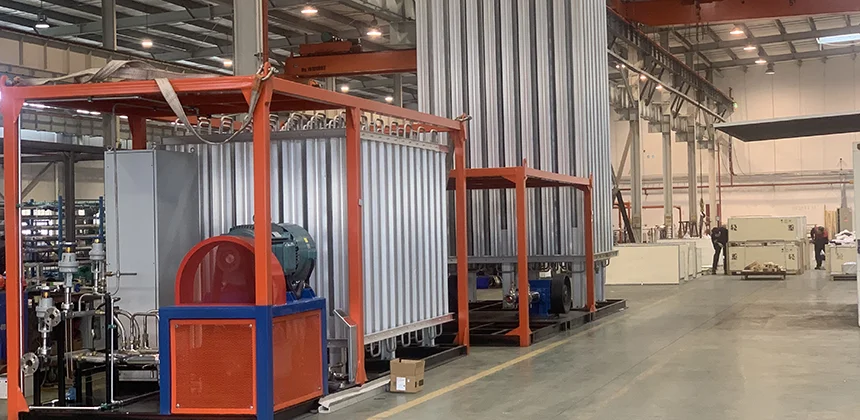
Why Does Boil-Off Gas Occur in Cryogenic Tanks?
Cryogenic liquids are stored at extremely low temperatures, often below -150°C. Because the surrounding environment is much warmer than the stored liquid, heat naturally transfers into the cryogenic vessel.
Although modern cryogenic tanks use double-wall construction, vacuum insulation, and multi-layer insulation (MLI), a small amount of heat leakage still occurs through:
- Ambient temperature exposure
- Tank supports and structural connections
- Pipelines and valves
- Instrumentation systems
- Loading and unloading operations
When heat enters the tank, part of the liquid absorbs this energy and changes from liquid phase into gas phase. This generated vapor is known as Boil-Off Gas (BOG).
The performance of these systems depends heavily on tank design, insulation technology, and manufacturing quality. Selecting an experienced cryogenic tank manufacturer helps ensure reliable long-term storage performance.
Boiling Points of Common Cryogenic Liquids
| Cryogenic Liquid | Boiling Temperature |
|---|---|
| Liquid Nitrogen (LIN) | -196°C |
| Liquid Oxygen (LOX) | -183°C |
| Liquid Argon (LAR) | -186°C |
| LNG (Liquefied Natural Gas) | Approximately -162°C |
| Liquid Carbon Dioxide (LCO₂) | Approximately -78.5°C (sublimation point at atmospheric pressure) |
How Is Boil-Off Gas Generated?
The formation of BOG follows a simple thermal process:
- Heat enters the cryogenic vessel from the external environment.
- The cryogenic liquid absorbs the heat energy.
- A small portion of liquid changes into vapor.
- The generated gas increases pressure inside the tank.
The boil-off rate depends on several factors:
- Quality of vacuum insulation
- Efficiency of multi-layer insulation (MLI)
- Tank capacity and geometry
- Ambient temperature
- Storage duration
- Frequency of filling and unloading
Why Is Boil-Off Gas Management Important?
Without effective BOG control, gas pressure inside a cryogenic vessel will gradually increase. Excessive pressure can lead to increased product loss and unnecessary venting.
Effective boil-off gas management helps:
- Reduce cryogenic liquid losses
- Improve transportation efficiency
- Extend storage holding time
- Maintain safe operating pressure
- Lower operating costs
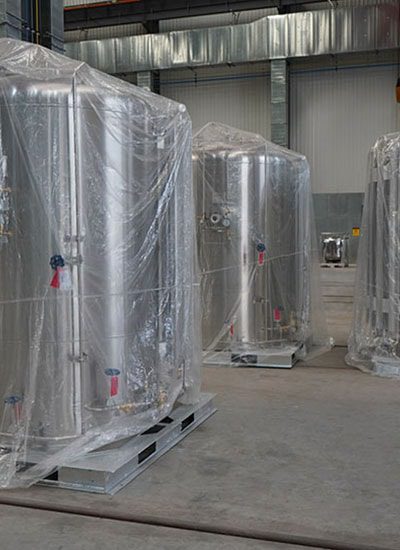
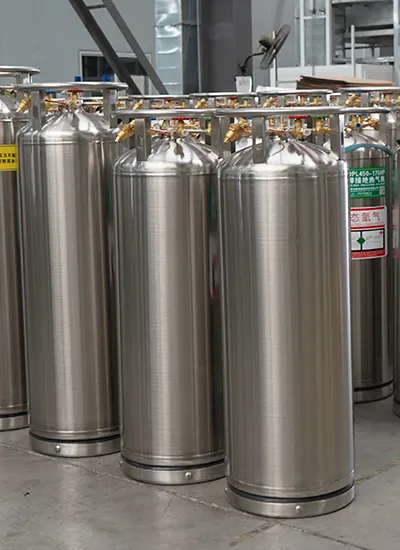
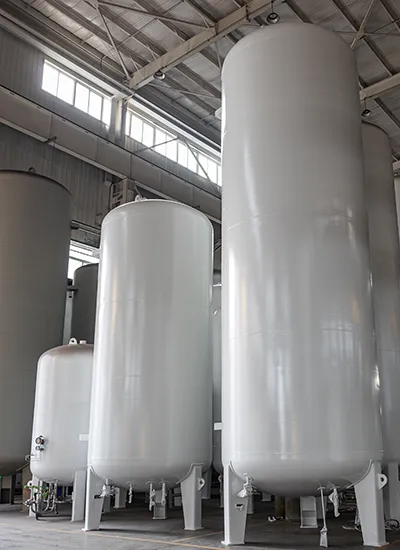
Methods Used to Control and Manage Boil-Off Gas
1. Vacuum Insulation
Vacuum insulation is one of the most important technologies used in cryogenic tanks. The vacuum space between the inner and outer vessel significantly reduces heat transfer by limiting conduction and convection.
High-quality vacuum insulation provides:
- Lower evaporation rates
- Longer holding time
- Reduced product loss
- Improved cryogenic transportation efficiency
These technologies are widely applied in industrial cryogenic storage tanks designed for liquid nitrogen, oxygen, argon, LNG, and CO₂ storage.
Learn more about vacuum insulation technology for cryogenic equipment.
2. Multi-Layer Insulation (MLI)
Multi-layer insulation consists of multiple reflective layers installed inside the vacuum jacket. It reduces radiant heat transfer and improves the thermal performance of cryogenic storage and transportation equipment.
MLI is widely used in:
- Cryogenic ISO tank containers
- Cryogenic tanker trailers
- Liquid nitrogen storage tanks
- LNG transportation systems
3. Pressure Build-Up System (PBU)
A pressure build-up system intentionally vaporizes a small amount of cryogenic liquid to maintain stable tank pressure during gas supply operations.
The PBU system helps:
- Maintain outlet pressure
- Improve liquid discharge performance
- Reduce unnecessary venting
4. Boil-Off Gas Recovery Systems
In large-scale cryogenic facilities, BOG is often recovered instead of released into the atmosphere.
Recovered boil-off gas can be:
- Returned to the process system
- Compressed for industrial use
- Re-liquefied
- Used as fuel in LNG applications
5. Pressure Relief Systems
Cryogenic vessels are equipped with safety devices such as pressure relief valves to protect against excessive pressure caused by vapor generation.
Cryogenic equipment commonly follows international standards including ASME, PED, EN standards, and ISO requirements.
Boil-Off Gas Applications in Different Cryogenic Systems
LNG Transportation and Storage
LNG generates significant amounts of BOG because it is stored at approximately -162°C and often transported over long distances.
LNG terminals and transportation systems commonly use BOG management systems to improve efficiency and reduce fuel losses.
For long-distance movement of liquefied gases, specialized cryogenic transportation systems are required to maintain temperature stability and minimize product loss.
Liquid Nitrogen Storage
Liquid nitrogen naturally produces nitrogen vapor during storage. Since nitrogen is inert and non-flammable, the main goal is reducing product loss and maintaining storage efficiency.
Liquid Oxygen Storage
Liquid oxygen systems require careful BOG management because oxygen-enriched environments can increase fire risks. Proper ventilation and equipment design are essential.
Liquid Argon Storage
Liquid argon is widely used in industrial applications. Effective insulation and pressure control help maintain product quality and reduce evaporation losses.
Factors Affecting Cryogenic Boil-Off Rate
| Factor | Effect on BOG |
|---|---|
| Insulation Performance | Better insulation reduces heat transfer and evaporation. |
| Vacuum Level | Higher vacuum quality improves thermal efficiency. |
| Tank Size | Larger tanks usually have lower boil-off rates per unit volume. |
| Ambient Temperature | Higher temperatures increase heat leakage. |
| Storage Duration | Longer storage increases total vapor generation. |
Explore Custom Cryogenic Storage Equipment
From stationary storage tanks to transportation vessels, DSW provides customized cryogenic storage solutions engineered for safe operation, low evaporation rates,and long-term reliability. .
How Cryogenic Equipment Manufacturers Reduce BOG
Modern cryogenic storage and transportation equipment uses advanced engineering methods to minimize boil-off losses, including:
- Double-wall vacuum insulated vessels
- High-performance MLI systems
- Low thermal conductivity supports
- Optimized piping design
- Vacuum monitoring systems
- Advanced pressure control systems
These technologies are widely applied in cryogenic ISO tank containers, cryogenic tanker trailers, and industrial gas storage systems.
DSW provides integrated cryogenic storage solutions combining vacuum insulated vessels, pressure control systems, and customized equipment for industrial gas applications.
TECHNICAL FAQs
FAQs About Boil-Off Gas (BOG) In Cryogenic System
Boil-Off Gas (BOG) is the vapor generated when a small amount of cryogenic liquid naturally evaporates due to heat entering a storage tank or transport container. It is a normal phenomenon in cryogenic systems and must be managed to maintain pressure and reduce product loss.
Boil-Off Gas occurs because no cryogenic storage system can completely eliminate heat transfer. Even with vacuum insulation and multi-layer insulation (MLI), a small amount of heat enters the tank, causing part of the cryogenic liquid to evaporate into gas.
No. Boil-Off Gas cannot be completely eliminated because some heat leakage is unavoidable. However, advanced vacuum insulation, multi-layer insulation, and pressure management systems can significantly reduce the boil-off rate.
Cryogenic tanks manage Boil-Off Gas using vacuum insulation, multi-layer insulation (MLI), pressure build-up systems, gas recovery systems, and pressure relief valves. These technologies reduce evaporation losses and maintain safe operating pressure.
All cryogenic liquids generate Boil-Off Gas, including liquid nitrogen (LIN), liquid oxygen (LOX), liquid argon (LAR), liquefied natural gas (LNG), and liquid carbon dioxide (LCO₂). The boil-off rate varies depending on the liquid properties, insulation quality, storage conditions, and operating environment.
Boil-Off Gas itself is not necessarily dangerous, but it increases pressure inside cryogenic tanks and must be safely controlled. The level of risk depends on the stored gas. For example, LNG is flammable, while liquid oxygen requires precautions to prevent oxygen-enriched atmospheres.
Final Conclusion
Boil-Off Gas (BOG) is an unavoidable part of storing and transporting cryogenic liquids. However, with advanced vacuum insulation, multi-layer insulation, pressure control systems, and proper engineering design, BOG losses can be minimized effectively.
Understanding boil-off gas management is essential for improving the safety, efficiency, and reliability of cryogenic storage tanks, ISO containers, and transportation systems. Explore our complete range of cryogenic engineering solutions for storage, transportation, and industrial gas supply applications.
? Causes, Management, and Applications)
No comment