

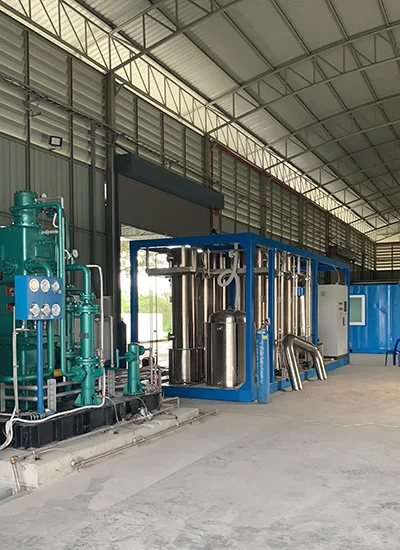
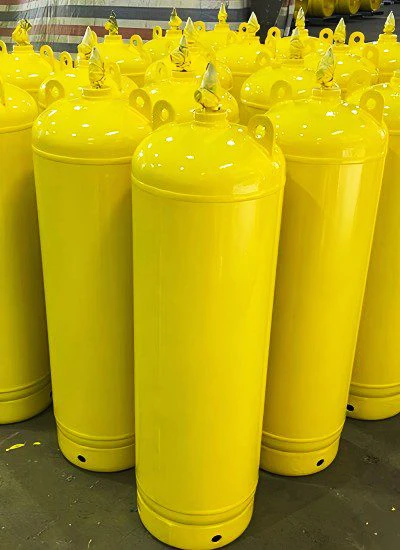
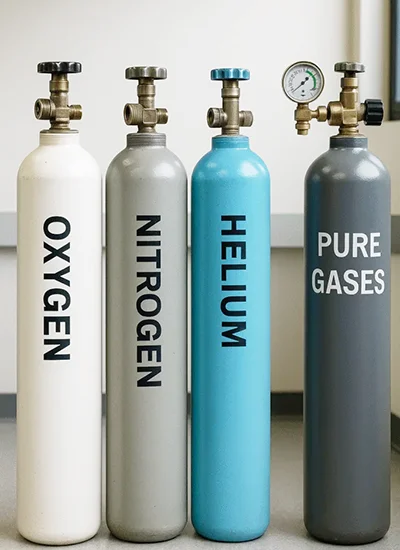

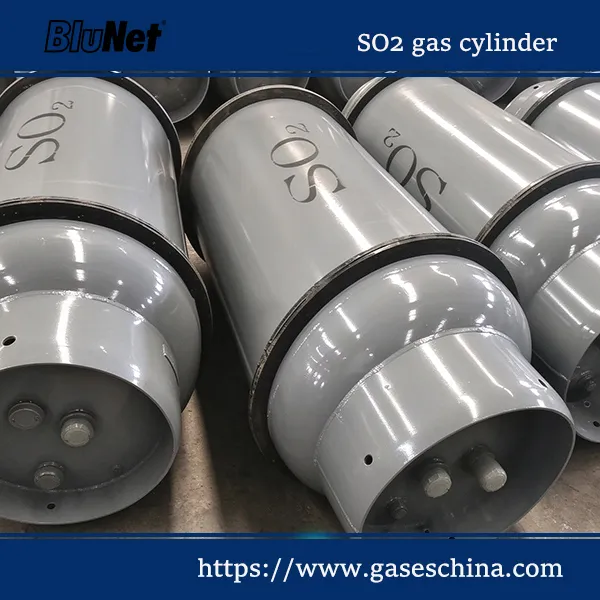


Dry ice is widely used in cold chain logistics, pharmaceutical transport, industrial cleaning, and food preservation. As a solid form of carbon dioxide (CO₂), it provides extremely low temperatures and sublimation behavior that makes it essential for moisture-free and temperature-sensitive applications.
This guide explains what dry ice is, its key properties, industrial applications, safety requirements, and proper handling practices.
What Is Dry Ice?
Dry ice is the solid form of carbon dioxide (CO₂). Unlike regular ice, it does not melt into liquid water. Instead, it sublimates directly from solid to gas.
Dry ice temperature: approximately -78.5°C
This ultra-low temperature makes dry ice highly effective for deep freezing, transport cooling, and industrial temperature control applications.
How Dry Ice Is Produced
- Carbon dioxide gas is compressed and liquefied under high pressure
- The liquid CO₂ is rapidly expanded to form CO₂ “snow”
- The snow is compressed into blocks, pellets, or slices
- Final products are stored in insulated, ventilated containers to reduce sublimation loss
Key Characteristics of Dry Ice
Sublimation (No Liquid Phase)
Dry ice transitions directly from solid to gas without producing liquid residue, making it ideal for moisture-sensitive applications.
Extremely Low Temperature
Dry ice maintains a stable temperature of approximately -78.5°C, enabling deep freezing and rapid cooling.
Non-Toxic but Asphyxiation Risk
Carbon dioxide is not chemically toxic, but it can displace oxygen in confined or poorly ventilated spaces, creating a suffocation hazard.
No Residue
Dry ice leaves no water or liquid residue after sublimation, making it suitable for electronics and precision industries.
Time-Sensitive Material
Dry ice continuously sublimates at ambient temperature and must be stored in insulated, vented containers.
Dry Ice vs Regular Ice
| Feature | Dry Ice | Regular Ice |
|---|---|---|
| Composition | CO₂ | H₂O |
| Temperature | -78.5°C | 0°C |
| Phase Change | Sublimation | Melting |
| Residue | None | Water |
| Primary Use | Industrial cooling & transport | General cooling |
Dry Ice Uses and Applications
Food Industry and Cold Chain Logistics
Dry ice is widely used for transporting perishable foods such as meat, seafood, dairy products, and frozen goods. It ensures stable low temperatures without introducing moisture or contamination.
Pharmaceutical and Medical Cold Chain
Dry ice is essential for transporting vaccines, biological samples, blood products, and temperature-sensitive pharmaceuticals that require ultra-low temperature storage.
Industrial Cleaning (Dry Ice Blasting)
Dry ice blasting is a non-abrasive cleaning method using CO₂ pellets. It removes contaminants without water, chemicals, or residue, making it ideal for machinery, electronics, aerospace, and mold removal.
Scientific Research and Laboratories
Used in laboratories for cryogenic preservation, biological sample storage, and controlled low-temperature experiments in chemistry and life sciences.
Entertainment and Special Effects
Dry ice creates dense fog effects when combined with warm water, widely used in film production, concerts, and theatrical performances.
Industrial Applications and Pest Control
Used in rodent control, metal shrink fitting, and specialized manufacturing processes requiring localized cooling.
Safety Guidelines for Handling Dry Ice
- Always use dry ice in well-ventilated areas
- Avoid direct skin contact (risk of frostbite burns)
- Use insulated storage containers designed for CO₂ sublimation
- Never store dry ice in airtight containers (explosion risk)
- Always wear protective gloves and safety goggles
How to Dispose of Dry Ice Safely
The safest disposal method is natural sublimation in a well-ventilated area. Dry ice should never be placed in sealed containers or disposed of in drains.
Warm water may be used to accelerate sublimation when necessary.
Looking for a Reliable Cryogenic Gas Solution?
Whether you need bulk storage, transport, or on-site supply,
Why Dry Ice Demand Is Increasing
- Expansion of global pharmaceutical cold chain logistics
- Growth in international food export industries
- Increasing adoption of dry ice blasting in industrial cleaning
- Advancements in cryogenic storage and transport systems
These trends are driving strong global demand for dry ice and related cryogenic technologies.
TECHNICAL FAQs
Questions About Dry Ice and Its Uses
Dry ice is the solid form of carbon dioxide (CO₂) that sublimates directly into gas without becoming liquid.
Dry ice has a temperature of approximately -78.5°C (-109.3°F), making it suitable for deep freezing and cryogenic applications.
Dry ice is widely used in food transport, pharmaceutical cold chain logistics, industrial cleaning (dry ice blasting), and laboratory preservation.
Dry ice is not toxic but can cause frostbite on contact and oxygen displacement in poorly ventilated areas, so proper handling and ventilation are required.
Dry ice must be stored in insulated, vented containers. It should never be placed in airtight containers due to pressure buildup and explosion risk.
Dry ice sublimates directly from solid to carbon dioxide gas without passing through a liquid phase.
Dry ice provides stable ultra-low temperatures without liquid contamination, making it essential for transporting vaccines, biological samples, and frozen foods.
Conclusion
Dry ice is a critical industrial material used across food logistics, pharmaceuticals, industrial cleaning, and scientific research. Its sublimation behavior and extremely low temperature make it essential for moisture-free, ultra-cold applications.
Proper handling, storage systems, and safety procedures are essential to ensure efficient and safe use across all industries.

No comment