

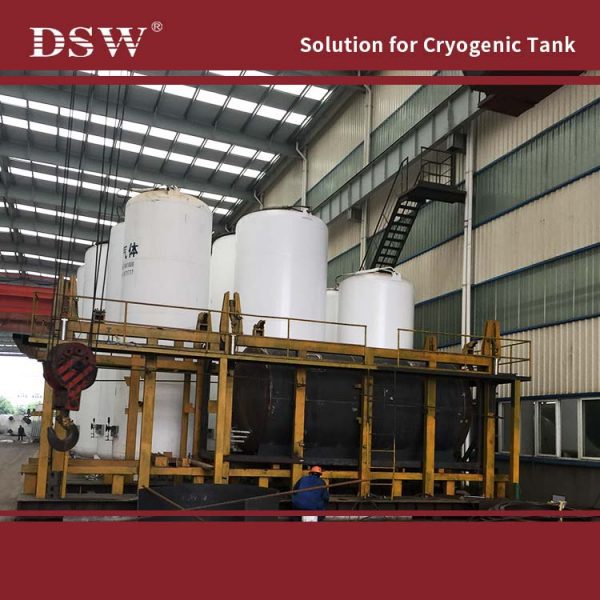
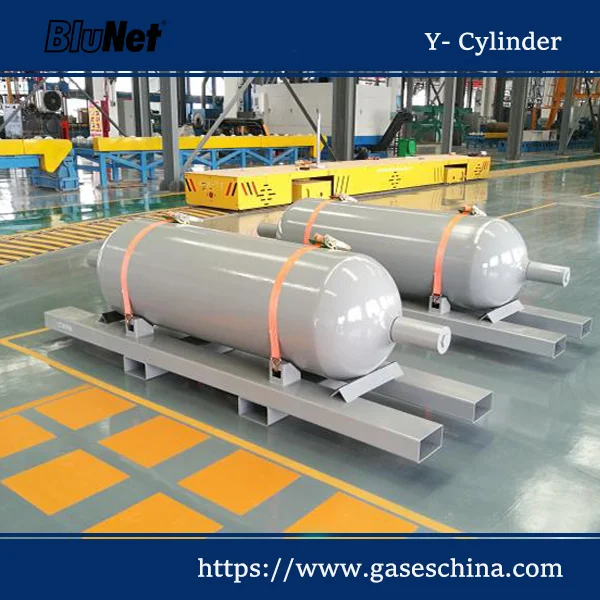
Cryogenic ISO tanks are specialized intermodal tank containers designed to transport liquefied gases at very low temperatures by road, rail and sea. Unlike conventional liquid ISO tanks, cryogenic ISO tanks require specialized pressure-vessel design, thermal insulation, vacuum systems, pressure-control equipment and materials suitable for cryogenic service.
Common applications include the transportation of liquid nitrogen (LIN), liquid oxygen (LOX), liquid argon (LAr), liquid carbon dioxide (LCO2), LNG, nitrous oxide, ethylene, hydrogen and other cryogenic liquids.
This guide introduces 12 manufacturers with documented involvement in cryogenic ISO tanks, T75 tank containers or related cryogenic intermodal equipment. The companies are presented as manufacturers to consider rather than as a strict ranking from first to last.
Editorial note: There is no universally accepted global ranking of cryogenic ISO tank manufacturers. The companies below were selected based on publicly documented cryogenic ISO tank products, T75 or related transportable cryogenic equipment, manufacturing capabilities, applications and international market presence. Product specifications, certifications and current manufacturing capabilities should be confirmed directly with each manufacturer before procurement.
Quick Comparison of Cryogenic ISO Tank Manufacturers
| Manufacturer | Country / Region | Cryogenic ISO Tank Focus | Typical Cryogenic Products | Typical Applications |
|---|---|---|---|---|
| Chart Industries | United States / Europe / China | Cryogenic ISO intermodal containers | 20 ft, 40 ft, specialized ISO containers | LIN, LOX, LAr, LNG, CO₂, hydrogen |
| BTCE | China | Cryogenic transport containers and equipment | Cryogenic ISO tanks, transport equipment | Industrial gases, LNG and cryogenic liquids |
| CIMC Enric | China / Global | Cryogenic tank containers and LNG equipment | T75 ISO tanks, LNG ISO tanks | LIN, LOX, LAr, CO₂, LNG and specialty gases |
| Rootselaar Group | Netherlands | Transportable cryogenic pressure vessels | T21, T22, T50, T75 | Liquefied gases and cryogenic products |
| Corban Energy Group | United States / China | Cryogenic and LNG transportation equipment | Cryogenic tanks and ISO-related equipment | LNG and industrial gases |
| Cryeng Group | Australia / Global | Vacuum-insulated T75 ISO tanks | 20 ft cryogenic ISO tanks | LIN, LOX, LAr, LNG, CO₂, ethylene |
| FURUISE | China | Cryogenic tank containers | T75 cryogenic ISO tanks | Industrial gases, LNG and cryogenic liquids |
| INOXCVA | India / Global | UN T75 cryogenic ISO containers | 10 ft, 20 ft and 40 ft | LIN, LOX, LAr, CO₂, N₂O, LNG |
| Uralcryomash | Russia | Cryogenic transport and storage equipment | Cryogenic tank containers | Industrial gases and cryogenic liquids |
| Bewellcn | China | T75 cryogenic ISO tanks | 20 ft T75 tank containers | LIN, LOX, LAr and other cryogenic gases |
| Cryocan | Turkey | Cryogenic tanks and transport equipment | Cryogenic ISO tanks and pressure vessels | Industrial gases and cryogenic applications |
| M1 Engineering | United Kingdom | Cryogenic ISO containers | 20 ft and 40 ft ISO containers | LIN, LOX, LAr, CO₂, LNG and specialty gases |
The companies above cover different parts of the cryogenic ISO tank market. Some focus heavily on industrial-gas transportation, while others also manufacture LNG equipment, stationary cryogenic tanks, road tankers or broader pressure-vessel systems.
What Is a Cryogenic ISO Tank?
A cryogenic ISO tank is an intermodal tank container designed to transport refrigerated liquefied gases while maintaining the required low-temperature conditions.
The tank normally consists of an inner pressure vessel, an outer vessel or protective shell, an insulation system and a standardized container frame. Many cryogenic designs use vacuum insulation combined with multilayer insulation to reduce heat transfer.
A typical cryogenic ISO tank includes:
- Inner cryogenic pressure vessel
- Outer vessel or protective shell
- Vacuum insulation system
- Multilayer insulation
- Pressure-building system
- Pressure relief devices
- Filling and discharge valves
- Pressure and level instrumentation
- Container frame and ISO corner fittings
- Safety and emergency shut-off equipment
The exact configuration depends on the cryogenic liquid, working pressure, design temperature, transportation regulations and required holding time.
What Gases Can Be Transported in Cryogenic ISO Tanks?
Cryogenic ISO tanks are used for a range of liquefied gases. The actual cargo must always be compatible with the specific tank design and certification.
| Cryogenic Liquid | Common Abbreviation | Typical Applications |
|---|---|---|
| Liquid nitrogen | LIN / LN₂ | Industrial gas supply, food processing, electronics, medical and laboratory applications |
| Liquid oxygen | LOX / O₂ | Industrial processes, steelmaking, healthcare and chemical applications |
| Liquid argon | LAr / Ar | Welding, metal processing, electronics and specialty-gas supply |
| Liquefied natural gas | LNG | Energy, industrial fuel, transportation and distributed gas supply |
| Liquid carbon dioxide | LCO₂ | Food and beverage, industrial processing and specialty applications |
| Nitrous oxide | N₂O | Food processing, medical and specialty applications |
| Ethylene | C₂H₄ | Petrochemical and chemical industries |
| Hydrogen | LH₂ | Specialized energy, aerospace and emerging hydrogen applications |
Not every cryogenic ISO tank manufacturer supplies tanks for every gas. Buyers should provide the manufacturer with the exact product, UN number where applicable, required pressure, temperature and applicable transportation regulations.
What Is a T75 Cryogenic ISO Tank?
T75 is a UN portable tank designation associated with refrigerated liquefied gases. T75 tanks are commonly used for cryogenic liquids such as nitrogen, oxygen, argon, LNG and carbon dioxide, depending on the specific tank design and approval.
A T75 tank is not simply a standard ISO container with a cryogenic liquid inside. It requires an appropriate pressure-vessel design, insulation system, safety devices and regulatory approvals.
For example, CIMC has publicly documented the delivery of 20-foot T75 cryogenic tank containers that received Japan KHK certification for liquid carbon dioxide transportation.
INOXCVA also identifies its ISO containers as multimodal UN T75 cryogenic tank container units for land, marine and rail transportation. Its published range includes 10-foot, 20-foot and 40-foot configurations for LIN, LOX, LAr, LCO₂, N₂O and LNG.
Top 12 Cryogenic ISO Tank Manufacturers
1. Chart Industries
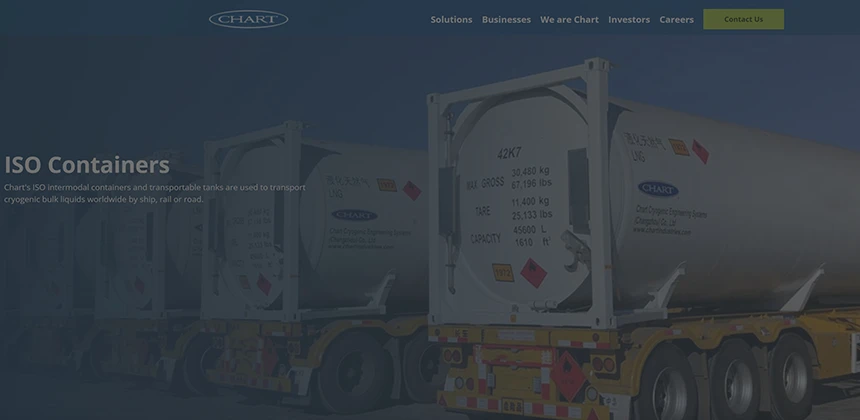
Chart Industries is a global cryogenic equipment manufacturer with a dedicated ISO container product range. Its ISO intermodal containers are designed to transport cryogenic bulk liquids by ship, rail and road.
Chart’s published ISO container portfolio includes solutions for nitrogen, oxygen, LNG, argon, methane, nitrous oxide, ethylene, carbon dioxide, hydrogen and helium. The company offers 20-foot and 40-foot models and states that its ISO containers are manufactured in facilities in the United States, Europe and China.
Chart also publishes different maximum allowable working pressure options and design-code configurations for its ISO containers, allowing the tanks to be configured for different international markets.
Key cryogenic ISO applications:
- Liquid nitrogen
- Liquid oxygen
- Liquid argon
- LNG
- Liquid carbon dioxide
- Hydrogen
- Ethylene
- Specialty cryogenic gases
Chart is particularly relevant for projects requiring a cryogenic ISO tank as part of a larger industrial-gas, LNG or cryogenic equipment system.
2. BTCE
BTCE is a Chinese cryogenic equipment manufacturer included in multiple recent market reports covering cryogenic ISO tank containers. Industry market studies identify BTCE among the major companies active in the global cryogenic ISO tank container segment.
Its relevance to this market is associated with cryogenic transportation and storage equipment for liquefied gases.
Typical areas to evaluate include:
- Cryogenic ISO tank containers
- Cryogenic transportation equipment
- Industrial gas applications
- LNG-related equipment
- Customized cryogenic systems
Buyers should request the exact tank model, T-code, capacity, working pressure and certification package for the intended application.
3. CIMC Enric
CIMC Enric is one of the largest Chinese manufacturers involved in tank containers and energy equipment. CIMC states that its tank-container portfolio includes standard liquid tank containers, special liquid tanks, gas tank containers, powder tank containers and cryogenic tank containers.
CIMC has also publicly documented 20-foot T75 cryogenic tank containers. In 2021, a CIMC Enric subsidiary delivered T75 cryogenic tank containers that passed Japan KHK certification for food-grade carbon dioxide service.
More recently, CIMC Enric has also been involved in LNG ISO tank projects. In 2026, the company announced a Colombian LNG project involving more than 300 LNG ISO tank containers for containerized LNG transportation from a coastal receiving point to inland regasification facilities.
Key applications:
- T75 cryogenic tank containers
- LNG ISO tank containers
- Liquid CO₂
- Industrial gases
- Liquefied gases
- Integrated LNG transportation systems
CIMC is particularly relevant for large-volume projects requiring both tank-container manufacturing and broader LNG or cryogenic equipment integration.
4. Rootselaar Group
Rootselaar Group is a Netherlands-based manufacturer of pressure vessels and transportable cryogenic equipment.
The company’s published certification information specifically lists cryogenic vessels with UN T21, T22, T50 and T75 certification in accordance with TPED. It also works with pressure-vessel codes including ASME VIII and PD 5500 and with classification organizations such as DNV, BV, RINA and Lloyd’s Register for applicable products.
Key areas include:
- T75 cryogenic tanks
- T50 liquefied-gas tanks
- Transportable pressure vessels
- Liquefied gas transportation
- Customized cryogenic equipment
Rootselaar can be relevant for buyers requiring engineered transportable pressure vessels and international certification support.
5. Corban Energy Group
Corban Energy Group is associated with LNG and cryogenic equipment and is included in recent cryogenic ISO tank market studies among the principal companies in the segment.
Its activities are relevant to cryogenic transportation and LNG infrastructure, making it a company to consider when an ISO tank project is connected with broader LNG storage, transportation or distribution requirements.
Potential application areas include:
- LNG transportation
- Cryogenic equipment
- LNG storage and distribution
- Industrial gas transportation
For procurement, buyers should verify the current product configuration and whether the required ISO tank is manufactured directly by the relevant Corban Energy Group entity or supplied as part of an integrated project.
6. Cryeng Group
Cryeng Group is an Australian cryogenic engineering and manufacturing company with a well-documented T75 ISO tank portfolio.
Cryeng has publicly documented deliveries of 20-foot T75 UN portable ISO tanks. The company states that its vacuum-insulated ISO tanks are designed for harsh intermodal transportation conditions and for a wide range of cryogenic liquid products.
Cryeng’s published ISO container applications include ethylene, oxygen, LNG, nitrogen, argon, nitrous oxide and carbon dioxide.
Key applications:
- Liquid nitrogen
- Liquid oxygen
- Liquid argon
- LNG
- Liquid CO₂
- Ethylene
- Nitrous oxide
Cryeng is particularly relevant when a project requires a vacuum-insulated cryogenic ISO tank rather than a conventional chemical tank container.
7. FURUISE
FURUISE is a Chinese manufacturer included in multiple current cryogenic ISO tank market studies. Industry reports identify FURUISE among the major companies serving the cryogenic ISO tank container market.
Its cryogenic equipment portfolio is associated with transportable cryogenic storage and ISO tank applications for industrial gases and other liquefied gases.
Typical application areas include:
- Cryogenic ISO tank containers
- Industrial gas transportation
- LNG transportation
- Liquid nitrogen
- Liquid oxygen
- Liquid argon
- Other cryogenic liquids
When evaluating FURUISE, buyers should request the exact T75 design, capacity, pressure range, insulation specification and certification package for the intended market.
8. INOXCVA
INOXCVA is an India-based cryogenic equipment manufacturer with a dedicated ISO tank product line.
INOXCVA states that its ISO containers are designed to transport cryogenic liquids in bulk by road, rail and ship. Its published products include multimodal UN T75 cryogenic tank containers in 10-foot, 20-foot and 40-foot configurations.
The company lists applications for LIN, LOX, LAr, LCO₂, N₂O and LNG. Its published design features include vacuum insulation with multilayer super insulation, a pressure-transfer system, pressure-building coil, emergency shut-off equipment and stainless-steel inner vessels.
Key applications:
- LIN
- LOX
- LAr
- LCO₂
- N₂O
- LNG
INOXCVA is therefore particularly relevant to industrial-gas suppliers looking for cryogenic ISO tanks that can be integrated into multimodal bulk-gas transportation.
9. Uralcryomash
Uralcryomash is a Russian manufacturer associated with cryogenic equipment and transportable cryogenic systems. It is included among the companies profiled in current cryogenic ISO tank market studies.
The company’s relevance to the sector is associated with cryogenic storage and transportation equipment for liquefied gases.
Potential application areas include:
- Cryogenic tank containers
- Industrial gases
- Liquefied gas transportation
- Cryogenic storage equipment
- Specialized transport equipment
For international projects, buyers should verify current export availability, applicable certification and compatibility with the destination country’s transportation regulations.
10. Bewellcn Shanghai
Bewellcn Shanghai Industrial Co., Ltd. is a Chinese manufacturer with documented T75 cryogenic ISO tank deliveries.
In a published 2024 project, Bewellcn reported delivery of 20-foot T75 tank containers for liquid nitrogen, oxygen and argon. The published configuration included an ASME design and fabrication code, stainless-steel inner vessel, 16 bar / 22 bar maximum working pressure options and LR certification.
Typical applications include:
- Liquid nitrogen
- Liquid oxygen
- Liquid argon
- Industrial gas transportation
- Cryogenic bulk supply
Bewellcn may be relevant to buyers looking for Chinese-manufactured T75 cryogenic ISO tanks for industrial gas applications.
11. Cryocan
Cryocan is a Turkish manufacturer associated with cryogenic equipment and tank-container solutions. It is included among the manufacturers identified in recent cryogenic ISO tank container market reports.
The company has experience with cryogenic vessels and transport equipment, making it relevant for projects involving industrial gases and low-temperature liquefied products.
Potential applications include:
- Cryogenic ISO tanks
- Industrial gas transportation
- Cryogenic storage
- Specialized pressure vessels
Before placing an order, buyers should verify the exact ISO tank model, T-code, capacity, design pressure, insulation system and international approvals.
12. M1 Engineering
M1 Engineering is a UK-based manufacturer with a dedicated cryogenic ISO container range.
M1’s current product information lists a 20-foot ISO container with a nominal capacity of 22,000 litres for transporting and storing cryogenic liquids. The container is available with working pressures from 4 to 22 bar and can be configured for nitrogen, oxygen and argon as well as CO₂, ethylene, nitrous oxide and LNG.
M1 also offers a 40-foot LNG ISO container with a published capacity of 46,000 litres and working pressures of 6, 10 and 17 bar.
Key applications:
- LIN
- LOX
- LAr
- LCO₂
- LNG
- Ethylene
- Nitrous oxide
M1 is particularly relevant for projects requiring larger cryogenic ISO containers or specialized LNG transportation equipment.
Get Your Custom Cryogenic ISO Tank
Contact our engineering team to discuss specifications, capacity, and compliance for your project.
📱 WhatsApp Request QuoteCryogenic ISO Tank Manufacturers by Gas
| Gas | Common Tank Type | Manufacturers to Evaluate |
|---|---|---|
| Liquid nitrogen | T75 cryogenic ISO tank | Chart, CIMC, Cryeng, INOXCVA, Bewellcn, M1, FURUISE |
| Liquid oxygen | T75 cryogenic ISO tank | Chart, CIMC, Cryeng, INOXCVA, Bewellcn, M1 |
| Liquid argon | T75 cryogenic ISO tank | Chart, Cryeng, INOXCVA, Bewellcn, M1 |
| LNG | Cryogenic LNG ISO tank | Chart, CIMC, M1, FURUISE, Corban Energy Group |
| Liquid CO₂ | Cryogenic ISO / T75 | Chart, CIMC, Cryeng, INOXCVA, Bewellcn |
| Nitrous oxide | Cryogenic ISO tank | Chart, Cryeng, INOXCVA, M1 |
| Ethylene | Cryogenic ISO tank | Chart, Cryeng, M1 |
| Liquid hydrogen | Specialized cryogenic tank | Selected specialized manufacturers |
The table is intended for initial supplier research. A manufacturer’s ability to produce one cryogenic liquid does not automatically mean that the same tank configuration can be used for another product.
20-Foot vs. 40-Foot Cryogenic ISO Tanks
20-foot cryogenic ISO tanks are widely used because their dimensions are compatible with standard intermodal transportation infrastructure. They can be transported by road, rail and ship while providing a practical capacity for industrial-gas distribution.
40-foot cryogenic ISO tanks can provide greater payload capacity for applications such as LNG transportation, although route restrictions, axle loads, terminal handling and local regulations must be considered.
| Feature | 20-Foot Cryogenic ISO Tank | 40-Foot Cryogenic ISO Tank |
|---|---|---|
| Intermodal compatibility | Very high | High, subject to route and equipment requirements |
| Typical use | Industrial gases and cryogenic liquids | LNG and higher-volume applications |
| Capacity | Commonly around 20,000–23,000 L depending on design | Can exceed 40,000 L depending on configuration |
| Transportation flexibility | Suitable for many standard container routes | Requires additional evaluation of payload and route limits |
For example, M1 Engineering publishes a 22,000-litre 20-foot cryogenic ISO container and a 46,000-litre 40-foot LNG ISO container.
Vacuum Insulation in Cryogenic ISO Tanks
Heat leakage is one of the most important design considerations for a cryogenic ISO tank. Cryogenic liquids continuously absorb heat from their surroundings, which can increase tank pressure and cause product boil-off.
For this reason, many cryogenic ISO tanks use a double-wall construction with a vacuum space between the inner and outer vessels. Multilayer insulation may be installed within the vacuum space to further reduce radiant heat transfer.
The performance of the insulation system influences:
- Static holding time
- Pressure rise
- Product loss
- Tank operating stability
- Transportation efficiency
- Safety during storage and transportation
When comparing manufacturers, do not evaluate insulation simply by asking whether a tank is “vacuum insulated.” Ask for the actual vacuum level, insulation construction, heat-leak performance, pressure-rise data and test method applicable to the proposed tank.
What Is Holding Time for a Cryogenic ISO Tank?
Holding time is the period during which a cryogenic tank can maintain the product within specified operating conditions without requiring a pressure-control or product-management intervention.
Holding time is not a universal number for all cryogenic ISO tanks. It depends on:
- Cryogenic liquid
- Tank volume
- Initial fill level
- Vacuum quality
- Multilayer insulation
- Ambient temperature
- Solar exposure
- Allowable pressure rise
- Tank design pressure
- Transportation conditions
Therefore, manufacturers should provide holding-time or pressure-rise data under defined test conditions rather than using a generic “30–120 days” figure for every cryogenic ISO tank.
Cryogenic ISO Tank Standards and Certifications
A cryogenic ISO tank may need to comply with several standards and regulatory systems depending on its design and transportation route.
Common requirements may include:
- UN portable tank requirements
- T75 requirements for refrigerated liquefied gases
- ISO 1496-3
- ISO 668
- ISO 1161
- IMDG Code
- ADR/RID
- CSC
- ASME Section VIII
- Applicable national pressure-vessel regulations
- Classification society requirements where applicable
The correct certification package depends on the cargo and destination markets. A tank approved for one country or transportation mode may require additional certification before it can legally operate in another jurisdiction.
For example, Rootselaar publicly lists T75 cryogenic vessel certification under TPED and multiple international pressure-vessel and classification standards.
How to Choose a Cryogenic ISO Tank Manufacturer
1. Start With the Cryogenic Product
Tell the manufacturer exactly what you intend to transport. “Cryogenic gas” is not a sufficient specification because nitrogen, oxygen, argon, LNG, CO₂ and hydrogen have different properties and service requirements.
2. Specify the T-Code
For applicable refrigerated liquefied gases, determine whether a T75 tank is required. Do not select a tank solely by volume.
3. Specify Capacity
Typical project requirements may involve 10-foot, 20-foot or 40-foot ISO containers. The required volume should be determined from product demand, transport frequency, payload restrictions and delivery distance.
4. Specify Working and Design Pressure
Provide the required working pressure and design pressure. The manufacturer must select the vessel thickness, safety devices and pressure-control equipment accordingly.
5. Specify the Required Holding Time
Holding time should be defined together with the test conditions and allowable pressure rise. This is especially important for long-distance cryogenic transportation.
6. Check Vacuum and Insulation Performance
For vacuum-insulated tanks, request information about vacuum performance, multilayer insulation, heat leak and pressure-rise characteristics.
7. Verify Certification
Ask for the exact certification applicable to the proposed model and destination market. Do not rely only on a general statement that the manufacturer is “ISO certified.”
8. Evaluate Manufacturing and Testing
Important manufacturing capabilities may include:
- Pressure-vessel fabrication
- Qualified welding procedures
- Non-destructive testing
- Pressure testing
- Leak testing
- Vacuum testing
- Insulation testing
- Dimensional inspection
- Safety-device testing
- Factory acceptance testing
9. Consider Transportation and After-Sales Support
A cryogenic ISO tank can operate internationally for many years. Availability of spare parts, valves, gauges, seals, vacuum-service support, inspections and repairs should therefore be considered before purchasing.
Cryogenic ISO Tank Manufacturer vs. Cryogenic Storage Tank Manufacturer
These two categories should not be confused.
A cryogenic ISO tank manufacturer focuses on transportable intermodal tanks designed to move cryogenic liquids by road, rail or sea.
A cryogenic storage tank manufacturer may focus primarily on stationary bulk tanks installed at industrial gas plants, hospitals, LNG facilities or customer sites.
Some companies manufacture both types of equipment, but the engineering requirements and applications are different.
If you are researching stationary cryogenic storage equipment, see our Cryogenic Storage Tank Manufacturers guide and Cryogenic Tanks Guide.
Cryogenic ISO Tank vs. Cryogenic Road Tanker
A cryogenic ISO tank and a cryogenic road tanker both transport liquefied gases, but they serve different logistics models.
| Feature | Cryogenic ISO Tank | Cryogenic Road Tanker |
|---|---|---|
| Basic design | Tank inside standardized intermodal frame | Tank permanently mounted on a road trailer |
| Road transportation | Yes | Yes |
| Rail transportation | Yes | No |
| Marine transportation | Yes, as an intermodal tank | No |
| Intermodal transfer | Excellent | Limited |
| Typical use | Multimodal and flexible distribution | Dedicated road delivery |
This distinction is important when designing a cryogenic transportation system. An ISO tank may be preferable when the same tank needs to move between ship, rail and truck, while a road tanker may be more suitable for dedicated bulk road delivery.
How Cryogenic ISO Tanks Fit Into an Industrial Gas Supply System
Cryogenic ISO tanks are often one component of a larger industrial gas distribution system.
A typical supply chain may look like:
Air Separation Unit or LNG Production Facility → Cryogenic Storage Tank → Filling Station → Cryogenic ISO Tank → Transportation → Customer Storage Tank → Vaporizer → Gas Supply System
This model allows industrial gas suppliers to deliver liquefied gases to customers that do not have a direct pipeline connection.
For distributed customers, cryogenic ISO tanks can support a virtual pipeline model in which liquefied gas is produced at one location, transported in tank containers and vaporized at the customer site.
See our Industrial Gas Supply Systems guide for more information about the complete supply chain.
When Should You Use a Cryogenic ISO Tank?
A cryogenic ISO tank may be suitable when:
- The customer requires bulk liquefied gas.
- The customer is located away from a pipeline network.
- Gas must be transported by multiple transportation modes.
- The delivery distance is too long for economical cylinder distribution.
- LNG needs to be delivered to distributed receiving stations.
- Industrial gases need to be supplied to multiple customer locations.
- A flexible virtual-pipeline system is required.
- The tank needs to move between road, rail and marine transportation.
For permanent high-demand facilities, a stationary bulk cryogenic storage system may provide a more appropriate solution. The decision should consider demand, delivery frequency, transportation distance, storage capacity, vaporization capacity and total operating cost.
Questions to Ask a Cryogenic ISO Tank Manufacturer
- Is the tank designed specifically for the required cryogenic liquid?
- Is the proposed tank a T75 or another applicable UN portable tank type?
- What is the nominal and usable capacity?
- What are the working and design pressures?
- What is the design temperature?
- What insulation system is used?
- What vacuum level is specified?
- What is the measured heat leak?
- What holding time can be demonstrated under defined conditions?
- Which design code is used?
- Which transportation certifications are included?
- Which countries can the tank legally operate in?
- What testing is performed before delivery?
- What spare parts are available?
- What is the production lead time?
- Can the tank be customized?
Cryogenic ISO Tank Manufacturer to Consider: BluNet Industry
BluNet Industry provides cryogenic equipment and industrial gas equipment for applications involving cryogenic storage, transportation and gas supply.
For projects requiring cryogenic ISO tanks, buyers should provide the product, required capacity, working pressure, design pressure, operating temperature, T-code, transportation route and certification requirements before requesting a quotation.
A typical technical inquiry should include:
- Cryogenic liquid
- UN number where applicable
- Tank type
- T-code
- Nominal capacity
- Working pressure
- Design pressure
- Design temperature
- Insulation requirement
- Required holding time
- Valve and connection configuration
- Applicable certification
- Destination country
- Required quantity
Providing these details allows the manufacturer to determine whether an existing standard tank can satisfy the project or whether a customized cryogenic ISO tank is required.
Important: BluNet is mentioned here as a manufacturer to consider and is not presented as one of the 12 companies above. This keeps the manufacturer list separate from the company’s own commercial information.
Conclusion
Cryogenic ISO tanks are specialized pressure-vessel systems designed for the intermodal transportation of liquefied gases. They combine a cryogenic inner vessel, insulation system, pressure-control equipment and standardized container frame so that liquefied gases can be transported by road, rail and sea.
The manufacturers covered in this guide include Chart Industries, BTCE, CIMC Enric, Rootselaar Group, Corban Energy Group, Cryeng Group, FURUISE, INOXCVA, Uralcryomash, Bewellcn, Cryocan and M1 Engineering. These companies represent different areas of the cryogenic ISO tank market, from industrial-gas transportation and T75 tanks to LNG and specialized cryogenic equipment. Multiple current market reports identify these companies among the major participants in the cryogenic ISO tank container market.
The right manufacturer should not be selected solely by company size or tank price. The most important factors are compatibility with the cryogenic liquid, T-code, capacity, pressure rating, vacuum and insulation performance, holding time, applicable standards, certification, manufacturing capability and after-sales support.
For industrial gas projects, a cryogenic ISO tank should also be evaluated as part of the complete supply chain, including the filling station, transportation system, receiving storage tank, vaporizer and downstream gas supply system.
TECHNICAL QUESTIONS
Frequently asked questions About ISO Tank Container Manufacturers
An ISO tank container is a standardized tank designed to transport liquids, gases, and cryogenic materials within a protective ISO frame. These containers comply with international shipping standards and can be transported by ship, rail, or truck.
Cryogenic ISO tank containers are commonly used for transporting liquefied gases such as LNG (liquefied natural gas), liquid nitrogen (LIN), liquid oxygen (LOX), liquid argon (LAr), and liquid carbon dioxide (LCO₂).
ISO tank containers typically require certifications including ISO 1496-3, UN T75, ASME pressure vessel standards, ADR/RID transport regulations, IMDG maritime compliance, and CSC container certification.
Most cryogenic ISO tanks have capacities ranging from approximately 17,000 liters to 26,000 liters, depending on the transported gas and insulation design.
High-quality vacuum-insulated ISO tanks can store cryogenic liquids for several weeks with minimal boil-off, depending on insulation performance and ambient conditions.
)
No comment