


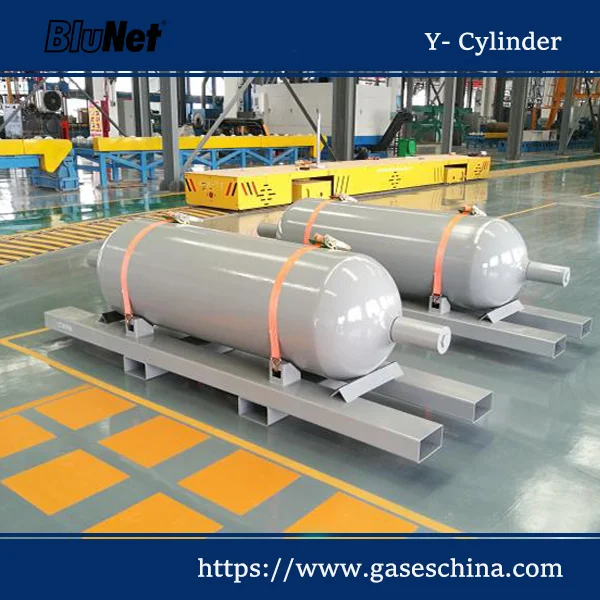
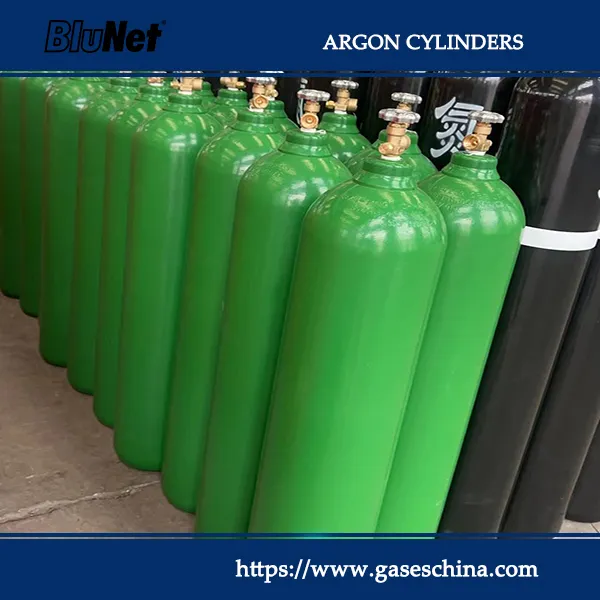
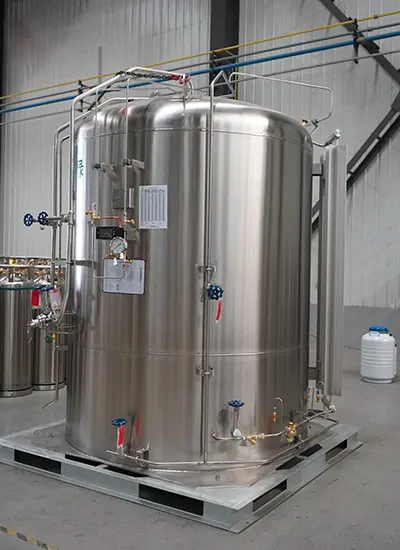
Microbulk tanks provide a centralized gas storage and supply solution for facilities whose industrial gas consumption has outgrown traditional cylinder delivery but does not justify a full-scale bulk installation.
By storing gases such as nitrogen, oxygen, argon, and carbon dioxide in liquid form on site, a microbulk system can reduce cylinder handling, simplify gas inventory management, decrease delivery frequency, and provide a more consistent supply to multiple points of use.
The main advantage of microbulk is not simply the larger storage capacity. It is the ability to replace a labor-intensive cylinder supply model with a centralized storage, vaporization, monitoring, and distribution system.
What Is a Microbulk Tank?
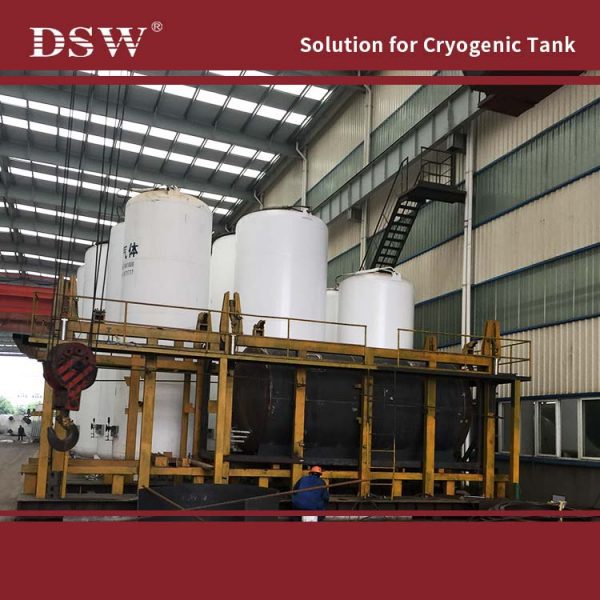
A microbulk tank is a stationary, insulated storage vessel designed to hold liquefied industrial gases at a customer’s facility. As a specialized type of cryogenic storage vessel, it is designed to store liquefied gases under controlled temperature and pressure conditions. Instead of repeatedly receiving and exchanging individual gas cylinders, the tank is filled on site from a delivery vehicle.
The stored liquid gas is then vaporized and supplied through a distribution system to the required points of use. Depending on the application, a microbulk installation may include the storage tank, vaporizer, pressure regulation equipment, piping, valves, instrumentation, and tank-level monitoring equipment.
Microbulk systems are commonly used for:
- Nitrogen (N2)
- Oxygen (O2)
- Argon (Ar)
- Carbon dioxide (CO2)
The system is particularly useful when gas consumption is too high or too continuous for convenient cylinder management, but a large bulk storage installation would provide more capacity and infrastructure than the facility requires.
Microbulk vs Gas Cylinders vs Bulk Storage
Microbulk is best understood as an intermediate gas-supply method between packaged gas cylinders and large bulk storage systems. The right choice depends on gas consumption, peak demand, required pressure and purity, site conditions, delivery logistics, and operating requirements.
| Factor | Gas Cylinders | Microbulk | Large Bulk Storage |
|---|---|---|---|
| Typical use | Low or intermittent consumption | Moderate or growing consumption | High-volume consumption |
| Gas handling | Frequent cylinder movement and changeouts | Centralized tank storage | Centralized bulk storage |
| Delivery method | Cylinder delivery and exchange | Liquid refill into stationary tank | Bulk tanker delivery |
| On-site inventory | Distributed across cylinders | Centralized in one tank | Large centralized inventory |
| Floor-space efficiency | Can require significant cylinder storage space | Can reduce indoor cylinder storage | Requires dedicated installation area |
| Inventory monitoring | Often manual | Level monitoring and telemetry options | Integrated monitoring options |
| Installation requirements | Relatively simple | Moderate infrastructure | More extensive infrastructure |
There is no universal gas-consumption level at which every facility should switch to microbulk. The decision should be based on the facility’s actual consumption profile, delivery frequency, operating requirements, site conditions, and total cost.
7 Advantages of Microbulk Tanks
1. Reduce Cylinder Handling and Changeouts
One of the most important advantages of a microbulk system is the reduction or elimination of routine cylinder handling.
Traditional cylinder supply requires workers to receive, move, connect, disconnect, and replace cylinders. As consumption increases, these activities can become a significant part of daily gas management.
A microbulk system keeps the primary gas inventory in a stationary tank. Gas is delivered through the facility’s distribution system rather than through repeated cylinder changeouts.
This centralized approach can simplify material handling and reduce the amount of manual work associated with maintaining the gas supply.
2. Improve Gas Supply Continuity
Cylinder systems depend on maintaining an adequate inventory of full cylinders and replacing cylinders before they are depleted. A missed changeout or unexpected increase in consumption can create a risk of gas interruption.
Microbulk storage provides a larger on-site liquid-gas inventory that can be continuously converted into gas for the process.
When properly sized and managed, the system can reduce interruptions associated with cylinder depletion. Microbulk installations can also incorporate tank-level monitoring or telemetry so that inventory can be monitored and replenishment can be planned before the tank reaches a critical level.
For processes that depend on reliable gas availability, this can be an important operational advantage.
3. Reduce Delivery Frequency
Facilities using large numbers of cylinders may require frequent deliveries to maintain adequate inventory. This creates additional receiving, handling, storage, and administrative requirements.
Microbulk changes the delivery model. Instead of exchanging numerous cylinders, a delivery vehicle refills the stationary tank at the customer’s site.
Because the tank stores a larger quantity of gas than individual cylinders, deliveries can generally be consolidated and scheduled according to actual consumption and storage requirements.
Reducing delivery frequency can simplify site logistics and reduce the time spent coordinating gas deliveries.
4. Free Up Valuable Production Space
Gas cylinders require designated storage areas and sufficient space for handling, access, and inventory management.
As the number of cylinders increases, cylinder storage can occupy valuable floor space that could otherwise be used for production equipment, materials, or other operations.
A microbulk tank moves the primary gas inventory into a dedicated stationary installation, potentially reducing the indoor floor space required for cylinder storage.
This can be particularly useful for manufacturing facilities, fabrication shops, laboratories, food-processing facilities, and other operations where available floor space is limited.
5. Simplify Gas Inventory Management
Managing individual cylinders requires tracking full and empty cylinders, delivery schedules, cylinder quantities, and consumption.
Microbulk systems centralize the gas inventory in one stationary storage vessel. Depending on the system configuration, level gauges and electronic telemetry can provide information about remaining inventory and consumption trends.
This allows gas management to shift from manually tracking individual cylinders toward monitoring overall tank inventory and consumption.
For facilities with regular gas demand, this can make replenishment planning more predictable and reduce the administrative work associated with cylinder inventories.
6. Improve Gas Utilization
Cylinder-based gas supply can leave residual product in partially used cylinders when containers are exchanged or returned. Multiple partially used cylinders can also make it more difficult to match gas purchases with actual consumption.
A microbulk system supplies gas from a dedicated on-site storage tank rather than relying on numerous individual containers.
This can improve inventory utilization and reduce dependence on partially used cylinders. Actual savings depend on the gas, operating conditions, delivery arrangement, and consumption profile.
7. Provide a Scalable Alternative to Cylinder and Bulk Supply
Microbulk fills an important gap between packaged-gas supply and large bulk installations.
Cylinder supply can become increasingly inefficient as gas consumption grows because of frequent changeouts, deliveries, handling, and inventory management. At the other end of the scale, a large bulk storage installation may provide more capacity and infrastructure than a medium-volume facility actually requires.
Microbulk provides an intermediate supply method that can be matched to the customer’s consumption, site conditions, and future growth.
Which Industries Can Benefit From Microbulk Tanks?
Microbulk systems can support a wide range of industrial and commercial applications where gas consumption is regular enough to make cylinder management inefficient.
Metal Fabrication
Common gases: Nitrogen, oxygen, and argon.
These gases are used in laser cutting, plasma cutting, welding, and other metal fabrication processes. A microbulk system can provide a centralized source for multiple machines while reducing repeated cylinder changeouts.
Food Processing
Common gases: Nitrogen and carbon dioxide.
Nitrogen and carbon dioxide are used in food processing, preservation, freezing, packaging, and related applications. A microbulk system can provide an on-site supply for facilities with consistent gas consumption.
Beverage Production
Common gas: Carbon dioxide.
Carbon dioxide is widely used for beverage carbonation. A dedicated microbulk CO2 tank can provide a centralized supply for facilities with recurring carbon dioxide demand.
Laboratories
Common gases: Nitrogen, oxygen, argon, and other industrial gases.
Laboratories may use industrial gases for analytical, research, purging, and cryogenic applications. Microbulk can be considered when gas consumption is sufficiently high to make individual-cylinder management inefficient.
Electronics and Manufacturing
Common gas: Nitrogen.
Nitrogen is used for inerting, purging, thermal processing, and controlled manufacturing environments. A centralized supply can be advantageous where several processes require a reliable gas source.
Water and Wastewater Treatment
Common gas: Oxygen.
Oxygen and other industrial gases can be used in water and wastewater treatment processes. Microbulk storage may be suitable for facilities requiring regular on-site gas consumption.
These applications demonstrate that a microbulk tank is not simply a storage vessel. A complete microbulk system combines storage, delivery, vaporization, pressure control, monitoring, and gas distribution.
Are Microbulk Tanks More Cost-Effective Than Gas Cylinders?
Microbulk can reduce operating costs associated with cylinder handling, frequent deliveries, inventory management, and residual product. However, it would be inaccurate to state that microbulk is always cheaper than cylinders.
The economic comparison should consider the total cost of the gas-supply method rather than the gas price alone.
Costs Associated With Cylinder Supply
- Gas purchase cost
- Cylinder rental or service charges
- Delivery and transportation costs
- Cylinder handling labor
- Storage requirements
- Frequent cylinder changeouts
- Inventory management
- Residual gas in returned cylinders
Costs Associated With Microbulk Supply
- Gas purchase cost
- Tank installation
- Site infrastructure
- Vaporization equipment
- Tank maintenance
- Monitoring or telemetry
- Liquid-gas delivery
- Required storage capacity
The economic advantage depends on factors such as monthly gas consumption, gas type, required purity, delivery distance, number of cylinder changeouts, labor requirements, installation costs, and delivery frequency.
For a facility with low or highly irregular gas consumption, cylinders may remain the more appropriate option. For a facility with steady or increasing consumption, the reduction in handling and delivery requirements can make microbulk economically attractive over its operating life.
The better question is therefore not simply “Are microbulk tanks cheaper?” but:
“Which gas supply method provides the lowest total cost and operational risk for the facility’s actual consumption profile?”
What Gas Consumption Justifies a Microbulk Tank?
There is no single gas-consumption threshold that applies to every facility. A microbulk system should be evaluated according to the facility’s actual consumption profile and operating conditions.
Important considerations include:
- Average daily or monthly gas consumption
- Peak gas demand
- Number of cylinders currently used
- Frequency of cylinder deliveries and changeouts
- Required supply pressure
- Required gas purity
- Available installation space
- Delivery access for the gas supplier
- Required reserve inventory
- Expected future growth in gas consumption
A facility may benefit from evaluating microbulk when cylinder changeouts have become frequent, gas consumption is increasing, or employees are spending significant time managing cylinders.
The decision should be based on a site-specific assessment rather than an arbitrary cylinder count or consumption number.
How to Select the Right Microbulk Tank
Selecting a microbulk tank requires more than choosing a nominal tank volume. The storage vessel and associated equipment should be matched to the gas, consumption profile, operating pressure, installation conditions, and applicable requirements.
Gas Type
The gas determines storage conditions, material compatibility, pressure requirements, vaporization requirements, and applicable safety considerations.
Gas Consumption
Determine both average and peak consumption rather than relying only on monthly purchasing volume. Peak flow is particularly important when selecting vaporization and distribution equipment.
Storage Capacity
Tank capacity should account for normal consumption, delivery intervals, reserve requirements, and expected changes in demand.
Operating Pressure
The required supply pressure should be established based on downstream equipment and the gas distribution system.
Vaporization Capacity
The vaporizer should be capable of handling the required continuous and peak gas flow under the expected operating conditions.
Installation Location
The installation area must accommodate the tank, filling connection, vaporizer, piping, valves, access requirements, safety clearances, and delivery vehicle.
Monitoring Requirements
For critical applications, level monitoring and telemetry can improve visibility of the remaining inventory and support proactive replenishment.
Applicable Standards and Regulations
The tank and complete installation should be designed, manufactured, inspected, and installed according to the applicable codes, standards, and regulations for the gas, pressure equipment, and destination market.
When Should You Switch From Cylinders to Microbulk?
A facility may want to evaluate a microbulk system when one or more of the following conditions apply:
- Cylinder changeouts are becoming frequent.
- Gas consumption is increasing steadily.
- Employees spend significant time moving or changing cylinders.
- Cylinder storage is occupying valuable production space.
- Gas deliveries are becoming difficult to manage.
- Production is affected by unexpected gas runouts.
- Multiple machines require the same gas.
- Gas inventory is difficult to track.
- The facility wants remote tank-level monitoring.
- A centralized gas distribution system is required.
These indicators do not automatically mean that microbulk is the correct solution. Consumption, site layout, gas properties, required pressure and purity, delivery logistics, installation requirements, and the economics of operation should all be evaluated before changing the gas-supply method.
When Is Microbulk Not the Best Choice?
Microbulk is not automatically the best solution for every gas user. Gas cylinders may remain more practical when consumption is low, irregular, or highly variable, particularly when installing a stationary tank would not provide sufficient operational or economic benefits.
A large bulk storage system may be more appropriate when gas consumption is sufficiently high to justify larger storage capacity, bulk tanker deliveries, and the associated infrastructure.
Microbulk may be less suitable when:
- Gas consumption is very low.
- Gas demand is highly irregular.
- The site cannot accommodate a suitable tank installation.
- Delivery vehicles cannot easily access the installation area.
- The required gas volume is high enough to justify a larger bulk system.
- Installation costs cannot be justified by expected gas consumption.
The most appropriate supply method should therefore be selected according to the facility’s actual requirements rather than assuming that one solution is suitable for every application.
Need a Microbulk Gas Supply Solution?
Choosing the right microbulk tank requires more than selecting a storage volume. The tank, vaporizer, pressure-control equipment, piping, monitoring system, and delivery arrangement should be matched to your actual gas consumption and site conditions.
Contact us for a microbulk tank solution tailored to your application.
To help us recommend a suitable configuration, provide the following information:
- Gas type
- Average gas consumption
- Peak gas consumption or required flow rate
- Required supply pressure
- Required storage capacity, if known
- Installation location
- Application or industry
- Destination country
Our team can evaluate the application and recommend a suitable microbulk storage and gas supply system based on your operating requirements.
TECHNICAL FAQs
FAQs About Microbulk Tank Advantages
The main advantages are fewer cylinder changeouts, less manual gas handling, fewer delivery events, a larger centralized gas inventory, simplified inventory management, better use of production space, and improved supply continuity. Microbulk can also support remote tank-level monitoring and centralized gas distribution.
A microbulk tank maintains a larger on-site inventory of liquefied gas than individual cylinders and continuously supplies gas through a vaporization and distribution system. When properly sized and replenished, this reduces the risk of interruptions caused by depleted cylinders. Level monitoring and telemetry can also help operators plan replenishment before inventory becomes critical.
Microbulk tanks are not always cheaper than gas cylinders. Their economic advantage depends on gas consumption, delivery frequency, cylinder handling, labor, installation costs, storage requirements, and other site-specific factors. For facilities with steady or increasing gas consumption, reduced handling and delivery requirements may make microbulk economically attractive.
Microbulk can reduce costs associated with frequent cylinder deliveries, cylinder handling, changeouts, inventory management, and labor. However, the total economic benefit depends on gas consumption, delivery distance, installation costs, storage capacity, labor requirements, and the existing cylinder supply arrangement.
Microbulk can be advantageous for facilities with regular or growing gas consumption because it provides a centralized on-site inventory and continuous gas supply through the distribution system. It can be particularly useful when frequent cylinder changeouts or multiple cylinder connections have become inefficient. The appropriate supply method still depends on consumption, pressure, purity, site conditions, and delivery requirements.
Microbulk is generally considered when gas consumption is moderate or growing, cylinder management has become inefficient, delivery frequency needs to be reduced, or a facility requires a more centralized gas supply but does not need the capacity and infrastructure of a full-scale bulk installation. The final selection should be based on actual consumption, peak demand, site conditions, delivery logistics, and operating requirements.

No comment