

Nitrous oxide (N₂O), also known as dinitrogen monoxide or laughing gas, is a colorless gas used across medical, dental, food processing, electronics, chemical and other industrial applications. Commercial nitrous oxide is commonly produced through controlled thermal decomposition of ammonium nitrate, followed by cooling, purification, drying, compression and liquefaction.
Because N₂O can be supplied as a liquefied compressed gas, production quality, cylinder filling, storage and transportation require appropriate process controls and pressure-rated equipment. This guide explains how nitrous oxide is manufactured, how it is purified and stored, where it is used, and the key safety considerations for industrial handling.
What Is Nitrous Oxide?
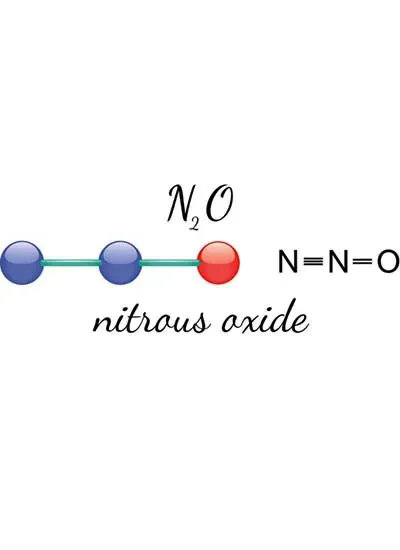
Nitrous oxide is a chemical compound with the formula N₂O and CAS Number 10024-97-2. It is a colorless gas with a slightly sweet odor and can be stored as a liquid under pressure. Nitrous oxide is widely used in medical and dental anesthesia, food processing and as an oxidizing gas in certain industrial gas applications.
The term “laughing gas” is commonly associated with nitrous oxide because inhalation can produce euphoria and other effects. However, nitrous oxide should not be intentionally inhaled outside approved medical applications. The U.S. FDA has warned that misuse or recreational inhalation of nitrous oxide products can cause serious adverse health effects, including loss of consciousness, neurological injury, asphyxiation and, in some cases, death.
Important: Nitrous oxide (N₂O) should not be confused with nitrogen dioxide (NO₂). They are different chemical compounds with different properties, applications and hazards.
Key Properties of Nitrous Oxide
Understanding the physical and chemical properties of N₂O is important when selecting cylinders, storage equipment and handling procedures.
| Property | Typical Information |
|---|---|
| Chemical name | Nitrous oxide / dinitrogen monoxide |
| Chemical formula | N₂O |
| CAS number | 10024-97-2 |
| Appearance | Colorless gas |
| Odor | Slightly sweet odor |
| Molecular weight | 44.0 |
| Storage state | May be stored as a liquefied compressed gas under pressure |
| Main industrial considerations | Pressure, temperature, purity, ventilation and appropriate container selection |
How Is Nitrous Oxide Manufactured?
Commercial nitrous oxide is commonly manufactured using ammonium nitrate as the primary feedstock. Under controlled conditions, ammonium nitrate undergoes thermal decomposition to produce nitrous oxide and water.
The overall reaction can be represented as:
NH₄NO₃ → N₂O + 2H₂O
The resulting gas mixture contains nitrous oxide together with water vapor and other potential impurities. Industrial production therefore requires additional separation and purification stages before the gas can be supplied for applications requiring defined purity specifications.
The main stages are described below.
1. Ammonium Nitrate Feedstock
Ammonium nitrate is used as the starting material for conventional nitrous oxide production. The feedstock must meet the manufacturer’s process specifications and be handled using appropriate industrial safety procedures.
The quality of the starting material can influence the composition of the resulting gas and the requirements of downstream purification.
Because ammonium nitrate requires careful handling, commercial production should be performed in properly designed and controlled industrial facilities.
2. Controlled Thermal Decomposition
The ammonium nitrate is heated under controlled process conditions. Thermal decomposition produces nitrous oxide and water vapor:
NH₄NO₃ → N₂O + 2H₂O
Industrial production requires careful control of process temperature, feed rate, equipment condition and other operating parameters. The objective is to generate N₂O consistently while controlling unwanted decomposition products and maintaining safe operating conditions.
The exact process conditions depend on the production system, equipment design, feedstock and required product specification.
3. Cooling and Water Removal
The gas leaving the decomposition stage contains substantial water vapor. The gas mixture is therefore cooled so that water can condense and be separated from the crude nitrous oxide.
Removing moisture is an important part of gas conditioning because water and other contaminants can affect downstream purification, compression and product quality.
4. Gas Purification
After initial cooling and water removal, the crude N₂O passes through additional purification stages. Depending on the production process and final specification, purification may involve separation, scrubbing, filtration and other gas-treatment technologies.
The purpose is to reduce unwanted contaminants and produce nitrous oxide that meets the required specification for its intended application.
Different applications can require different purity levels and impurity limits. Medical, food-processing, industrial and electronics applications should therefore be supplied according to their applicable product specifications rather than being treated as a single universal grade.
5. Drying and Compression
Following purification, the gas can undergo additional drying and conditioning. Moisture control is particularly important where the final application has strict gas-quality requirements.
The purified N₂O is then compressed using equipment designed for the gas service. Process controls are used to maintain product quality throughout compression and prevent contamination from the equipment or surrounding environment.
6. Liquefaction and Storage
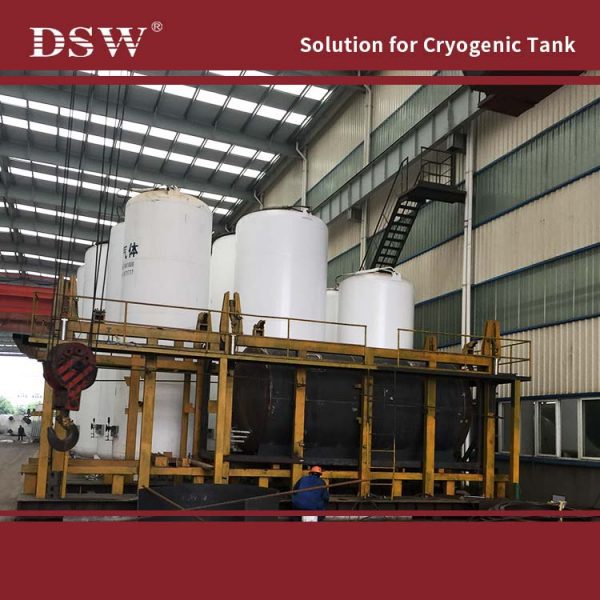
Nitrous oxide can be stored and transported as a liquefied compressed gas under pressure. After purification and conditioning, the gas may therefore be converted to the required storage state and transferred into approved pressure-rated containers.
The actual storage pressure depends on temperature and other physical and equipment conditions. For this reason, it is not appropriate to specify one universal storage pressure for all N₂O cylinders or tanks.
Storage and filling systems should be designed for the specific gas service and comply with the applicable cylinder, pressure-vessel, filling and transportation requirements.
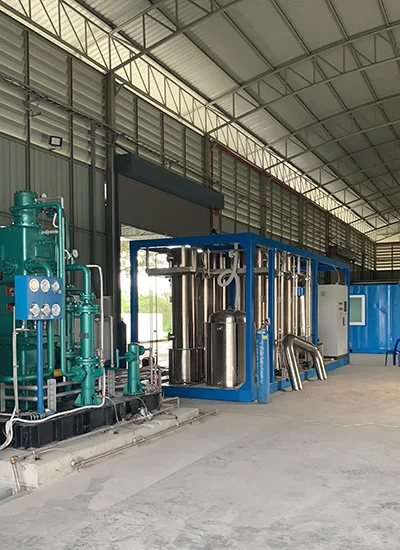
Overview of the industrial nitrous oxide manufacturing process, including decomposition, cooling, purification, drying, compression and liquefaction.
Nitrous Oxide Purity and Quality
Nitrous oxide purity requirements depend on the intended application. A gas suitable for one industrial process may not meet the specification required for medical, food or electronics applications.
Rather than describing commercial N₂O as “100% pure,” suppliers normally specify a target purity together with limits for individual impurities. These specifications can include requirements for moisture, oxygen, nitrogen, carbon monoxide, carbon dioxide and other trace contaminants, depending on the application.
Industrial-Grade Nitrous Oxide
Industrial N₂O is used in applications where the required gas specification is defined by the process. The appropriate purity, moisture level and impurity limits should be confirmed between the gas supplier and end user.
Medical-Grade Nitrous Oxide
Medical applications require gas that complies with the relevant pharmaceutical, medical-gas and national regulatory requirements. Quality control, traceability, packaging, labeling and cylinder handling are particularly important for medical gas supply.
Nitrous oxide is used in healthcare as an anesthetic and analgesic gas. Medical facilities should use products that are specifically manufactured, tested and supplied for the intended medical application.
Food-Grade Nitrous Oxide
Nitrous oxide is used in food processing as a propellant and aerating gas, including applications such as whipped cream. The U.S. FDA lists nitrous oxide among substances used for food applications and identifies its technical effects as including propellant and flavor-enhancing functions.
Food applications require products that meet the applicable food regulations and quality requirements for the intended market.
Electronic-Grade Nitrous Oxide
Nitrous oxide can also be used in semiconductor and electronics manufacturing. These applications can require very high purity and strict control of trace contaminants because small amounts of impurities can affect sensitive manufacturing processes.
The exact specification should therefore be established according to the customer’s process and technical requirements.
Applications
Nitrous oxide has a broad range of applications because of its physical and chemical properties. Major applications include healthcare, food processing, electronics, chemical processing and specialized propulsion systems.
1. Medical and Dental Applications
Nitrous oxide has long been used in healthcare as an analgesic and anesthetic gas. It is used in certain medical and dental procedures and is commonly delivered through controlled gas-delivery systems.
Dental and healthcare facilities must use suitable equipment, ventilation and gas-scavenging systems to minimize occupational exposure. NIOSH recommends engineering and work-practice controls to reduce workplace exposure to N₂O.
2. Food and Beverage Processing
Nitrous oxide is widely known for its use as a propellant and aerating gas in food applications. One familiar example is whipped cream, where N₂O helps create the desired texture when used with appropriate dispensing equipment.
Nitrous oxide is also recognized by the FDA as a substance used in food applications.
3. Electronics and Semiconductor Manufacturing
High-purity nitrous oxide is used in selected semiconductor and electronics manufacturing processes. In these applications, gas purity and trace impurity control are critical because manufacturing processes can be sensitive to contamination.
Electronic-grade N₂O is therefore typically supplied according to tighter specifications than general industrial gas.
4. Chemical Processing
Nitrous oxide can be used as an oxidizing or process gas in selected chemical and industrial applications. The appropriate gas specification depends on the process, equipment and required reaction conditions.
5. Automotive and Engine Applications
Nitrous oxide is used in some performance-oriented engine systems as an oxidizing gas. When properly controlled, introducing N₂O into an engine system can provide additional oxygen-containing gas to support combustion and increase power output.
These systems require application-specific equipment and should be operated according to the manufacturer’s specifications and applicable safety requirements.
6. Aerospace and Propulsion Applications
Nitrous oxide has also been used as an oxidizer in certain rocket and propulsion systems. Its ability to be stored as a liquefied compressed gas makes it useful in some specialized propulsion designs.
Propulsion applications require carefully engineered storage, pressure control, material compatibility and handling systems.
Nitrous Oxide Storage and Transportation
Because N₂O can be stored as a liquefied compressed gas, appropriate gas cylinders and pressure-rated storage equipment are essential.
Nitrous oxide cylinders should be manufactured, inspected, tested, filled and transported according to the applicable standards and regulations for the destination market.
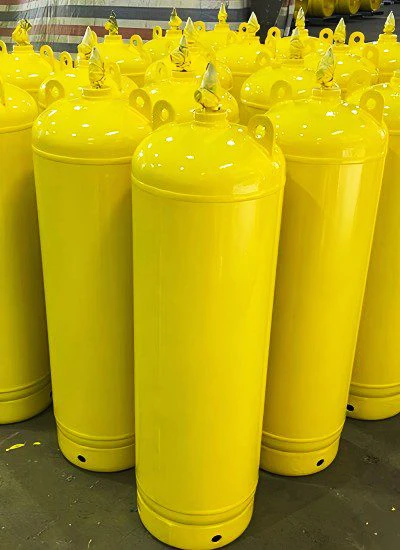
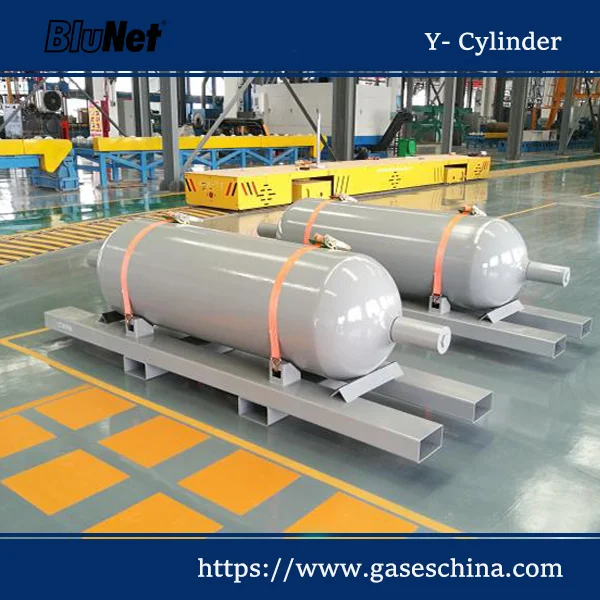
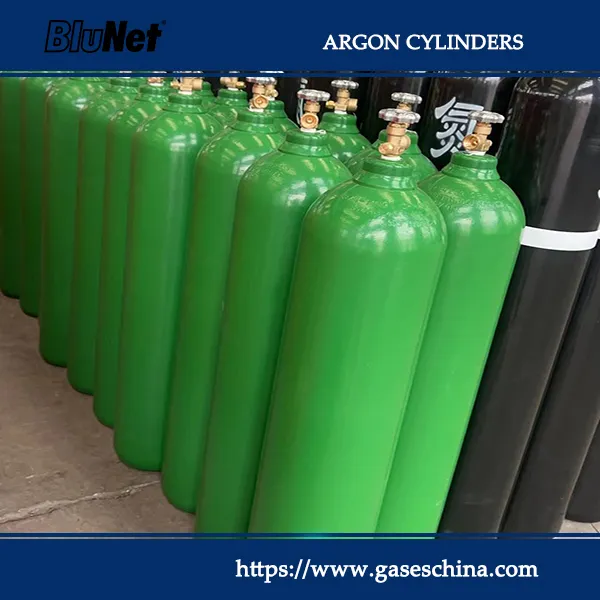
N₂O Gas Cylinders
Cylinders used for nitrous oxide service should be suitable for the pressure and gas application. Important considerations include:
- Compatible cylinder material and design
- Appropriate working pressure
- Correct valve configuration
- Required inspection and testing
- Suitable filling procedures
- Proper labeling and identification
- Protection against physical damage during transportation
When selecting N₂O cylinders, buyers should also consider gas cylinder sizes, working pressure, cylinder capacity, valve configuration and applicable certification requirements.
Transportation of Nitrous Oxide
Transportation requirements vary by country and mode of transport. Nitrous oxide shipments may be subject to hazardous-material or dangerous-goods requirements because the product is supplied as a compressed or liquefied gas.
Exporters and importers should verify the current requirements for the destination country, including packaging, labeling, documentation, vehicle requirements and cylinder certification.
Nitrous Oxide Safety
Nitrous oxide is useful in many industries, but it must be handled correctly. Workplace risks can result from gas release, oxygen displacement, pressure, cold liquid or uncontrolled exposure.
NIOSH identifies medical personnel, dental workers, laboratory personnel, compressed-gas workers and other workers as groups that may be exposed to N₂O. Appropriate engineering controls, ventilation, maintenance and work practices are important for reducing exposure.
1. Oxygen-Deficiency and Asphyxiation Risk
A release of N₂O into an enclosed or poorly ventilated area can displace oxygen and create an oxygen-deficient atmosphere. Workers should therefore avoid uncontrolled releases and ensure adequate ventilation in areas where N₂O is stored or used.
Gas detection and ventilation systems may be appropriate depending on the facility and risk assessment.
2. Pressure and Cylinder Hazards
Compressed and liquefied gases must be handled as pressure hazards. Cylinders should be secured against falling or impact and should not be exposed to conditions outside their rated service limits.
Valves, fittings and connections should be kept in good condition, and cylinders should be handled according to the supplier’s instructions and applicable regulations.
3. Cold-Burn and Frostbite Hazards
Contact with liquid nitrous oxide or rapidly expanding cold gas can cause cold injury or frostbite. NIOSH specifically identifies severe frostbite as a potential hazard from contact with liquid N₂O.
Appropriate protective equipment and safe handling procedures should be used when connecting, disconnecting or transferring N₂O.
4. Fire and Oxidation Hazards
Nitrous oxide is not itself a flammable gas, but it can support combustion and may intensify the burning of combustible materials under certain conditions.
For this reason, storage and handling areas should be managed to minimize contact with incompatible materials and ignition-related hazards.
5. Occupational Exposure
Repeated occupational exposure to nitrous oxide can create health risks. NIOSH recommends using the hierarchy of controls, including engineering controls, ventilation, maintenance and appropriate work practices. Dental facilities, for example, may use gas-scavenging systems to reduce exposure to waste anesthetic gas.
Workers should always consult the applicable Safety Data Sheet (SDS), workplace procedures and local regulations before handling N₂O.
Nitrous Oxide Regulations and Quality Requirements
Nitrous oxide regulations depend on the application and destination market. Medical, food, industrial and electronic gases can be subject to different quality, packaging, labeling and documentation requirements.
For example, the FDA lists nitrous oxide in its food-substance inventory and identifies food-related uses such as propellant applications. Medical products and equipment are subject to additional regulatory requirements depending on the specific product and intended use.
For international shipments, buyers and suppliers should confirm the current requirements for:
- Gas purity and product specifications
- Cylinder design and certification
- Periodic inspection and testing
- Valve and connection requirements
- Labels and hazard communication
- Dangerous-goods transportation
- Import and export documentation
Regulatory requirements can change by country and application, so the current rules applicable to the shipment should always be confirmed before export.
Nitrous Oxide vs Nitrogen Dioxide: What Is the Difference?
Nitrous oxide and nitrogen dioxide are completely different compounds and should not be used interchangeably.
| Property | Nitrous Oxide | Nitrogen Dioxide |
|---|---|---|
| Chemical formula | N₂O | NO₂ |
| Common name | Laughing gas | Nitrogen dioxide |
| Appearance | Colorless gas | Typically reddish-brown gas |
| Common applications | Medical, food, industrial and specialized applications | Chemical processing and other industrial applications |
This distinction is particularly important when preparing product specifications, Safety Data Sheets, cylinder labels and transportation documentation.
Conclusion
Nitrous oxide (N₂O) is an important industrial gas with applications ranging from healthcare and food processing to electronics, chemical processing and specialized propulsion systems.
The conventional manufacturing process begins with ammonium nitrate and controlled thermal decomposition, followed by cooling, water removal, purification, drying, compression and liquefaction. The final gas specification should be matched to the intended application because medical, food, industrial and electronics users can have different purity and quality requirements.
Safe N₂O supply also depends on appropriate cylinders, valves, storage systems, filling procedures and transportation controls. Buyers should select gas products and pressure containers according to the requirements of their application and destination market.
TECHNICAL FAQs
FAQs About Nitrous Oxide Manufacturing
Nitrous oxide is commonly produced through controlled thermal decomposition of ammonium nitrate. The resulting gas mixture is cooled to remove water, purified, dried, compressed and prepared for storage or filling.
The chemical formula of nitrous oxide is N₂O. Its CAS number is 10024-97-2.
Ammonium nitrate is commonly used as the feedstock for conventional industrial nitrous oxide production.
Nitrous oxide is not itself a flammable gas, but it can support combustion and intensify burning under certain conditions. It should therefore be stored and handled according to applicable gas-safety requirements.
Nitrous oxide can be stored as a liquefied compressed gas in suitable pressure-rated cylinders or other approved containers. Storage pressure varies with temperature and equipment conditions, so a single universal pressure should not be assumed.
Nitrous oxide is used in medical and dental applications, food processing, electronics and semiconductor manufacturing, selected chemical processes, automotive performance systems and certain propulsion applications.
N₂O is nitrous oxide, while NO₂ is nitrogen dioxide. They are different chemical compounds with different properties, applications and hazards. Nitrous oxide should never be confused with nitrogen dioxide.
Nitrous oxide can be handled safely when appropriate equipment, ventilation, storage procedures, cylinder controls and workplace safety practices are used. Uncontrolled exposure can cause health risks, and contact with liquid N₂O can cause frostbite.

No comment