

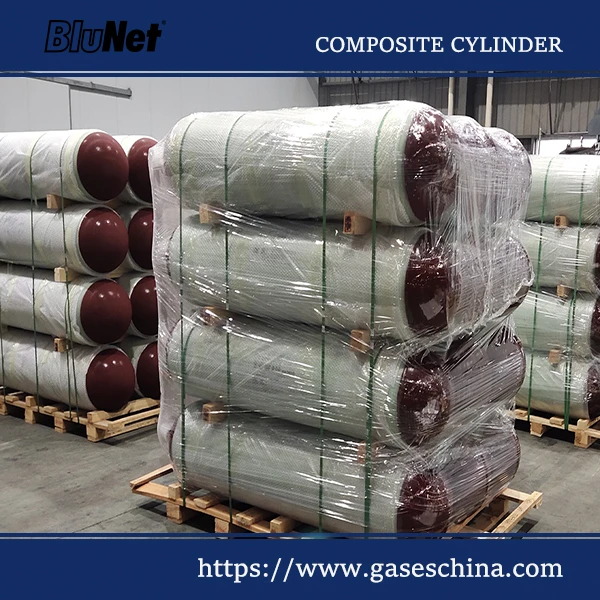
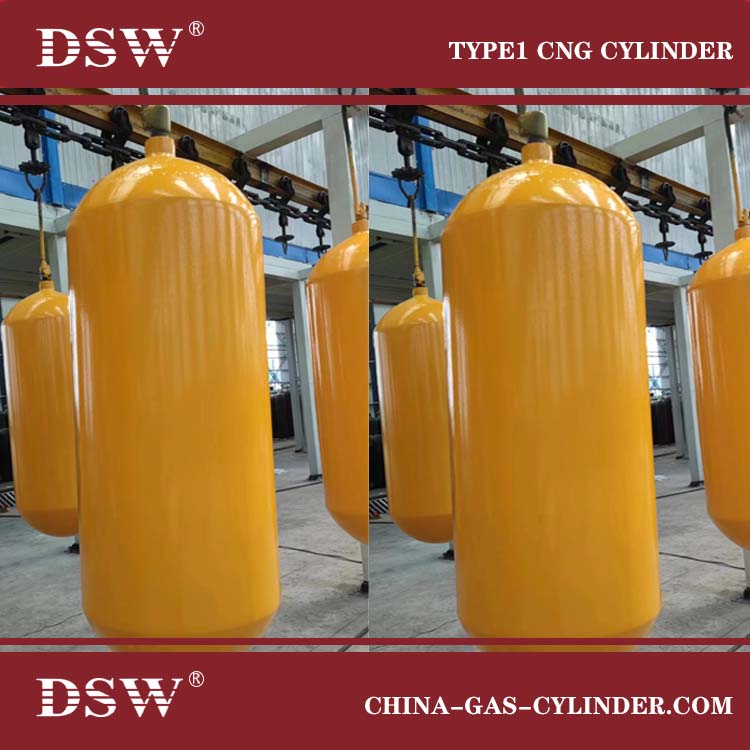
BluNet supplies CNG composite cylinders for high-pressure compressed natural gas storage in automotive applications. Combining suitable liners with fiber-reinforced materials, these cylinders can reduce weight compared with conventional all-metal designs while providing the strength required for their intended operating conditions.
Our range includes carbon fiber CNG cylinders in different construction types and configurations, subject to availability. Capacity, working pressure, dimensions, and applicable approvals depend on the selected model and its intended use.
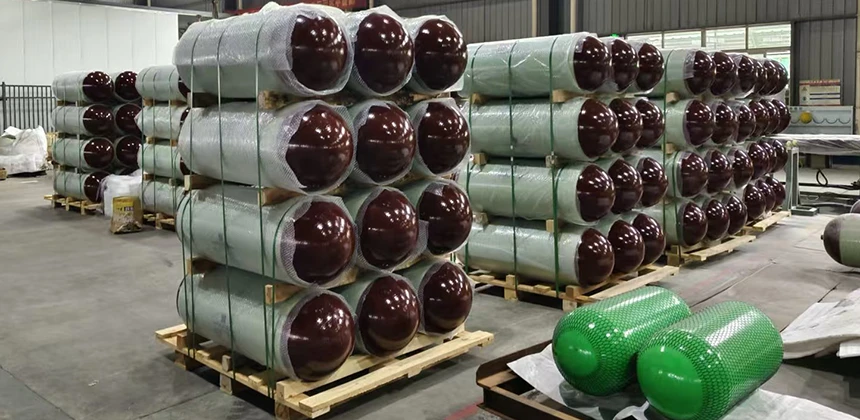
Key Features and Benefits
Composite construction offers several advantages for vehicle-mounted gas storage systems:
- Lightweight design: Reduces cylinder weight compared with comparable all-metal designs.
- High-strength reinforcement: Carbon fiber and other suitable reinforcing materials provide structural strength.
- Corrosion resistance: Composite overwraps resist many forms of external corrosion.
- Installation flexibility: Different dimensions and capacities support a range of vehicle configurations.
- Application-specific safety: Cylinder design, testing, and approvals must meet the requirements of the intended service.
Carbon Fiber CNG Cylinder Construction
A carbon fiber CNG cylinder uses carbon-fiber composite reinforcement to achieve high strength relative to weight. Depending on the design, it may have a metallic or non-metallic liner, with reinforcement covering part or all of the cylinder body.
The liner provides gas containment and may contribute to structural strength, while the composite overwrap carries loads according to the cylinder design. Material selection and winding configuration affect the cylinder’s weight, performance, and suitability for its intended application.
Types of CNG Composite Cylinders
Automotive CNG cylinders are classified into four types according to liner construction and reinforcement. Type 1 is an all-metal design; Types 2, 3, and 4 incorporate composite materials.
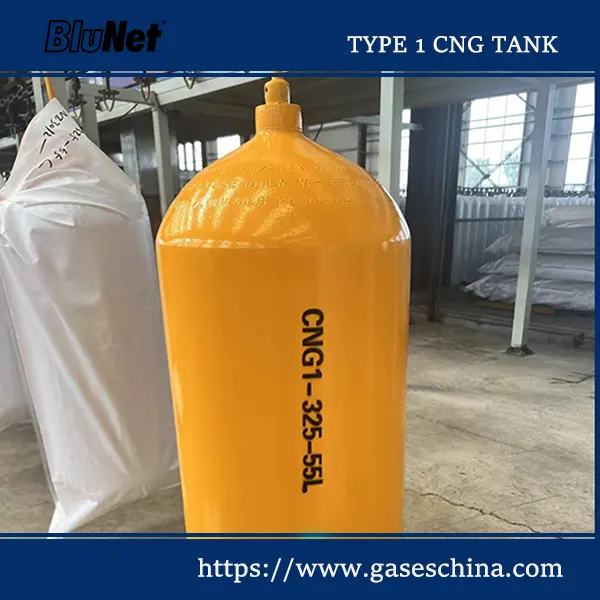
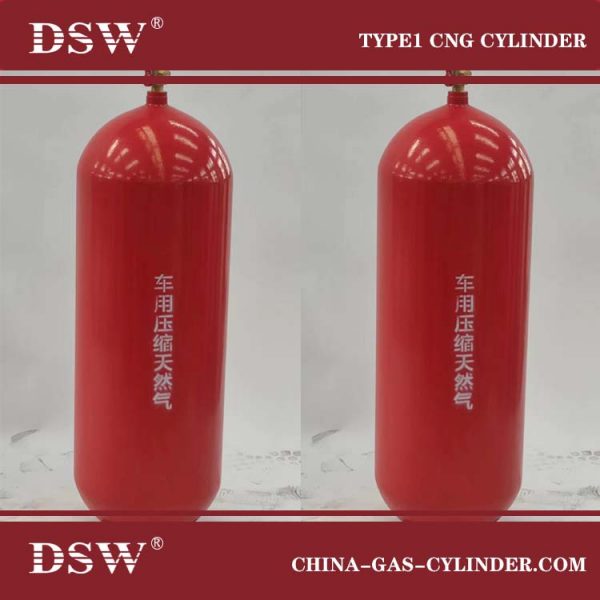
- Type 1 — All-metal: Manufactured entirely from metal without composite reinforcement.
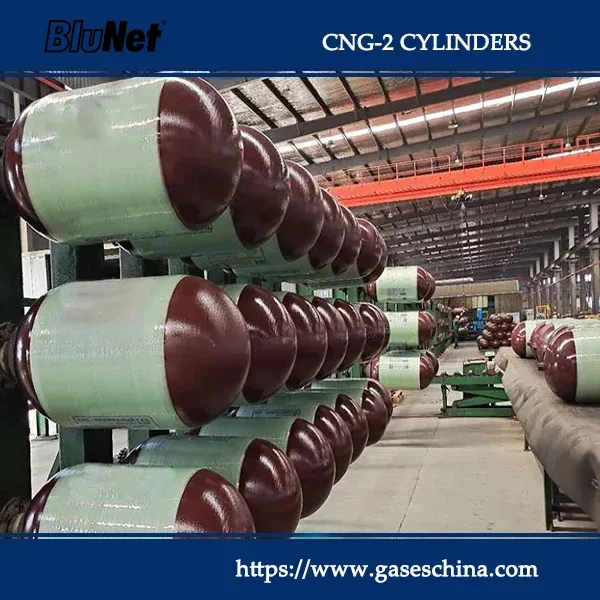
- Type 2 — Hoop-wrapped: Uses a load-bearing metal liner reinforced around the cylindrical section.
- Type 3 — Fully wrapped with a metal liner: Uses a load-bearing metal liner with composite reinforcement over the cylinder body and end domes.
- Type 4 — Fully wrapped with a non-metallic liner: Typically uses a polymer liner with composite reinforcement covering the cylinder body and end domes.
The available materials, pressure ratings, and configurations depend on the specific product. For a hoop-wrapped option, see our Type 2 CNG cylinders.
Applications
CNG fiber cylinders are used in compatible automotive fuel systems where weight reduction and efficient gas storage are important.
- Passenger cars: Onboard natural gas storage for compatible CNG-powered vehicles.
- Commercial vehicles: Fuel storage for applicable vans and trucks.
- Buses and fleet vehicles: Cylinder configurations selected to meet vehicle capacity and installation requirements.
- Vehicle fuel systems: Integration with compatible valves, fittings, mounting systems, and safety components.
Each cylinder must be approved for its intended gas service and installed according to applicable vehicle and system requirements. Cylinders intended for other gases must not be assumed suitable for CNG.
Specifications and Applicable Standards
Selection depends on the vehicle platform, storage requirements, installation space, and destination market. The following parameters should be confirmed for each model.
| Parameter | Considerations |
|---|---|
| Cylinder Type | Type 2, Type 3, Type 4, or specified design |
| Materials | Liner material and composite reinforcement |
| Water Capacity | Required gas storage volume and installation space |
| Working Pressure | Specified according to the approved design |
| Dimensions and Weight | Vehicle packaging and mounting requirements |
| Standards and Approvals | Requirements for the specific model and destination market |
ISO 11439 addresses high-pressure cylinders for onboard natural gas storage in automotive vehicles. Other standards and regulatory requirements may apply depending on the product and destination market. DOT or other approvals should be confirmed against the specific cylinder’s documentation.
BluNet CNG Composite Cylinder Supplier
BluNet supplies gas cylinder products for automotive and industrial applications. We help buyers evaluate suitable configurations according to technical requirements, vehicle installation constraints, and applicable regulations.
For a quotation, please provide the intended application, cylinder type, water capacity, working pressure, dimensional requirements, destination country, and estimated order quantity. Technical drawings or reference specifications can also assist product evaluation.
Contact BluNet to discuss product availability and technical requirements for your project.


Reviews
There are no reviews yet.